
PVC Flooring for Pop-Up Retail Spaces: A Project Application Guide
Project application guide · Self-adhesive PVC flooring · EU market
A pop-up shop is a floor with a deadline attached. The tenancy may run for two weeks, the fit-out window is often a single night, the base surface belongs to a landlord, and the whole installation has to be removed again without leaving a claim behind. For projects inside the EU, the same floor also has to survive a compliance review before it ever reaches the site.
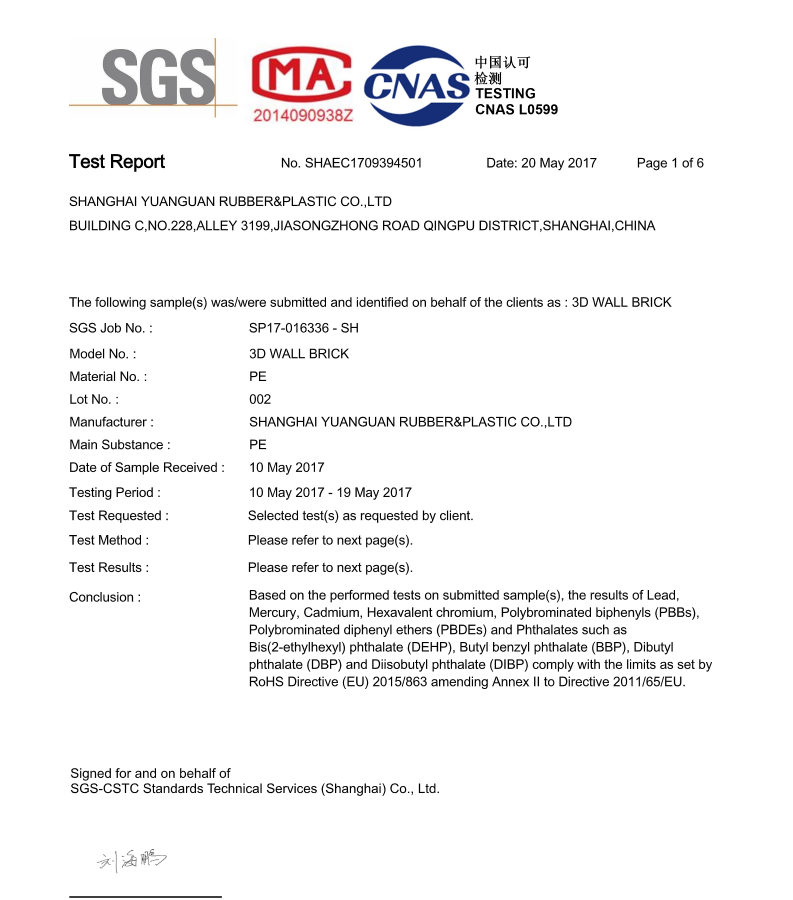
The compliance anchor for this guide: SGS RoHS Test Report SHAEC1709394501, issued by SGS-CSTC against the RoHS Directive (EU) 2015/863 and applicable to the EU market for the WB-PVC model.
Short answer for project teams
- For a short-term retail unit, specify a self-adhesive PVC floor tile that installs dry over a sound existing substrate, can be cut on site, and can be lifted again inside the tenancy window.
- For an EU destination, treat the RoHS test report as a starting document, not the whole compliance file: the WB-PVC model is covered by SGS RoHS Test Report SHAEC1709394501 under the RoHS Directive (EU) 2015/863, and CE-CPR, REACH and PPWR packaging points still need separate confirmation per shipment.
- The WB-PVC PVC floor tile is supplied in 40/60/120 × 300 cm at 1.5 mm thickness with PVC as the primary material, with customization on size, color, pattern, embossing texture, material structure, thickness and packaging.
- Published purchasing terms list a 200 square meter MOQ, FOB delivery, TT payment and pre-shipment test as the acceptance criterion, with a 30-day production lead time.
This guide is written for the people who actually carry that risk: retail project managers working to a mall opening date, shop fitters who inherit an unknown substrate, and importers who have to hand a compliance file to a client in Brussels or Berlin. It uses the WB-PVC PVC floor tile from SXP Wall Panel as the working reference product and sets out how to specify, verify, order and accept it - then closes with the checklist that should be signed off before order confirmation.
Problem definition: why pop-up retail breaks standard flooring specifications
Conventional flooring specifications are written for permanence. They assume a multi-year service life, a prepared screed, a wet or adhesive-based installation, and a client who will live with the result for a decade. A pop-up tenancy inverts almost every one of those assumptions, which is why retail teams that copy a standard flooring spec into a temporary unit usually end up paying for it twice.
- Installation window. A pop-up fit-out is usually scheduled inside a mall or landlord-controlled access slot, often overnight and often with a fixed opening event. A floor that needs adhesive cure time, drying time or specialist tools is a scheduling risk, not just a technical choice.
- Substrate uncertainty. The base surface is whatever the previous tenant left behind: existing ceramic tile, a patched screed, a raised access floor or a painted slab. Self-adhesive PVC flooring requires a base that is flat, dry and free of dust and grease, and a floor base that meets the required strength with no hollow spots. Those conditions have to be surveyed before the order is placed, not discovered on installation night.
- Reversibility. Pop-ups end. The lease or licence usually requires the unit to be returned to its original condition, which puts the removal method, residue risk and reinstatement cost into the commercial case from day one.
- Compliance documentation. For EU destinations the shipment is checked on documents as much as on product: RoHS for restricted substances, CE-CPR for construction products, REACH for hazardous substances and PPWR packaging rules. Missing or invalid certificates can mean customs detention, return shipment and cost, so compliance has to be resolved at specification stage.
- Fragmented scope. Temporary retail projects buy in small, fast, multi-part orders - flooring, packaging, branded labels, a sample for the design team, a replacement box after damage. Sourcing those from four suppliers multiplies the coordination load on a project that has no slack.
Industry background: what the PVC flooring supply base looks like in 2026
PVC and vinyl flooring is not a niche material for temporary spaces; it is a mature global category with a well-developed export supply chain, which is why a short-term retail project can be served from standard production rather than bespoke manufacturing.
The global vinyl flooring market was estimated at USD 28.0 billion in 2026, with a projected size of USD 41.5 billion by 2033 and a compound annual growth rate of 5.8% across that period, according to Grand View Research. On the trade side, China was the leading exporter of vinyl chloride polymer floor coverings under HS code 391810 in 2024, with exports valued at USD 4.97 billion, ahead of Vietnam at USD 1.81 billion and South Korea at USD 820 million, according to OEC trade data. For a buyer, that concentration means a deep pool of suppliers and a corresponding need for document-level verification.
Material expectations have also shifted. Major manufacturers moved their vinyl production to phthalate-free plasticizer systems using alternatives such as DOTP; Tarkett reported that by 2018, 100% of its vinyl production sites in Europe, North America, Serbia and China used phthalate-free technology. Buyers specifying for the EU or US increasingly ask which plasticizer system is used and request documentation, rather than assuming that all PVC flooring is equivalent.
Fire and indoor-air criteria are the other background points that surface in project specifications. PVC flooring fire resistance is commonly classified as Class B1 under Chinese national standard GB 8624-97 and as Cfl-s1 under EN 13501-1; on the US side, FloorScore certification verifies that hard surface flooring complies with the volatile organic compound emissions criteria of California Section 01350. None of these replace the project's own specification, but they explain why a flooring submittal for a commercial retail unit is asked for more than a product photograph.
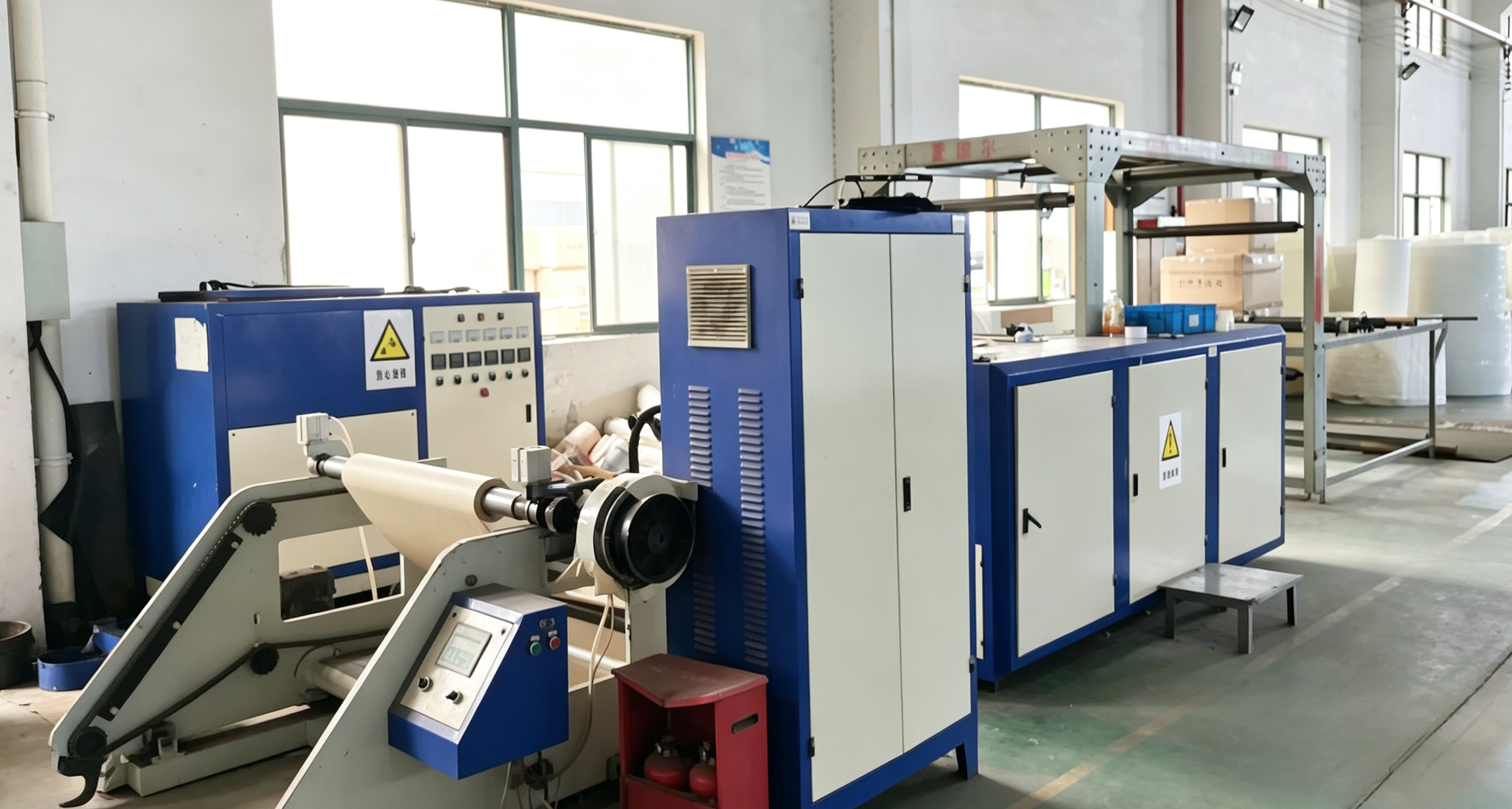
Production base of Shanghai Yuanguan Rubber Plastic Co., Ltd. (brand: SXP Wall Panel), the manufacturer supplying the WB-PVC PVC floor tile referenced in this guide.
The solution: how the WB-PVC self-adhesive PVC floor tile is specified
The specification that solves the pop-up problem is not a premium product tier - it is a self-adhesive PVC floor tile that is thin enough to lay over an existing substrate, stable enough to take retail footfall, documentable for the EU market, and configurable to the brand's visual and packaging requirements.
Material and format
The WB-PVC model is a PVC floor tile with PVC as the primary material. Standard formats are 40/60/120 × 300 cm at 1.5 mm thickness. The tile is supplied with a self-adhesive backing: the protective film is peeled off and the tile is pressed onto a smooth, solid base, with no cement or separate adhesive required. Installation is dry, the material can be cut locally with a utility knife, and some styles can be removed and reinstalled without leaving residue. The matched tool set is deliberately light - utility knife, scraper or roller, tape measure, spirit level, and an adhesive remover for disassembly assistance, with a floor roller recommended rather than any large construction equipment.
The published product comparison for this tile states a 22% increase in total material thickness, a 35% increase in glue coating weight and a 180% increase in wear layer thickness relative to alternatives. For a pop-up, the practical reading of those three numbers is: more tolerance for an imperfect substrate, more adhesion security under rolling retail traffic, and more abrasion resistance across a short but intense trading period. Buyers should still test the specific format on the specific substrate before a full roll-out.
The EU compliance anchor
The soft stone wall sticker and the WB-PVC floor tile model are covered by SGS RoHS Test Report SHAEC1709394501, issued by SGS-CSTC against the RoHS Directive (EU) 2015/863, and the report is applicable to the EU market. The report number, issuing body, standard reference and market applicability are the four items a retail client's compliance team will ask for, and all four can be supplied in writing.
RoHS restricts hazardous substances; it is not a construction product certification. A complete EU submittal for a pop-up retail floor normally needs three further confirmations per shipment: CE-CPR for the construction product route, REACH for hazardous substance obligations, and PPWR-compliant packaging for the cartons and labels that travel with the goods. The responsible procedure is to request the RoHS report copy, check on the document itself that the ordered item, model and material sit inside the tested scope, and confirm the remaining three items with the supplier before the order is released.
Customization scope
Project customization is where a pop-up usually diverges from a stock order. The available scope covers size customization, color customization, pattern and design customization, embossing texture customization, material structure customization, thickness customization, packaging customization, logo and private label customization, custom labels, and a new product development service. Both OEM and ODM production services are provided, so a retailer can order under its own brand rather than reselling a generic range.
For retail projects, packaging and labelling usually matter more than buyers expect. A pop-up often receives delivery into a shared service corridor or a mall loading bay, where unmarked cartons create handling errors and where private-label cartons support the brand presentation from the moment the goods arrive. Packaging customization and custom labels should therefore be locked at the same time as the flooring pattern, not added later.
Service scope: from sample to after-sales
Supply is structured as a one-stop service: sample support, order production, shipment arrangement and professional after-sales support. The after-sales scope covers pre-sale consultation and product solutions, installation guidance and product usage support, fast response to inquiries, quality issue tracking and resolution, re-order and replacement support, long-term technical support, OEM/ODM project follow-up and continuous market feedback support.
Manufacturing capacity for this type of order is reported at more than 10 million square meters per month, with a 30-day production lead time, MOQ published at 200 square meters, 100% testing and pre-shipment test as the stated acceptance criterion. Export markets cover Europe, North America, the Middle East, Asia, Oceania and Japan. The manufacturer, Shanghai Yuanguan Rubber Plastic Co., Ltd., operates under the SXP Wall Panel brand from Shanghai, China, holds ISO 9001 quality management system certification, and supplies decorative materials to buyers in more than 80 countries and regions. The product catalogue is available as a downloadable PDF brochure.
Step-by-step: taking a pop-up floor from brief to handover
The sequence below is the working order for a short-term retail unit. Changing the order - for example ordering before the substrate is surveyed - is what turns a fast project into an expensive one.
- Define the tenancy envelope. Record the trading dates, the access slot for installation, the area in square meters, the reinstatement obligation in the lease or licence, and the deposit conditions attached to the base surface. These four items decide whether a self-adhesive tile is the right answer at all.
- Survey the substrate. Confirm flatness, dryness, and freedom from dust and grease, and for a floor base confirm adequate strength with no hollow spots. Photograph the base surface and keep the images in the project file; they are the reference point if a reinstatement dispute arises.
- Select format and surface. Choose from the 40/60/120 × 300 cm formats at 1.5 mm, then fix the visual: wood-grain or stone-grain patterns for a neutral retail look, a matte surface where glare and scuffing are a concern, and a slip-conscious finish at entrances and queuing zones. Match the pattern direction to the shopfront sightline, since a pop-up is usually viewed from one dominant angle.
- Build the compliance file. Request the SGS RoHS Test Report SHAEC1709394501, confirm the ordered model and material fall inside the tested scope, and confirm CE-CPR, REACH and PPWR packaging points for the destination market. File the documents with the purchase order so the retail client receives one pack, not three emails.
- Approve a sample on site. Test adhesion, cutting behaviour and removal on the actual substrate, and approve the pattern, color and surface as a physical strike-off. Keep the approved sample sealed and referenced in the purchase order.
- Fix the commercial terms. Confirm the quantity against the 200 square meter MOQ, agree FOB delivery terms and TT payment terms, define pre-shipment test as the acceptance point, and book production against the 30-day lead time counted backwards from the installation date.
- Produce, inspect and ship. Production runs with 100% testing, the pre-shipment test is witnessed or documented at the agreed point, and cartons carry the approved labels. Shipment arrangement is handled as part of the one-stop service, with the delivery term written into the proforma invoice.
- Install, hand over and plan the de-rig. Lay the tile with a floor roller, cut around columns and fixtures locally, retain spare stock for damage during the tenancy, and agree the removal method and after-sales contact before opening day rather than at the end of the lease.
Where this specification fits: use cases
The same combination - dry installation, documentable compliance, configurable format - appears across several short-cycle retail scenarios.
- Seasonal mall pop-ups and kiosks. A short tenancy over a mall's finished floor, where the landlord will not accept adhesive residue or mechanical fixing, and where the tile has to be laid inside the access slot and lifted at hand-back.
- Chain brand store refurbishment. A rolling refresh programme where each store closes for a short window; the flooring has to arrive pre-labelled, in the right quantity, on a known date, under the brand's own packaging.
- Temporary exhibition booths. A three-to-five-day build where the floor must read as finished retail rather than temporary carpet, and where cutting on site around stand structures is unavoidable.
- Sample corners and showroom refreshes. Small-area installations where the MOQ of 200 square meters covers a roll-out of several locations rather than a single site.
- Short-let and rental refurbishment. Residential rental units where a fast turnaround and a waterproof, wear-resistant surface reduce the void period between tenants.
There is direct delivery evidence behind this use pattern. An e-commerce platform customer ordered 100,000 units for residential and commercial interior decoration, including apartment renovation, office fitting and retail store refurbishment, over a service relationship of 5 to 10 years. Reported results were stable product performance with no quality complaints during the service period, and three repeat orders within two years; the highlight recorded for the case is wear-resistant, waterproof and easy-to-install performance, with stable colour and texture in long-term use and suitability for high-frequency traffic scenarios.
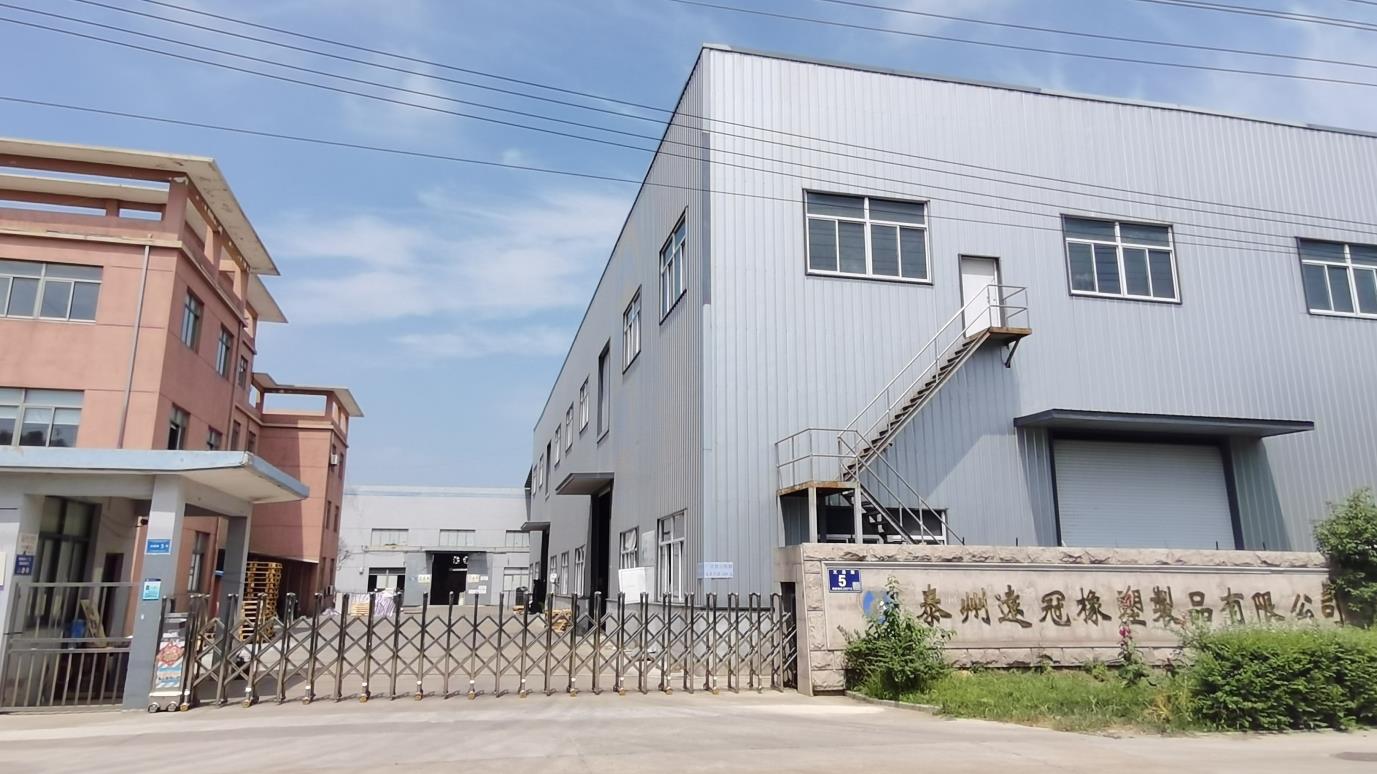
Factory capacity and batch control behind the 30-day lead time and 100% testing regime for PVC flooring orders.
Decision tables: requirement fit, customization and commercial terms
The three tables below convert the specification into the checks a project team actually runs, and they use only facts from the product documentation and the published purchasing terms.
Table 1 - Pop-up requirement against WB-PVC specification
| Pop-up requirement | WB-PVC specification / evidence | What the buyer must verify |
|---|---|---|
| Fast, dry installation | Self-adhesive backing; dry installation without cement or glue; local cutting with a utility knife; floor roller recommended | Base is flat, dry, dust- and grease free; access slot is long enough for the measured area |
| Reinstatement at hand-back | Self-adhesive tile format; some styles can be removed and reinstalled without leaving residue | Removal test on a spare piece; confirm the landlord's reinstatement wording |
| EU market compliance | SGS RoHS Test Report SHAEC1709394501 under RoHS Directive (EU) 2015/863, applicable to the EU market | Report copy in the project file; model and material within tested scope; CE-CPR, REACH and PPWR packaging confirmed per shipment |
| Format and area fit | Standard 40/60/120 × 300 cm at 1.5 mm; size customization available | Format matched to the plan, including wastage and cutting around fixtures |
| Brand consistency | Color, pattern and design, embossing texture and surface customization | Physical strike-off approved and sealed |
| Delivery and handling | Packaging customization, logo and private label, custom labels | Carton labelling artwork approved; delivery term and port fixed in the PI |
| Traffic performance | Wear-resistant, waterproof and easy-to-install performance recorded in the retail refurbishment case | Entrance matting, cleaning regime and spare stock agreed |
Table 2 - Customization variables and typical pop-up decision
| Customization variable | Scope available | Typical pop-up decision point |
|---|---|---|
| Size | Size customization on top of the 40/60/120 × 300 cm standard | Match to the unit plan and cutting pattern |
| Color | Color customization | Brand palette match, approved on a physical sample |
| Pattern and design | Pattern and design customization | Wood-grain or stone-grain direction relative to the shopfront |
| Surface | Embossing texture customization | Matte surface where glare affects display lighting |
| Material structure and thickness | Material structure customization; thickness customization | Trade-off between substrate tolerance and transition height at thresholds |
| Packaging | Packaging customization, logo and private label, custom labels | Multi-site roll-out under one brand carton |
| Development | New product development service; OEM and ODM services | New retail concept needing a non-standard surface |
Table 3 - Published commercial terms and where to fix them
| Term | Published value | Where it must be written |
|---|---|---|
| MOQ | 200 square meters | Proforma invoice, with the measured area plus wastage |
| Delivery terms | FOB | Proforma invoice and forwarder booking |
| Payment terms | TT | Proforma invoice and payment schedule |
| Acceptance criteria | Pre-shipment test | Inspection clause in the purchase order |
| Production lead time | 30 days | Purchase order date and site installation date |
| Monthly capacity | More than 10 million square meters | Production allocation for peak retail season |
FAQ
Does WB-PVC self-adhesive PVC flooring meet EU RoHS requirements?
Model WB-PVC is covered by SGS RoHS Test Report SHAEC1709394501, issued by SGS-CSTC against the RoHS Directive (EU) 2015/863, and the report is applicable to the EU market. RoHS is a hazardous-substance restriction, so it should be treated as one document in the compliance file rather than the whole file. Buyers should request the report copy, confirm that the ordered item, model and material fall inside the tested scope, and separately confirm CE-CPR, REACH and PPWR-compliant packaging before the shipment leaves.
Can the flooring be customized in size, thickness, pattern and packaging for a pop-up project?
Yes. Customization covers size, color, pattern and design, embossing texture, material structure, thickness, packaging, logo and private label, and custom labels, and a new product development service is available. OEM and ODM production services are provided. The standard WB-PVC floor tile is 40/60/120 × 300 cm at 1.5 mm, so a project that needs a different format, a different surface or branded cartons should confirm those variables at quotation stage rather than after production has started.
What are the minimum order quantity and payment terms?
Published purchasing terms list a minimum order quantity of 200 square meters, FOB delivery terms and TT payment terms, with pre-shipment test as the acceptance criterion. These are starting points for a quotation, not a contract: quantity, delivery term, port and payment schedule should be written into the proforma invoice, together with the agreed acceptance criteria, before the order is confirmed.
Can we test samples before placing the order?
Sample support is part of the manufacturer's one-stop service scope, alongside order production, shipment arrangement and after-sales support. A sample is only useful if it is tested on the actual substrate: self-adhesive PVC flooring requires a base that is flat, dry and free of dust and grease, and a floor base with adequate strength and no hollow spots. Check adhesion, cutting behaviour and removal on site before committing to a full roll-out.
How long is the production lead time, and what is the acceptance criterion?
Production lead time is 30 days, supported by a monthly capacity of more than 10 million square meters and 100% testing. Pre-shipment test is the listed acceptance criterion, so the inspection point should be defined in the purchase order, together with the date by which the material must reach the site. For a pop-up with a fixed opening date, the 30-day production window plus freight has to be planned backwards from the installation date. To start an evaluation, send the unit area, substrate type, target installation date and destination market to SXP Wall Panel through wallpanelsticker.com for a specification and quotation review.
Conclusion: the buyer checklist to close before order confirmation
A pop-up floor is a small purchase with a disproportionate failure cost: a missed opening date, a reinstatement claim, or a customs hold on a shipment that was meant to be installed the following week. The checklist below is the minimum that should be closed, in writing, before the order is confirmed.
- Area and wastage. Unit area measured from the plan, with cutting allowance for columns, fixtures and thresholds - checked against the 200 square meter MOQ.
- Product definition. Format from the 40/60/120 × 300 cm range, 1.5 mm thickness, pattern, color and surface approved on a sealed physical sample.
- Compliance pack. SGS RoHS Test Report SHAEC1709394501 filed, with model and material scope confirmed on the document; CE-CPR, REACH and PPWR packaging points confirmed for the destination market.
- Commercial terms. FOB delivery, TT payment, port and schedule written into the proforma invoice.
- Time plan. 30-day production lead time plus freight plotted backwards from the installation date, with a buffer for the access slot.
- Packaging and labels. Carton artwork, private label and custom labels approved in writing.
- Substrate sign-off. Base confirmed flat, dry, dust- and grease free, with adequate strength and no hollow spots, supported by photographs.
- Acceptance criteria. Pre-shipment test defined as the acceptance point, with inspection date, method and pass criteria stated in the purchase order.
- Site support. Installation guidance, spare stock quantity, removal method and the after-sales contact agreed before opening day.
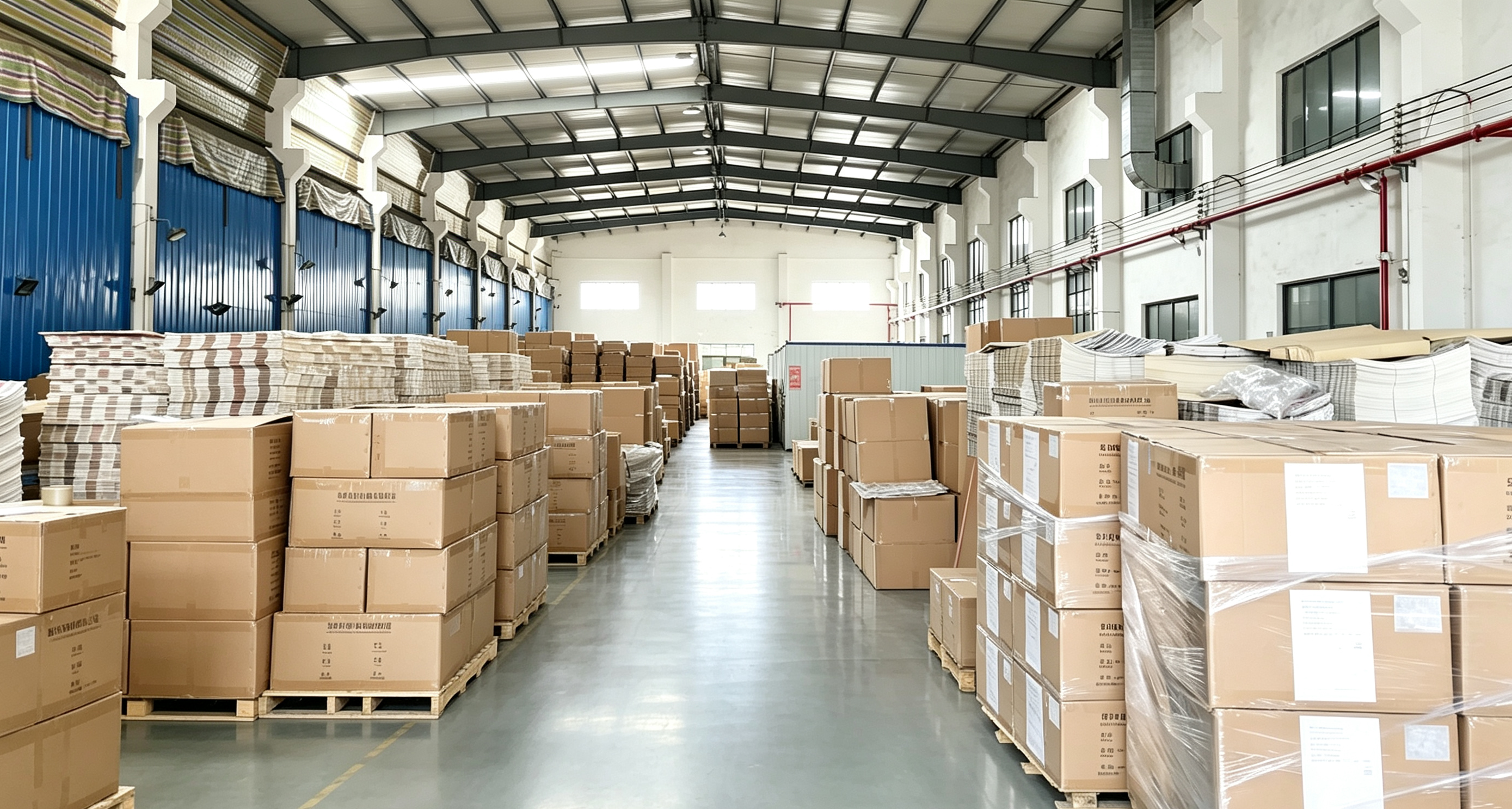
Order preparation and packing: packaging customization, custom labels and pre-shipment test are the last controllable steps before the installation window.
Request a sample or a project quotation
Send the unit area, substrate condition, target installation date, pattern direction and destination market. SXP Wall Panel will respond with the matching WB-PVC format, the SGS RoHS report copy, and a quotation stating MOQ, delivery term, payment term, lead time and acceptance criteria.
Email: ericwang@shyuanguan.com · Tel / WhatsApp: +86 13524706491 · Website: wallpanelsticker.com · Product catalogue: Shanghai Yuanguan Product Brochure
Shanghai Yuanguan Rubber Plastic Co., Ltd. (brand: SXP Wall Panel), Building 5, No.6066, Songze Road, Qingpu District, Shanghai, China.
Have Questions or Need More Details?
Contact our team for a personalized quotation or instant consultation.
Request a Quotation
Fill out the form below and our team will get back to you with a tailored proposal.
WhatsApp Direct Chat
Prefer to chat in real-time? Message us on WhatsApp for instant assistance & quick answers.
- Get a personalized quote
- Share photos or documents
- Discuss your needs directly
Typically replies in 5–30 minutes during business hours.