
Sourcing Insight: PVC Flooring Isn’t Wallpaper — Why Manufacturing Scale Matters
A PVC floor tile is a manufactured building product, not a decorative extra. Wear behaviour, dimensional stability, adhesive performance and compliance documentation are all decided inside a factory long before a sample reaches a buyer’s desk — which is why the production scale behind a supplier matters as much as the pattern printed on the surface.
This article argues one position: commercial PVC flooring should be sourced with the same discipline a buyer applies to any engineered material, and manufacturing scale is the clearest available signal of whether that discipline exists. The working example is SXP Wall Panel, the flooring and wall-panel brand of Shanghai Yuanguan Rubber Plastic Co., Ltd., a decorative materials manufacturer founded in 2005 and based in Qingpu District, Shanghai, China. The company reports annual output of 75,000,000 units, a dedicated R&D team of 5 engineers, SGS RoHS certificates for its floor tile models, and supply relationships with building-materials retailers and wholesalers in more than 80 countries and regions. Those figures are used here as evidence of how capacity, engineering and quality control connect to the risks an importer actually carries.
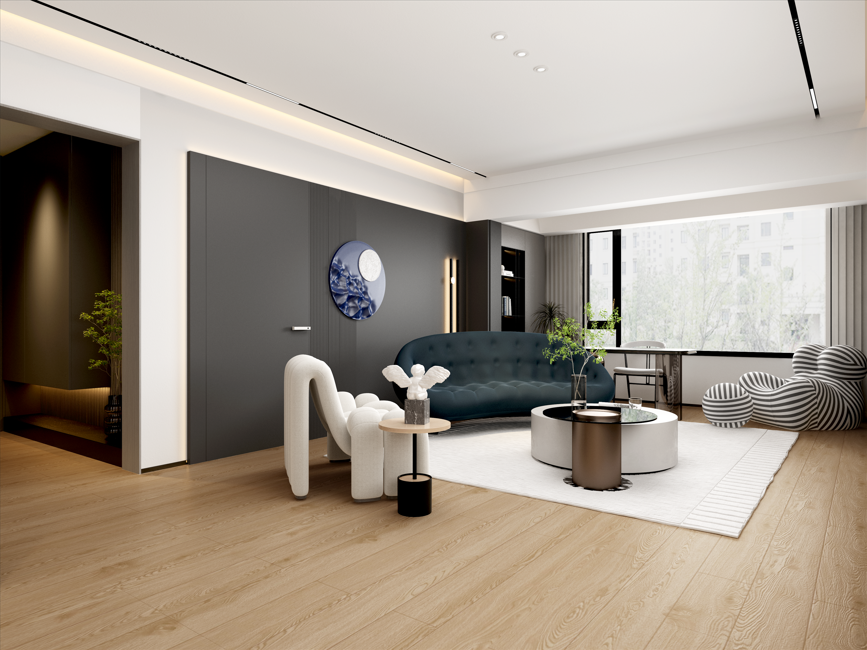
Why the Wallpaper Analogy Breaks Down
Wallpaper logic is simple: choose a pattern, compare a roll price, paste it onto a wall, and accept that failure is cosmetic and cheap to correct. That logic is transferable to decorative wall stickers. It is not transferable to flooring.
The difference is not a difference in wording. It changes what a buyer must specify, what a supplier must prove, and what happens when something goes wrong.
- Load and traffic. A floor is walked on, moved over and cleaned repeatedly. The performance question is not “does it look right on day one” but “does the surface remain stable under high-frequency traffic”, which is the property the company documents for its flooring range.
- Substrate dependency. The application specification requires the base surface to be flat, dry and free of dust and grease, and explicitly excludes powdery, sandy or loose surfaces. A wallpaper purchase rarely carries a substrate condition; a flooring purchase always does.
- Environment. The product operates under indoor use, normal room temperature and typical humid environments, and long-term exposure to strong sunlight is to be avoided. Those conditions are engineering boundaries, not styling notes.
- Compliance. Hazardous-substance restrictions, fire classification and indoor-air-quality criteria apply to floors in ways they rarely apply to wall coverings. A buyer who never asked a wallpaper supplier for a test report will still be asked for one by a flooring project owner.
- Failure cost. A lifting tile in a retail aisle or a hospital corridor creates downtime, removal labour and a claim. That is a different order of magnitude from replacing a strip of wall film.
The practical consequence is that buyers who treat flooring as a decorative purchase tend to make the same five mistakes: they approve a sample on appearance alone, compare quotations per unit without comparing scope, skip the substrate survey, request compliance documents after the purchase order, and assume lead time is fixed regardless of customization.
Definition for procurement use. Commercial PVC flooring is a factory-produced resilient floor covering whose performance is determined by formulation, thickness, surface treatment and process control. Buying it as a “decorative extra” removes the very variables that determine whether it performs.
What the Market Structure Tells a Buyer
The vinyl flooring market is large and still growing. Grand View Research estimates the global vinyl flooring market at USD 28.0 billion in 2026, projected to reach USD 41.5 billion by 2033, a CAGR of 5.8% across 2026–2033.
Supply is concentrated at the export end. According to OEC trade data, China was the leading exporter of floor, wall and ceiling coverings under HS 391810 in 2024, with exports valued at USD 4.97 billion, ahead of Vietnam at USD 1.81 billion and South Korea at USD 820 million.
For an importer, the reading is straightforward: a deep, competitive export base means many suppliers can quote the same product category. The category’s existence is not a differentiator. What separates one quotation from another is process scope — the capacity, engineering and documentation behind the number.
Compliance is the second structural signal, and it is where decorative assumptions fail hardest:
- Fire performance for PVC flooring is commonly classified as Class B1 under Chinese national standard GB 8624-97 and as Cfl-s1 under EN 13501-1.
- In the United States, FloorScore certification verifies that hard surface flooring complies with the volatile organic compound emissions criteria of California Section 01350.
- Plasticizer choice has become a purchasing criterion in its own right: Tarkett reported reaching 100% phthalate-free vinyl production across its sites in Europe and North America by 2018, using alternative plasticizers such as DOTP.
None of these are decoration variables. They are specification variables, and they are answered by factories that hold documentation — not by intermediaries that forward a specification sheet.
Where Manufacturing Scale Actually Shows Up
Scale is often presented as a marketing number. In practice it shows up in four places a buyer can test, and one place where it does not help at all.
1. Capacity sets pricing stability
Annual output of 75,000,000 units is a scheduling fact before it is a marketing claim. High volume allows the fixed cost of pattern runs, embossing changeovers and material purchasing to be absorbed across a larger base, and the company states that factory-direct supply cuts intermediate costs. For a buyer, the useful outcome is not a single low quotation but a quotation that holds when the repeat order arrives.
2. R&D depth sets the customization range
A dedicated R&D team of 5 engineers is what makes customization engineering rather than relabelling. The documented customization scope covers size, colour, pattern and design, embossing texture, material structure, thickness, packaging, logo and private-label branding, custom labels, and new product development. Surface programmes such as wood-grain, stone-grain, carpet-pattern or parquet-pattern styling, and functional directions such as anti-slip or wear-resistant surfaces, sit inside that pattern and surface customization scope — they are development work, not catalogue picking.
This matters because changing one variable changes others. Increasing thickness or altering material structure alters how the adhesive system behaves; changing an embossing texture changes packing density and container loading. A supplier without in-house engineering cannot price those changes accurately.
3. QC cadence sets batch consistency
The company applies strict standardized production and multi-stage quality inspection, with 100% testing, to every batch before delivery. The evidence that this has real-world weight is a delivered programme: an international e-commerce platform distributing flooring products across multiple countries took 100,000 units for residential and commercial interior decoration, including apartment renovation, office fitting and retail store refurbishment. Over a 5–10 year service window, no quality complaints were reported, the product maintained stable colour and texture in long-term use, and the customer completed three repeat orders within two years.
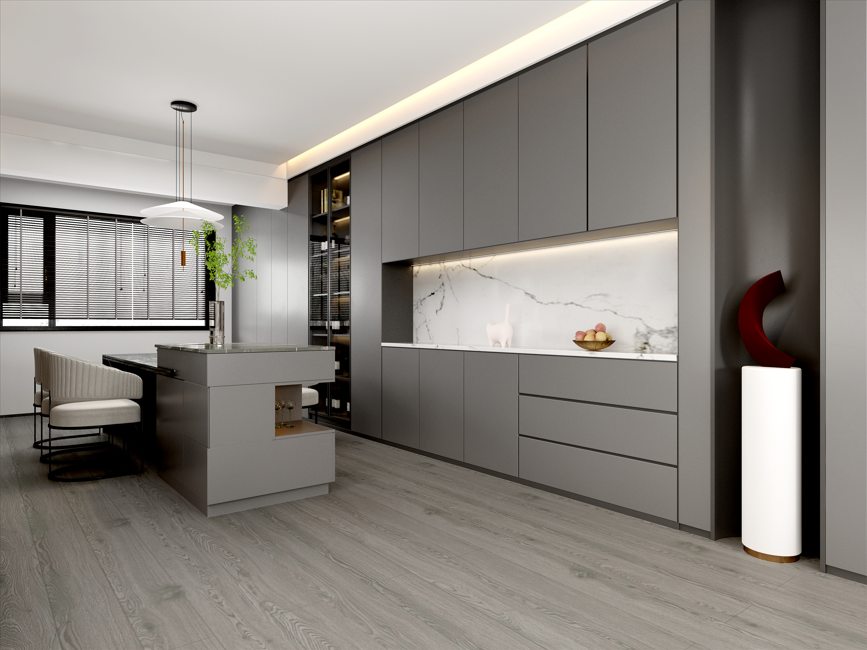
4. Documentation sets clearance speed
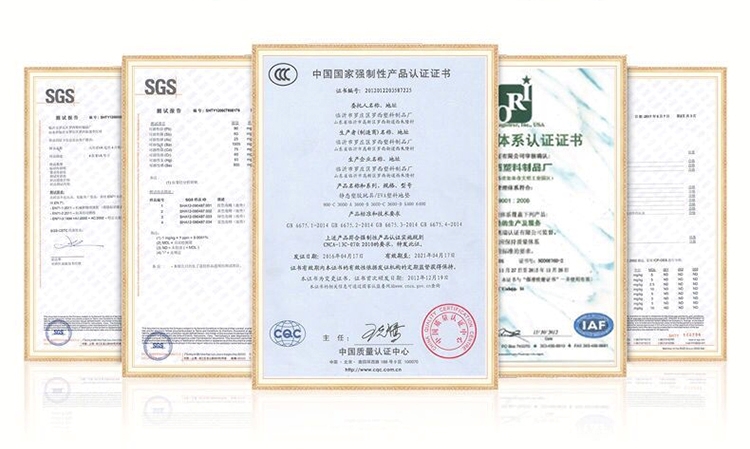
SXP Wall Panel holds SGS RoHS certificates covering its floor tile models, and the manufacturer operates under ISO9001 quality management system certification. With an export ratio of 90% and main markets across the EU, USA, Asia and South America, document generation is routine rather than exceptional. That is a commercial advantage: compliance files that exist before the order are files that do not delay the shipment.
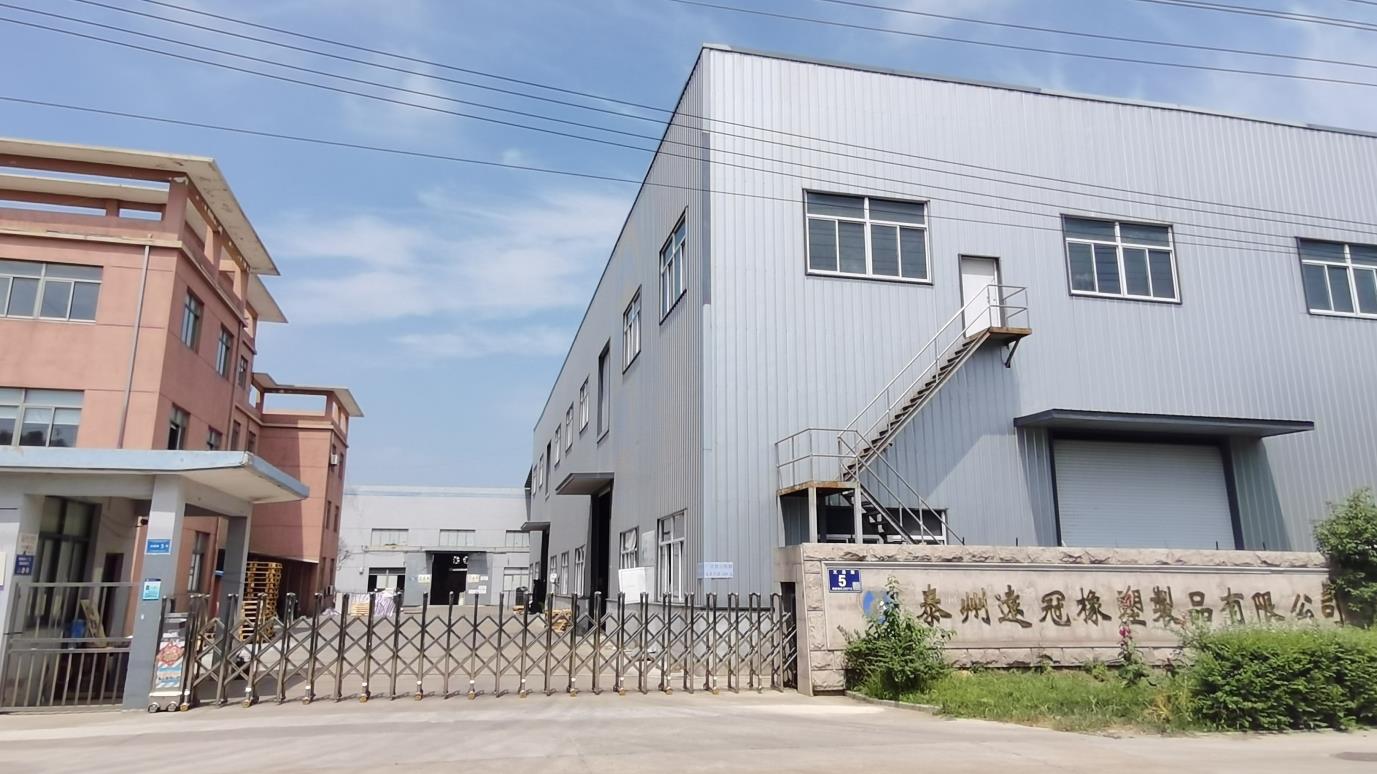
Where scale does not help
Limits worth stating plainly. A minimum order quantity of 1,000 square metres and a 30-day lead time suit programme and project orders; they do not suit single-room top-ups. Scale does not correct a bad substrate: a floor installed on a powdery, sandy or loose surface will fail regardless of who manufactured it. And customization adds an approval cycle that a fixed-catalogue order avoids.
| Operating fact | Value | Why a buyer should care |
|---|---|---|
| Manufacturer | Shanghai Yuanguan Rubber Plastic Co., Ltd. (brand: SXP Wall Panel) | Entity behind the certificate file and the invoice |
| Founded | 2005 | Operating history behind the process |
| Annual output | 75,000,000 units | Volume headroom for repeat and programme orders |
| R&D team | 5 engineers | Customization is engineered, not outsourced |
| Quality control | 100% testing, multi-stage inspection | Batch consistency before delivery |
| Quality system | ISO9001 | Documented process management |
| Floor tile compliance | SGS RoHS certificates for floor tile models | Restricted-substance evidence for the exact model |
| Export ratio / markets | 90% / EU, USA, Asia, South America | Export documentation is routine |
| Countries served | 80+ (retailers and wholesalers) | Experience with varied market requirements |
| MOQ / lead time | 1,000 m² / 30 days | Programme-scale ordering band |
Step-by-Step: Turning a Project Spec into a Factory Order
The sequence below is the working method a buyer can run with any scaled flooring manufacturer. It converts a vague requirement into a controlled order in seven steps.
- Define the application, not the product. State where the floor goes — apartment renovation, office fitting, retail store refurbishment, hotel room makeover, old house renovation — and what traffic and cleaning regime it will face. The company’s documented applications cover exactly these environments.
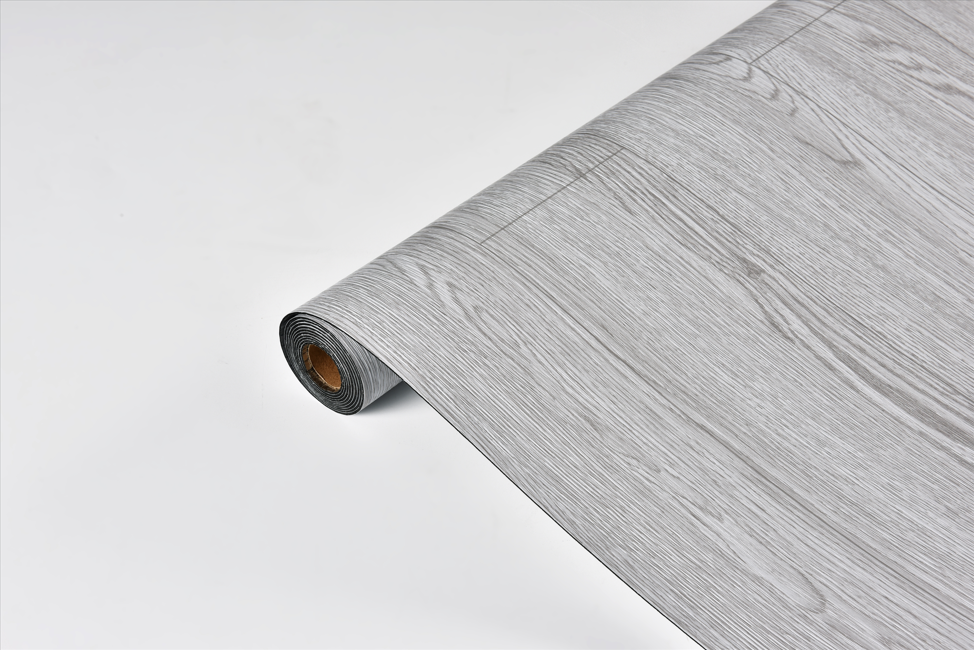
- Match the format and installation method. The WB-PVC floor tile is a 1.5 mm self-adhesive PVC tile supplied in 40/60/120 × 300 cm. Installation is dry: peel off the protective film and press the tile onto a smooth surface. No cement or glue is required, which is what makes phased renovation possible in occupied buildings.
- Survey the substrate before sampling. The base must be flat, dry and free of dust and grease, and must meet the required strength with no hollow spots. This step is where most import disputes originate, because a substrate failure looks like a product failure.
- Confirm the compliance scope. Match the certificate to the exact model and thickness ordered. Request the SGS RoHS certificates for the floor tile models, the ISO9001 certificate, and — where the destination market requires it — fire classification evidence (B1 under GB 8624-97 or Cfl-s1 under EN 13501-1) or indoor-air-quality evidence such as FloorScore against California Section 01350.
- Approve a sample against the substrate. Sample support is part of the company’s one-stop service. Test adhesion on the actual substrate, check colour and texture against the approved design, confirm thickness and packaging, and keep the approved sample as the reference attached to the purchase order.
- Lock the production parameters. Confirm quantity against the 1,000 m² minimum, confirm customization items (size, colour, pattern, embossing, material structure, thickness, packaging, logo and labels), and agree the 30-day production window in writing.
- Close the loop after delivery. The after-sales scope covers installation guidance, fast response to inquiries, quality-issue tracking and solutions, re-order and replacement support, and OEM/ODM project follow-up — the items that determine whether a second order is easy or expensive.
| Parameter | Specification |
|---|---|
| Product type | PVC floor tile |
| Model | WB-PVC |
| Material | PVC |
| Size | 40 / 60 / 120 × 300 cm |
| Thickness | 1.5 mm |
| Installation | Self-adhesive backing; peel off protective film and apply to a smooth surface |
| Tools required | Utility knife, scraper/roller, tape measure, spirit level, adhesive remover |
| Operating environment | Indoor use, normal room temperature, typical humid environments |
| Substrate requirement | Flat, dry, free of dust and grease; no hollow spots |
| Not suitable for | Powdery, sandy or loose surfaces; long-term exposure to strong sunlight |
Use Cases: Where Scale-Grade Flooring Is Specified
Hospital and healthcare renovation
Healthcare refurbishment is the scenario behind the most common sourcing question in this category: which PVC flooring manufacturer can support a hospital renovation project. The relevant capability questions are format, installation method, maintenance profile and documentation — not colour range.
A 1.5 mm self-adhesive tile installed dry shortens the window in which a corridor or ward is out of service, because there is no cement curing stage. The product documentation states that it requires 85% less maintenance than alternatives, with no hollowing, edge warping or degumming, and a scratch-resistant surface — properties that matter where equipment is moved daily. Buyers should still verify healthcare-specific requirements in their own market against the actual certificate file, and should confirm that phthalate-free options align with their specification, since major manufacturers have already moved to phthalate-free vinyl production in Europe and North America.
Retail and chain-store refurbishment
Retail floors face the combination that exposes weak product: high-frequency traffic, rolling loads, frequent cleaning, and a brand standard on colour. This is the environment in which the 100,000-unit programme for an international e-commerce platform was delivered — apartment renovation, office fitting and retail store refurbishment — with stable colour and texture maintained in long-term use and three repeat orders within two years.
Rental apartments, old house renovation and hotel makeovers
These projects prioritise speed and reversibility. The self-adhesive format allows local cutting and, for some styles, removal and reinstallation without leaving residue. For a rental turnaround or a hotel room makeover, that is the difference between a one-day refresh and a closed room.
Office fit-outs and phased occupancy
Office fitting is usually staged around occupied desks. Dry installation, no adhesive odour from cement, and dust-controlled cutting make staged handover practical — provided the substrate survey in step 3 is done properly, which is the condition that scale cannot supply.
What You Are Actually Buying: A Decision Table
| Criterion | Question to ask | Evidence that answers it |
|---|---|---|
| Batch consistency | Will batch 5 match the sample of batch 1? | 100% testing and multi-stage inspection; approved retained sample tied to the PO |
| Restricted substances | Does the exact model comply? | SGS RoHS certificates for floor tile models; ISO9001 quality management system |
| Fire classification | Which class does the project require? | Classification references: B1 (GB 8624-97), Cfl-s1 (EN 13501-1) |
| Indoor air quality | Is a VOC criterion specified? | FloorScore verification against California Section 01350, where required |
| Customization feasibility | Can size, thickness, pattern, embossing and packaging change? | Documented customization scope supported by a 5-engineer R&D team |
| Capacity assurance | Can volume be delivered on schedule? | 75,000,000 units annual output; 30-day lead time; 1,000 m² MOQ |
| Export experience | Has this market been served before? | 90% export ratio; EU, USA, Asia, South America; retailers and wholesalers in 80+ countries |
Why Direct Factory Engagement Reduces Import Risk
Import risk in flooring is rarely a single catastrophic event. It accumulates: a specification approved on appearance, a substrate assumption never tested, a certificate that arrives late, a colour that drifts between shipments, a replacement claim handled by three parties who each point at another.
Direct engagement with the manufacturing entity collapses those risks into one accountable line. The same organisation that runs 75,000,000 units of annual output and 100% testing also issues the SGS RoHS certificates for its floor tile models, holds the ISO9001 system, handles OEM/ODM customization through its own engineers, and provides the after-sales follow-up on quality issues and re-orders. The company states that factory-direct supply cuts intermediate costs — and the operational corollary is that it also removes an intermediate layer between the buyer and the process that produced the floor.
That is the practical meaning of scale in this category. It is not a badge. It is the reason a quotation can hold, a batch can repeat, a certificate can be produced on request, and a second order can be placed without renegotiating the fundamentals.
FAQ
Which compliance documents should I verify on PVC floor tile models before ordering?
For its floor tile models, SXP Wall Panel holds SGS RoHS certificates, and the manufacturer operates under ISO9001 quality management system certification. RoHS addresses restricted hazardous substances. Where the destination market requires fire performance, the commonly referenced classifications for PVC flooring are Class B1 under GB 8624-97 and Cfl-s1 under EN 13501-1; where indoor air quality is specified, FloorScore verifies compliance with the volatile organic compound emissions criteria of California Section 01350. Buyers should confirm that each document matches the exact model and thickness on the purchase order, not only the product family.
Can this manufacturer support a hospital renovation project?
A hospital renovation is an indoor project with phased occupancy, so the capability questions are format, installation method, maintenance profile and documentation. The WB-PVC floor tile is a 1.5 mm self-adhesive PVC tile in 40/60/120 × 300 cm, installed dry by peeling the protective film and pressing it onto a smooth, flat, dry substrate free of dust and grease. The product documentation states 85% less maintenance than alternatives, with no hollowing, edge warping or degumming, and a scratch-resistant surface. Customization of size, thickness, pattern, embossing, material structure and packaging is supported by a 5-engineer R&D team, and every batch is 100% tested. Healthcare-specific requirements in the destination market should still be checked against the certificate file before the order is placed.
Why does a factory quotation differ from an intermediary quotation on the same specification?
Three factors drive the gap. First, factory-direct supply cuts intermediate costs, as the company states. Second, annual output of 75,000,000 units allows pattern, embossing and material set-up costs to be absorbed across volume rather than loaded onto a single order. Third, the ordering band is defined: a 1,000 m² minimum order quantity and a 30-day lead time. Below the minimum, unit economics shift because fixed costs are spread over less output. Compliance testing and packaging customization are separate cost items and should be specified explicitly rather than assumed.
How should I validate a sample before committing to a programme order?
Sample support is part of the manufacturer’s one-stop service, covering pre-sale consultation and product solutions. Test the sample on the substrate you will actually install over — flat, dry, free of dust and grease — rather than on a desk. Check thickness and dimensions against the specification, compare colour and texture with the approved design, confirm the packaging format and label requirements, and retain the approved sample as the contractual reference. Installation guidance and product usage support are available to support that validation stage.
What are the minimum order quantity and production lead time?
The minimum order quantity is 1,000 square metres and the production lead time is 30 days. Customization — size, colour, pattern, embossing, material structure, thickness, packaging, logo and private label — adds an approval step before production and should be scheduled into the timeline. For buyers planning a repeat programme, the relevant follow-up support includes re-order and replacement processing and OEM/ODM project follow-up. To discuss a specification, request samples or a quotation, contact the team at ericwang@shyuanguan.com or +86 13524706491.
Next Step: Review the Specification, Then the Evidence
Send the application, substrate condition and target market, and the team will respond with the matching floor tile model, the applicable certificate file and a programme-level quotation.
Download the product catalogue: Shanghai Yuanguan Product Brochure | Website: wallpanelsticker.com
Conclusion
PVC flooring is not wallpaper with a thicker backing. It is a factory-grade construction product whose performance is fixed by formulation, thickness, surface treatment and process control, and whose acceptance is decided by compliance documents as much as by appearance. Manufacturing scale matters because it is the only visible proxy for all four: 75,000,000 units of annual output supports pricing that survives a repeat order, a 5-engineer R&D team makes customization an engineering task rather than a relabelling exercise, 100% testing and multi-stage inspection protect batch consistency, and SGS RoHS certificates for floor tile models plus ISO9001 certification keep documentation ahead of the shipment rather than behind it.
SXP Wall Panel supplies building-materials retailers and wholesalers in more than 80 countries from a 90% export base across the EU, USA, Asia and South America. For an importer, engaging that manufacturing entity directly is the shortest route to fewer assumptions between the specification and the delivered container.
Have Questions or Need More Details?
Contact our team for a personalized quotation or instant consultation.
Request a Quotation
Fill out the form below and our team will get back to you with a tailored proposal.
WhatsApp Direct Chat
Prefer to chat in real-time? Message us on WhatsApp for instant assistance & quick answers.
- Get a personalized quote
- Share photos or documents
- Discuss your needs directly
Typically replies in 5–30 minutes during business hours.