
Wall Panel Application Guide: Room-by-Room 2–2.8 mm Selection
Thickness is the first specification that should be decided when a wall panel is chosen by project zone — not the last. In the SXP Wall Panel range, the 2 mm and 2.5 mm self-adhesive lines (PVC and PET marble, model WB-PET among them) and the 2.8 mm WB-KC 3D foam slat panel cover different wall areas, handling conditions and project types, and each is supplied in a defined size set from 30×30 cm up to 120×300 cm. Matching the right thickness to the zone prevents the two most common failures: a panel that is too thin for the substrate and traffic it faces, or a panel heavier than the wall, budget or freight plan requires.
SXP Wall Panel is the wall-panel line of Shanghai Yuanguan Rubber & Plastic Co., Ltd., a Shanghai-based manufacturer of self-adhesive decorative materials — wall stickers, wall panels, wallpaper, flooring and carpet tiles — that supplies retailers, wholesalers and project buyers in more than 80 countries. This guide works only from the released product, application and certification data for that range, so it can be used as a specification reference rather than a style catalogue.
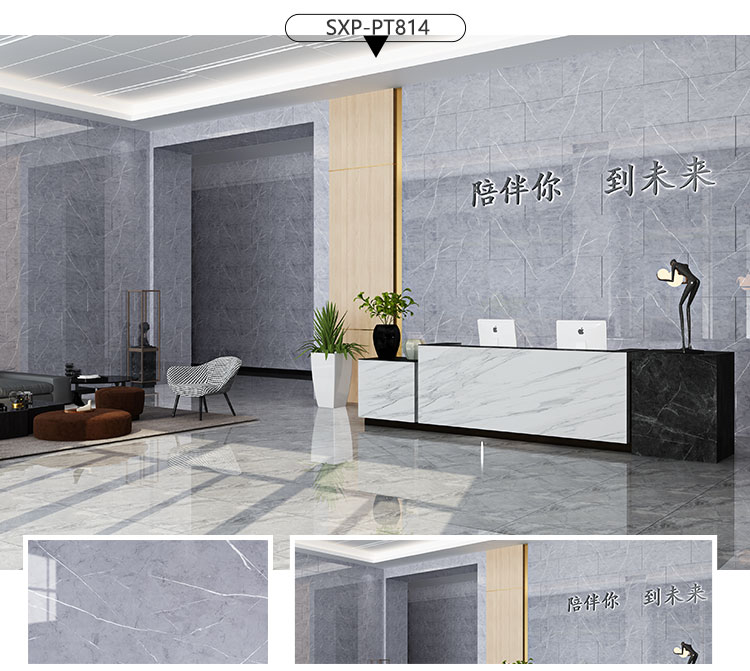
Problem Definition: Why Thickness Decides Zone Fit
Buyers researching a wall panel usually start with pattern, colour or price per box, then discover during evaluation that thickness controls four practical outcomes at once: how forgiving the panel is on a real wall, how it behaves at joints and edges, how much weight moves through the warehouse and the container, and whether the finished surface still looks acceptable after a year in a humid or high-traffic zone.
Three constraints drive the decision:
- Substrate quality. The released application data for this range requires a flat, dry base free of dust and grease, and lists cement, tiled surfaces, latex-painted walls, plasterboard and plywood as suitable. Powdery, sandy or loose surfaces are excluded. A 2 mm self-adhesive panel follows the substrate closely, so any unevenness reads through; thicker builds tolerate slightly more surface irregularity.
- Zone conditions. The same data set covers indoor use at normal room temperature, including typically humid areas such as bathrooms and dry kitchen zones, and advises against long-term exposure to strong sunlight. Thickness alone does not create moisture resistance — it must be read together with material and adhesive behaviour.
- Handling and logistics. A box weight budget, a shelf-life plan and a two-person installation all depend on the thickness and format selected. For the WPC panel line, the released spec records 690, 810 and 830 g/m and 16 pieces per box, which is the kind of figure a buyer needs before quoting freight.
The problem, in short, is that thickness is frequently treated as a quality ranking when it is actually a fit decision. A 2 mm panel is not a downgraded 2.8 mm panel; it is a different answer to a different zone.
Industry Background: What Buyers Are Specifying
The wall panel category is large enough that specification language now travels with the product. Industry research published by Dataintelo values the global wall panels market at USD 32.4 billion in 2025 and projects USD 43.7 billion by 2033. The same research reports metal wall panels holding a 28.5% share in 2025, with Asia Pacific the largest regional market at 42.3%. Wood-based systems remain a major reference point: WiseGuyReports puts wood-based wall panels at nearly 31% of global installations in 2024 and projects wood wall panel systems growing at a 6.2% CAGR to 2035.
Those figures describe a market where self-adhesive and thin decorative panels compete less on material category and more on installation speed, substrate compatibility and documented specification. Two further details matter for buyers assembling a spec sheet:
- Fire classification language. EN 13501-1 is the European classification for reaction-to-fire performance, and B-s1,d0 is commonly specified for commercial interior wall panel applications. A buyer entering a commercial project should therefore confirm which classification report exists for the exact product and thickness, not for the category in general.
- Customs classification. U.S. Customs and Border Protection classification N337378 assigns wood plastic composite (WPC) wall panels from China to HS code 3925.90.0000. Importers using WPC panels should confirm the code on the commercial invoice before shipment so the declaration matches the product.
What this means for a thickness decision: in residential renovation, the specification conversation is usually about substrate readiness and installation time; in commercial fit-out, it shifts to fire documentation, joint consistency across large wall areas and repeatable supply. The same 2.5 mm panel can serve both, but the evidence requested is different.
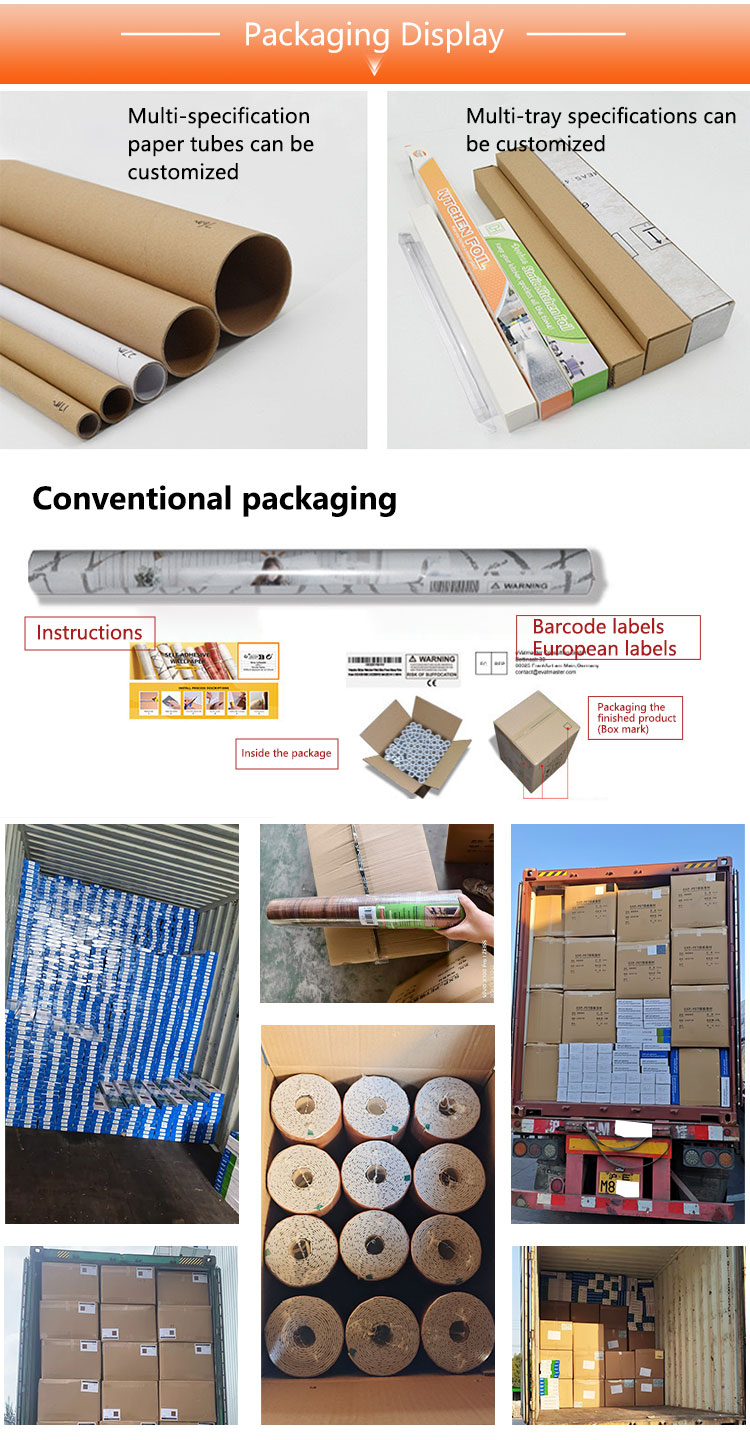
Detailed Solution: The Three Thickness Families
The SXP Wall Panel range answers the thickness question with three builds and one adjoining panel system. Each has a defined size set, so a zone decision is always a thickness-and-format decision together.
2 mm: PVC wall sticker and PET marble at entry thickness
The 2 mm build appears in two released lines. The PVC wall sticker (model WB-PVC) is supplied in 30×30 cm, 30×60 cm, 40×80 cm, 60×60 cm, 60×120 cm and 120×300 cm. The PET marble wall sticker (model WB-PET) is supplied at 2 mm and 2.5 mm in 30×30 cm, 30×60 cm, 60×60 cm, 40×80 cm, 60×120 cm, 60×300 cm and 120×300 cm. At 2 mm the panel is light in the hand and cuts easily on site with a utility knife, which suits renovation work where walls stay in service and only the surface changes. The trade-off is a surface that follows the wall closely, so substrate preparation must be taken seriously.
2.5 mm: PVC wall panel, soft stone and PET marble
The 2.5 mm build is the widest part of the range. The PVC wall panel (model WB-PVC) is offered at 2.5 mm in 30×30 cm, 50×50 cm and 96×48 cm. The PVC soft stone wall sticker (model WB-PVC) is offered at 2.5 mm in 30×60 cm, 60×60 cm, 40×80 cm, 60×100 cm, 40×300 cm, 60×300 cm and 120×300 cm, and the PET marble line is also available at 2.5 mm. This is the thickness to consider where a project needs more hand weight and a firmer finished feel but still wants peel-and-stick installation. SXP's own comparison of XPE foam stickers against PVC soft-stone stickers records the soft-stone type as delivering superior surface texture and scratch resistance, at the cost of heavier weight and a higher unit cost — a trade-off worth restating to a client before the finish is approved.
2.8 mm: WB-KC 3D foam slat wall panel
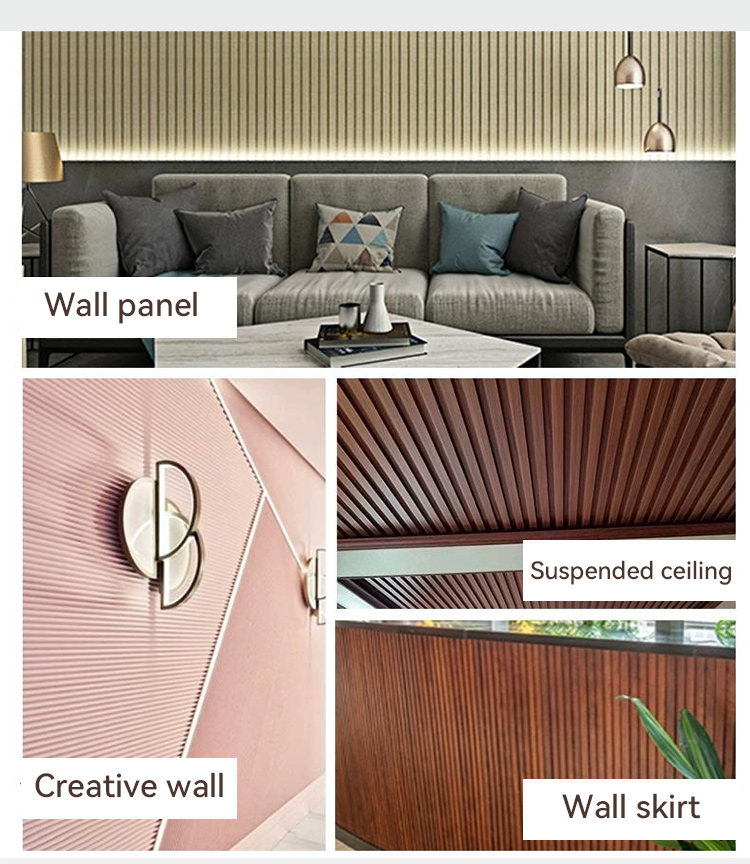
The WB-KC is a 3D self-adhesive foam slat wall panel in PVC at 2.8 mm, supplied in 30×30 cm, 60×60 cm, 30×60 cm, 40×300 cm, 60×300 cm and 120×300 cm, with length available as a customization. The slat geometry is the reason for the extra thickness: a three-dimensional profile needs enough body to hold its relief and shadow line across a wall. WB-KC is the natural choice when the wall itself is the design feature rather than a background for furniture or signage.
Where the WPC panel fits
The WPC wall panel (model WB-WPC) sits outside the 2–2.8 mm self-adhesive logic: it is supplied at 160×23×2900 mm, packed 16 pieces per box, with a recorded weight range of 690, 810 and 830 g/m. The released spec sheet does not state a thickness figure for this line, so it should be specified by section size and weight rather than by the millimetre bands above. It is included here because buyers comparing formats on the same wall often end up mixing a slat or sticker zone with a larger WPC panel zone, and the weight-per-metre figure is what drives the freight and handling plan.
Zone-by-Zone Mapping: Which Thickness for Which Wall
The table below converts the released specifications into project-zone guidance. Recommendations are selection logic built from the recorded specs, materials and use conditions — they are not performance ratings.
| Project zone | Typical conditions | Starting thickness | Why |
|---|---|---|---|
| Rental apartment / fast refresh | Flat interior walls, short cycle, budget-sensitive | 2 mm (WB-PVC sticker or WB-PET) | Lightest handling, on-site cutting, dry peel-and-stick installation without cement or glue |
| Bedroom and living feature wall (residential) | Low traffic, visible surface, pattern continuity | 2.5 mm (PVC soft stone or WB-PET) | More body and firmer feel; recorded scratch resistance and texture advantage of the soft-stone type |
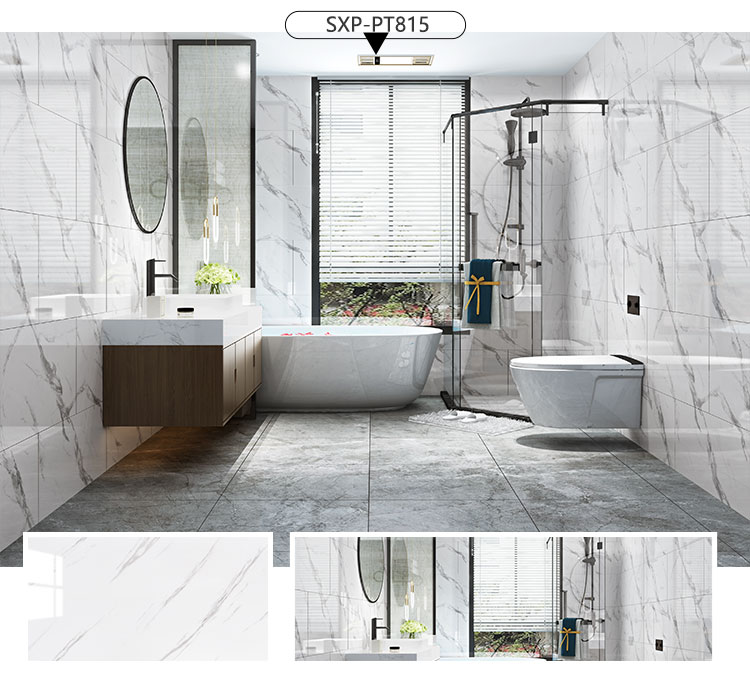
| Bathroom and dry kitchen zone | Typically humid, indoor, avoid long-term strong sunlight | 2.5 mm (WB-PET marble or PVC soft stone) | Humid indoor areas are listed working conditions for the range; the recorded commercial case cites moisture-proof performance |
| Hotel guest rooms and chain-store interiors | Commercial traffic, repeat specification | 2.5 mm (PVC soft stone) | Recorded guidance positions the soft-stone sticker for hotel guest rooms and chain-store projects over foam alternatives |
| Retail accent and 3D slat feature wall | Visual focus, relief effect | 2.8 mm (WB-KC) | Slat profile needs thickness to hold relief; lengths customizable |
| Large-format panel wall | Joint planning, freight planning | WB-WPC | 160×23×2900 mm section, 16 pcs/box, 690–830 g/m recorded weight |
| Exhibition booth / temporary fit-out | Short life, fast removal | 2 mm | Self-adhesive dry installation; some styles can be removed and reinstalled |
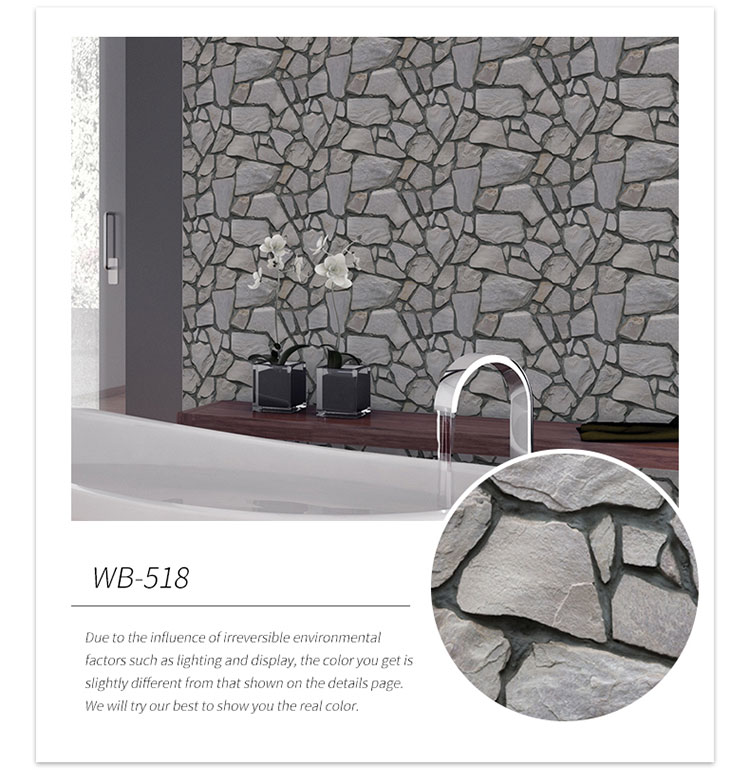
Step-by-Step Breakdown: Specifying a Panel by Zone
A repeatable six-step sequence keeps the thickness decision traceable when several people — designer, buyer, installer — are involved.
- Name the zone and its conditions. Record indoor use, room temperature, humidity exposure (bathroom, dry kitchen) and sunlight exposure. If the wall takes long-term direct sun, the specification should change before the thickness does.
- Verify the substrate. Confirm the base is flat, dry and free of dust and grease. Acceptable bases in the released data are cement, tiled surfaces, latex-painted walls, plasterboard and plywood. Reject powdery, sandy or loose surfaces outright — no thickness fixes a failing base.
- Choose the thickness band. 2 mm for flat, low-traffic, cost-sensitive walls; 2.5 mm for feature walls, humid zones and commercial rooms; 2.8 mm when a 3D slat relief is the design intent; WB-WPC when a larger panel format is specified.
- Choose the format. Sizes run from 30×30 cm to 120×300 cm, and 60×300 cm and 40×300 cm formats appear in the PET and WB-KC lines. Larger formats mean fewer joints across a wall, which generally calls for two-person handling; smaller formats are easier to cut around sockets and corners with a utility knife.
- Lock the packing and weight plan. Confirm pieces per box and weight per metre with the supplier before the freight quote. For WB-WPC the released figures are 16 pieces per box and 690, 810 or 830 g/m; for the self-adhesive lines, ask for the equivalent data for the exact size ordered.
- Set the installation sequence. Mark with a tape measure and spirit level, cut on site, peel the backing film and press the panel to the smooth surface, then set it with a scraper or roller. No cement or large equipment is required; an adhesive remover assists later removal.
Installer and buyer checklist — storage before installation. The released storage guidance for wall-sticker products specifies a cool, ventilated warehouse, temperature at or below 40 °C, goods on pallets rather than on bare floor, a stacking height limit, no heavy hard panels stacked on foam goods, protection from heat and water sources, and FIFO rotation so older batches ship first. Curling, deformation or mildew caused by sun exposure, over-stacking or ground moisture is classified as improper-storage damage rather than an inherent product defect — which is exactly the point a buyer should settle in the purchase contract.
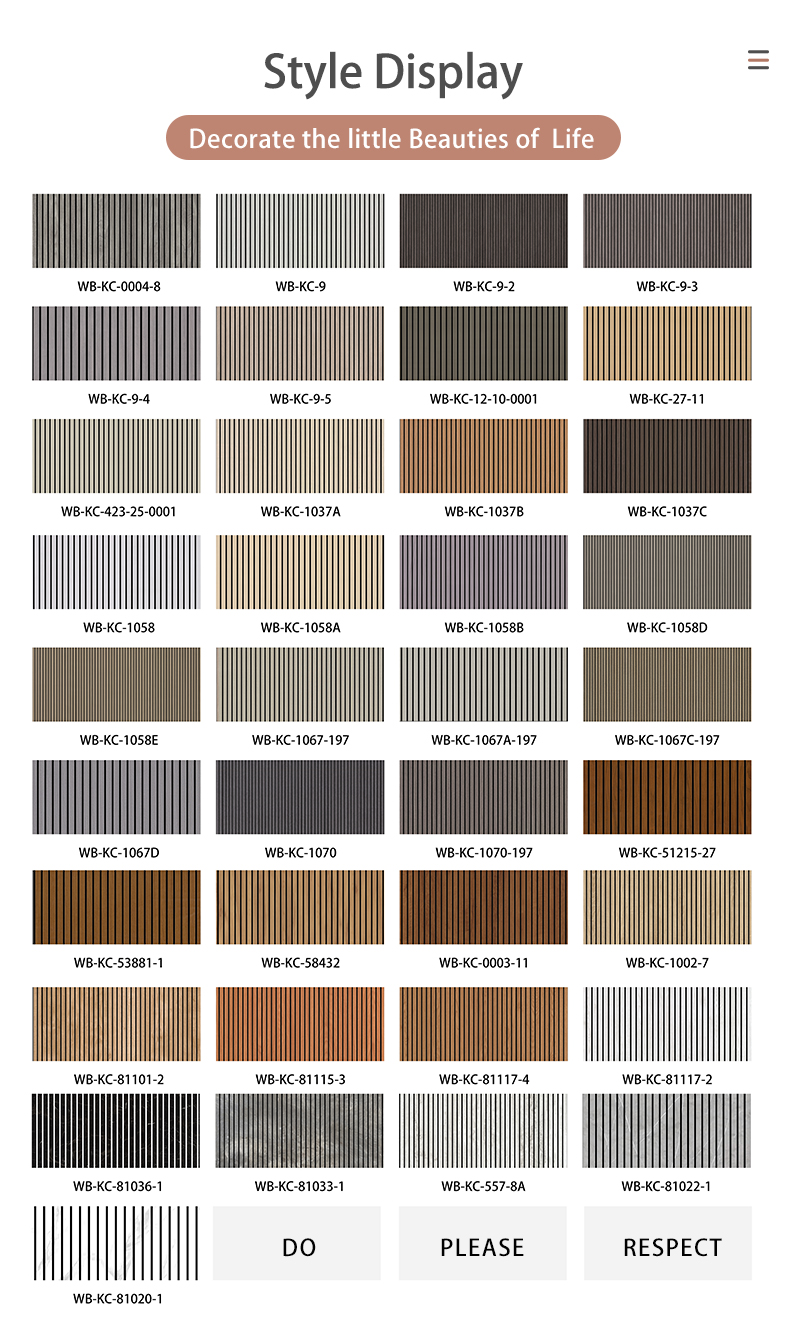
Use Cases: How the Zones Play Out in Real Projects
Supermarket and home-centre programmes
SXP's recorded case for a home-centre client covers 370,000 units applied in supermarket environments across a supply relationship lasting 5–10 years. The recorded outcome cites good decorative effect and easy daily maintenance, with moisture-proof performance, quick installation and a variety of surface textures identified as the fit for commercial space; the client generated repeat orders. For a buyer, the lesson is structural rather than promotional: in a high-turnover commercial zone, the specification has to survive cleaning routines and humidity, and the surface range has to stay consistent across repeat orders — which is why a 2.5 mm soft-stone or marble build is usually the working thickness in that environment rather than the thinnest option available.
Hotel rooms and chain-store refurbishment
The same recorded guidance positions the PVC soft-stone self-adhesive sticker for hotel guest rooms and chain-store interior projects, and the XPE foam sticker for residential apartments and rental-house renovation, where light weight and competitive logistics cost matter most. That split is a useful template for mixed portfolios: one stock line per zone class, rather than one thickness attempting to serve every wall.
Residential renovation and rental turnover
In apartments where walls are sound but dated, a 2 mm PVC or PET sticker allows the surface to be renewed without demolition, using the cut-and-stick method and no wet trades. Because some styles can be removed and reinstalled, and the backing film allows dry installation, the sequence can be reversed later if a tenant or owner changes the scheme — a practical argument when the panel is specified as a reversible layer over an existing finish.
Commercial fit-out and 3D feature walls
Where the wall is the visual anchor — reception desks, retail accent walls, hospitality corridors — the 2.8 mm WB-KC slat profile provides the relief, and the customizable length allows a wall to be run with fewer horizontal breaks. Buyers entering a commercial project in Europe should still request the reaction-to-fire documentation that the project specifies, since EN 13501-1 classifications are product-specific and thickness-specific.
Comparison Table: Released Specifications Side by Side
| Model | Material | Thickness | Released sizes | Zone fit | Recorded weight / packing |
|---|---|---|---|---|---|
| WB-PVC (PVC wall sticker) | PVC | 2 mm | 30×30, 30×60, 40×80, 60×60, 60×120, 120×300 cm | Flat residential walls, rental refresh, temporary fit-out | Not stated in released data for this line |
| WB-PVC (PVC wall panel) | PVC | 2.5 mm | 30×30, 50×50, 96×48 cm | Residential feature walls, retail back walls | Not stated in released data for this line |
| WB-PVC (soft stone wall sticker) | PVC | 2.5 mm | 30×60, 60×60, 40×80, 60×100, 40×300, 60×300, 120×300 cm | Hotel guest rooms, chain stores, bathroom and dry kitchen zones | Not stated in released data for this line |
| WB-PET (PET marble wall sticker) | PET | 2 mm / 2.5 mm | 30×30, 30×60, 60×60, 40×80, 60×120, 60×300, 120×300 cm | Marble-look feature walls, reception, bathroom walls, large-format runs | Not stated in released data for this line |
| WB-KC (3D foam slat wall panel) | PVC | 2.8 mm | 30×30, 60×60, 30×60, 40×300, 60×300, 120×300 cm; length customizable | 3D slat feature walls, commercial accent walls | Not stated in released data for this line |
| WB-WPC (WPC wall panel) | WPC | Size-specified; 160×23×2900 mm | 160×23×2900 mm | Large-format panel walls in commercial and residential interiors | 690 / 810 / 830 g/m; 16 pcs per box |
Only the specifications recorded in the released product data are listed. Where a figure is not published for a line, it is shown as not stated rather than estimated; buyers should request the data sheet for the exact size ordered.
FAQ
1. Are the 2 mm, 2.5 mm and 2.8 mm wall panels CE certified or RoHS tested?
Ask for the report that matches the product you are buying, because certificate scope and product scope are not interchangeable. The certification record held for this range is an SGS RoHS Test Report, certificate number SHAEC1709394501, issued by SGS-CSTC against RoHS Directive (EU) 2015/863 — and its stated scope is 3D wall brick in PE material, not the PVC, PET or WPC panel lines. For a European commercial project, reaction-to-fire performance is governed by EN 13501-1, where B-s1,d0 is commonly specified for commercial interior wall panels, and that classification must be documented for the specific product and thickness. The practical answer for a procurement file is therefore: request the RoHS report and the EN 13501-1 classification report for the exact model and thickness on the purchase order, and record the report number on the specification sheet.
2. Can WB-KC length and other parameters be customized?
Yes. WB-KC length is listed as customizable, and the manufacturer operates OEM/ODM production with customization of size, colour, pattern and design, embossing texture, material structure, thickness, packaging, logo and private label, and custom labels, plus new product development. Recorded production capability includes a monthly capacity above 10 million square metres and 100% testing, with export supply to Europe, North America, the Middle East, Asia, Oceania and Japan. For buyers, the customization list matters most for two items: thickness and packaging, because both change the freight calculation before they change the visual result.
3. What MOQ and commercial terms apply, and what drives the budget?
The recorded minimum order quantity is 1,000 square metres. Budget in this category is driven less by the pattern than by three variables: thickness and material — the PVC soft-stone type carries heavier weight and a higher unit cost than a foam sticker — format, because larger sizes reduce joint count but increase handling cost, and packing weight, where the WPC line is recorded at 690, 810 and 830 g/m at 16 pieces per box. Confirm grams per metre and pieces per box for the exact size before approving a freight quote; those two figures usually decide whether a landed cost stays inside budget.
4. How should a sample be validated before a bulk order?
Test the sample on a substrate that matches the project, not on a smooth sample board. Confirm the base is flat, dry and free of dust and grease, and that it is one of the listed suitable surfaces — cement, tile, latex paint, plasterboard or plywood; a powdery, sandy or loose wall is not a valid test base. Then apply the panel by peeling the backing film and pressing it down, set it with a scraper or roller, and review joint appearance, edge behaviour and surface texture in the actual room lighting. For humid zones, keep the sample in place through a normal use cycle and confirm storage conditions in your own warehouse against the storage guidance — cool, ventilated, at or below 40 °C, on pallets, FIFO. Requesting physical samples for adhesion and ageing checks before bulk purchasing is the recorded recommendation for choosing between sticker types.
5. What is the lead time, and how do I start an order or request a sample?
The recorded lead time is 30 days, with monthly capacity above 10 million square metres and 100% testing before shipment. Projects that mix zones should send the full schedule at once — 2 mm for flat residential walls, 2.5 mm for feature and humid areas, 2.8 mm WB-KC for slat walls, WB-WPC for larger panel runs — so sizes and packing can be planned in one production block. The product brochure can be downloaded here: Shanghai Yuanguan Product Brochure. Sample and quotation requests can be sent to Eric at ericwang@shyuanguan.com or +86 13524706491 (WhatsApp available), or through wallpanelsticker.com.
Conclusion: Decide the Zone, Then the Millimetre
A wall panel specification is only as reliable as the order in which it is made. Zone conditions come first, substrate verification second, and thickness third — because 2 mm, 2.5 mm and 2.8 mm each solve a different problem rather than representing three grades of the same product. The 2 mm PVC and PET lines carry flat, low-traffic and reversible wall work; the 2.5 mm builds carry feature walls, humid zones and commercial rooms where recorded scratch resistance, texture and moisture behaviour matter; the 2.8 mm WB-KC carries three-dimensional slat design; and the WB-WPC panel covers larger panel runs where section size, 16-piece packing and 690–830 g/m weight shape the logistics plan.
Two disciplines keep the decision durable. First, treat documentation as part of the specification: the RoHS report number and the EN 13501-1 classification must match the model and thickness actually ordered, since the record held here covers 3D wall brick in PE material specifically. Second, hold the supplier to the same figures you quoted internally — sizes from 30×30 cm to 120×300 cm, pieces per box, grams per metre, MOQ of 1,000 square metres and a 30-day lead time. SXP Wall Panel, the wall-panel line of Shanghai Yuanguan Rubber & Plastic Co., Ltd., publishes these values so that a zone-by-zone schedule can be checked before the container is booked, not after the wall is finished.
Next step: match samples to your zones. Send the room list and wall areas for your project, and request a sample set covering the 2 mm, 2.5 mm and 2.8 mm builds so the thickness decision can be reviewed on the actual substrate. Product catalogue, specification sheets and quotation are available on request.
Email: ericwang@shyuanguan.com · WhatsApp/Tel: +86 13524706491 · Website: www.wallpanelsticker.com · Brochure: Download the SXP Wall Panel brochure
Have Questions or Need More Details?
Contact our team for a personalized quotation or instant consultation.
Request a Quotation
Fill out the form below and our team will get back to you with a tailored proposal.
WhatsApp Direct Chat
Prefer to chat in real-time? Message us on WhatsApp for instant assistance & quick answers.
- Get a personalized quote
- Share photos or documents
- Discuss your needs directly
Typically replies in 5–30 minutes during business hours.