
Wall Sticker Panel vs Wall Panel: A Basic Vocabulary Guide
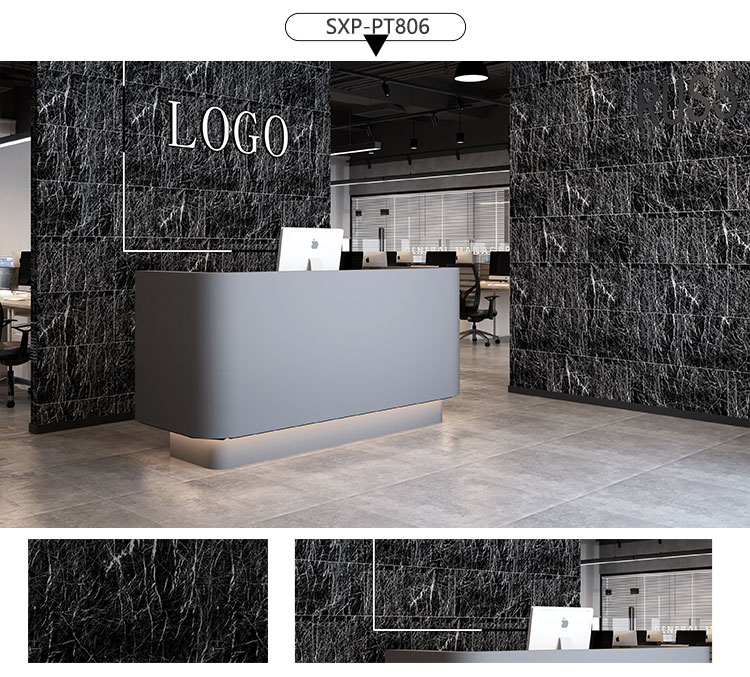
PET marble wall sticker panel. Image: SXP Wall Panel product range.
A wall sticker panel and a wall panel are not two names for the same object. In Construction & Decoration sourcing, “wall panel” is a broad category label for a decorative or functional panel fixed to a wall, while “wall sticker panel” describes a thin, self-adhesive sheet supplied with a peel-off backing film. One term tells you where a product sits in a catalogue; the other tells you how it reaches the wall.
This guide sets out the vocabulary a first-time interior decoration buyer meets in specifications, quotations and online listings. It covers the material names PET, PVC and WPC, the thickness values 2 mm, 2.5 mm and 2.8 mm, the size range from 30×30 cm to 120×300 cm, and the model codes used in the SXP Wall Panel range. The aim is category cognition: knowing what each word means before comparing anything.
The short answer: a category label and an attachment method
A wall panel is the wider term. It covers rigid boards, semi-rigid sheets, narrow slats and tiles that are fixed to a wall for decoration, protection or both. A wall sticker panel is narrower: it is a thin decorative sheet with adhesive already applied to the back, protected by a release liner that the installer peels away. The word “sticker” carries the installation method inside it.
The two terms overlap because they answer different questions. “Panel” answers what the product is in a product hierarchy. “Sticker” answers how it is fixed. A product can legitimately be both: in the SXP range, the WB-KC is listed as a wall panel and classified as a 3D Self-Adhesive Foam Slat Wall Sticker. Reading either word alone will not tell you the material, thickness or size.
- Wall panel: a category term. Check the type, material and dimensions that sit beside it.
- Wall sticker panel: a format term. Check the substrate requirements and the backing system.
- Self-adhesive wall panel: a combined term used when the category and the fixing method are stated together.
Why the vocabulary matters before a buyer compares products
Most early-stage confusion is not about quality. It is about mismatched nouns. A buyer who asks for a “wall panel” may receive a rigid WPC profile, a 2.5 mm PVC sheet or a self-adhesive PET marble sheet, because all three sit inside the same category. A buyer who asks for a “wall sticker panel” narrows the format but still has to choose a material and a thickness.
The category is also large enough that published figures depend on definition. Dataintelo estimated the global wall panel market at USD 32.4 billion in 2025 and projected USD 43.7 billion by 2033, while other research using a narrower definition reports a much smaller figure. The same report placed metal wall panels at a 28.5% share in 2025. Those numbers describe a category that includes exterior cladding, metal systems and industrial panels, not only the interior decorative products discussed here. Treat any market size as definition-dependent.
Product data is more useful than market data at the vocabulary stage. In the SXP product units, six separate fields carry the meaning: name, model, type, material, dimensions and applicable industry. A listing that says only “wall panel” has given you one field out of six.
Category words: panel, sticker panel, cladding, slat and tile
Wall panel
A wall panel is a prefabricated wall covering supplied as a discrete piece rather than as a roll of wallpaper. The category includes decorative panels, protective panels and panels that combine both functions. In product data, the word often appears as the product name even when the type field is more specific.
Wall sticker panel
A wall sticker panel is a self-adhesive decorative sheet. The SXP usage is typical: the WB-PET is named “wall sticker panel” and typed as a “PET marble wall sticker”, with sizes from 30×30 cm to 120×300 cm and a thickness of 2 mm or 2.5 mm. The name tells you the format; the type tells you the material and the look.
Cladding, slat and tile
Cladding is a covering layer applied over a surface. In exterior construction it usually has a structural or weather-protection role; in interior listings the word is sometimes used loosely for any wall covering, so check what it is covering. A slat is a narrow panel with a linear profile, which is why the WB-KC is described as a slat wall sticker. A tile is a small-format unit; the 30×30 cm size in the PET and PVC ranges is the closest thing to a tile format in these product lists. None of these words is a performance grade.
Material words: PET, PVC, WPC, foam and leather
Material names are the most stable part of the vocabulary, because they refer to the substance rather than the look. They are also the part most often confused with the surface print.
PET
PET is a polyester. In decorative wall products it appears as a sheet or film carrying a printed design, which is why the WB-PET is described as a PET marble wall sticker rather than a marble panel. The material field says PET; “marble” describes the appearance. The WB-PET is listed at 2 mm or 2.5 mm and in sizes of 30×30, 30×60, 60×60, 40×80, 60×120, 60×300 and 120×300 cm.
PVC
PVC is polyvinyl chloride. It is the most widely used material name in this category and the one that causes the most confusion, because a single model code can cover several product types. In the SXP range, WB-PVC appears against a PVC parquet wall sticker at 1.5/2 mm, a PVC soft-stone wall sticker panel at 2.5 mm, a PVC wall sticker at 2 mm, and a PVC wall panel at 2.5 mm in 30×30, 50×50 and 96×48 cm. The model code is shared; the type and dimensions are not.
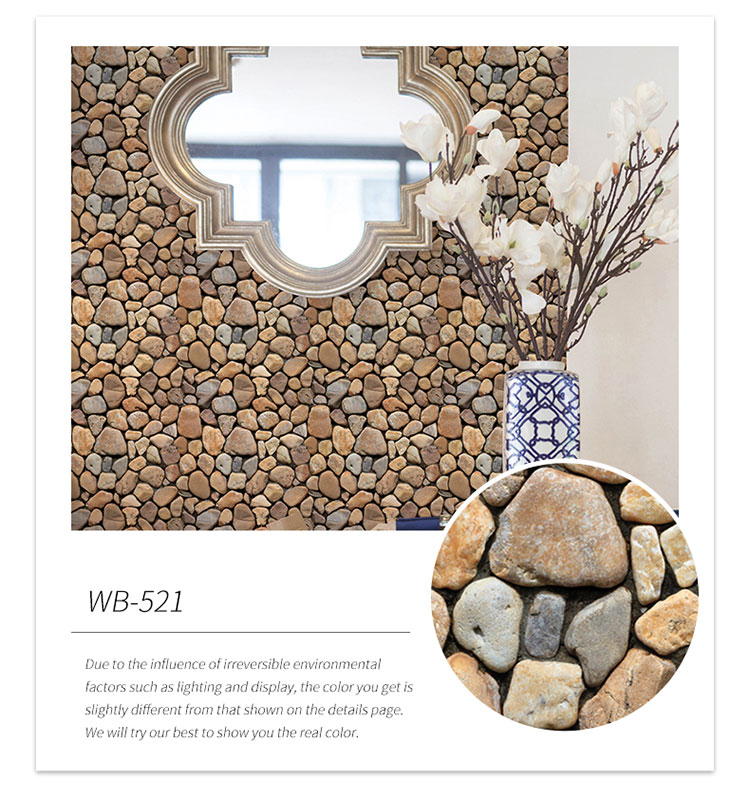
PVC wall panel, one of several product types listed under the WB-PVC model code.
WPC
WPC stands for wood plastic composite. It is a composite of wood-derived material and plastic, supplied in profiles rather than thin sheets. The WB-WPC is listed at 160×23×2900 mm, packed 16 pieces per box, with a weight of 690, 810 or 830 g/m. Those numbers describe a linear profile whose dimensions are given in millimetres on all three axes, not a sheet measured in centimetres.
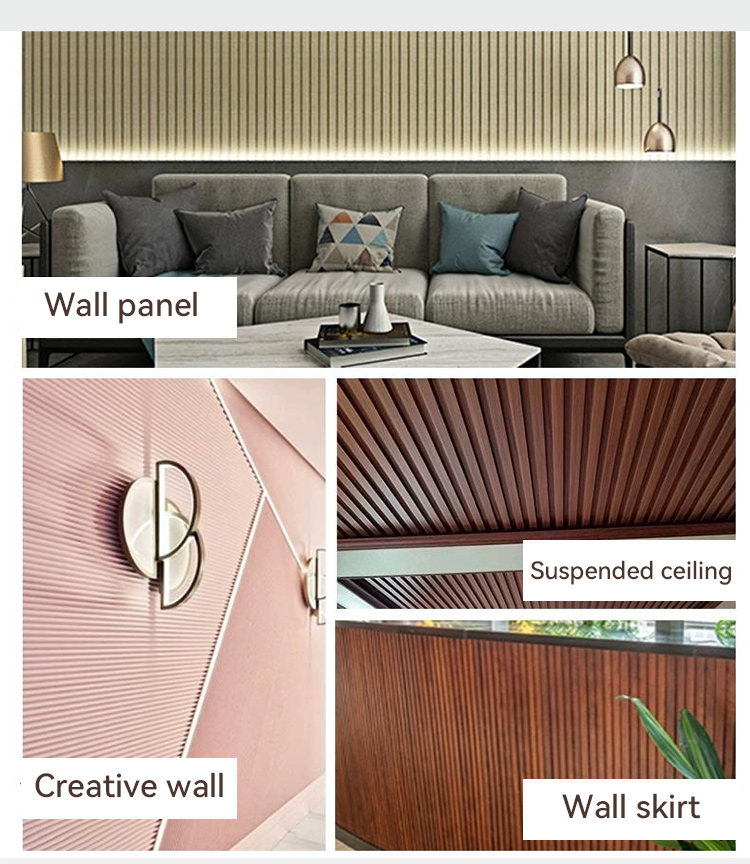
WPC wall panel, model WB-WPC, listed at 160×23×2900 mm.
Foam, XPE and IXPE
Foam is a structure, not a polymer family, and the two names a buyer meets most often are XPE and IXPE. SXP’s own inspection guidance distinguishes them by cell structure and rebound: IXPE is cross-linked by electron-beam irradiation with fine, uniform cells and fast rebound, while chemically cross-linked XPE has larger cells and slower rebound under heavy pressure. That guidance also states that a visual and hand-press check is only preliminary screening and that a third-party test report is the final evidence. The WB-KC illustrates a further vocabulary point: its type name includes “foam” while its material field says PVC, so the type name and the material field must be read separately.
Leather and PU leather
Leather appears as a surface material in wall stickers such as the WB-PG, listed at 6 mm in sizes of 60×60, 60×240, 70×70, 70×280 and 70×300 cm. PU leather is a polyurethane-based synthetic surface; the two terms are not interchangeable, and a listing should state which one it means. Velvet is a fabric surface, not a leather type.
Dimension words: what 2 mm, 2.5 mm, 2.8 mm and 120×300 cm describe
Dimensions are where most reading errors happen, because the same product family mixes centimetres and millimetres. Sheet products are usually listed in centimetres for width and height and in millimetres for thickness. Profiles such as the WB-WPC are listed in millimetres on all three axes.
In the SXP range, 2 mm and 2.5 mm are the thickness values attached to wall sticker panels: the WB-PET is offered at 2 mm or 2.5 mm, the PVC wall sticker at 2 mm, and the PVC soft-stone wall sticker panel at 2.5 mm. The 2.8 mm value belongs to the WB-KC 3D self-adhesive foam slat wall sticker. It is not a universal wall panel thickness, and a buyer should not carry it across to another product without checking that product’s own data.
The size range runs from 30×30 cm to 120×300 cm across the PET, KC and soft-stone types, with 30×60, 40×80, 60×60, 60×120, 60×300 and 40×300 cm appearing in individual lists. The WB-PVC wall panel uses a different set: 30×30, 50×50 and 96×48 cm. Larger formats cover more area per piece and reduce the number of joints; smaller formats suit patterns built from repeated units. Neither is inherently better, and neither changes the material.
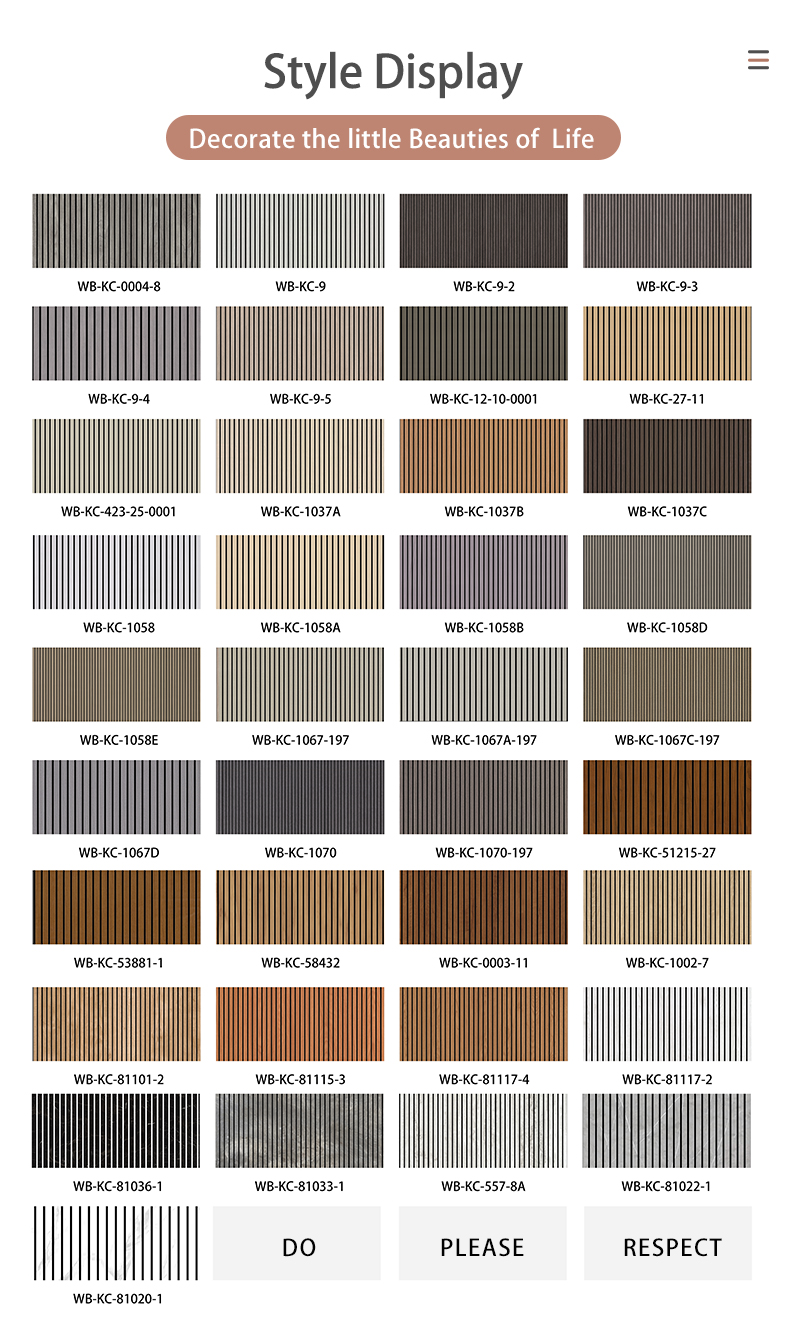
WB-KC 3D self-adhesive foam slat wall sticker, listed at 2.8 mm and in formats up to 120×300 cm.
Surface words: marble, wood grain, embossed and mosaic
Surface words describe what the product looks like or feels like. They do not describe what it is made of. A PET marble wall sticker is a PET sheet with a marble-effect print, not a marble panel.
- Marble: a stone-effect print. The WB-PET is the marble example in this range.
- Wood grain: a linear print that imitates timber. It is an appearance, not a wood-content claim.
- Leather grain: a textured surface that imitates leather. It does not mean the panel is leather; check the material field.
- Fabric texture: a woven or textile-like surface effect.
- Embossed: a raised or recessed texture pressed into the surface, as opposed to a flat print.
- Mosaic: a pattern built from small units. It can be printed on a large sheet or assembled from small tiles such as 30×30 cm.
These terms are useful for matching a design intent, but they cannot be used to compare durability. Two products with the same marble print may have different base materials, thicknesses and surface treatments.
Performance words: water-proof, sound insulation and scratch-resistant
Performance words are the least standardised part of the vocabulary, because they can describe a test result, a material property or a general expectation. A careful listing says which one.
Water-proof is used loosely in interior decoration. SXP’s application notes describe indoor use at normal room temperature, including typical humid environments such as bathrooms and dry areas of kitchens, and advise against long-term exposure to strong sunlight. That is an application statement, not a waterproof rating. If a project needs a rating, ask for the test method and the result behind the word.
Sound insulation and noise reduction appear as functions of the product family, and cushioning is part of the same description. In SXP’s comparison notes, XPE foam wall stickers are described as light with good sound absorption and cushioning, while PVC soft-stone stickers are described as offering better scratch resistance with a heavier weight and higher unit cost. Those are relative descriptions within one supplier’s range; they are not a ranking against other manufacturers.
Scratch-resistant, stain-resistant and easy-clean follow the same rule: the word should point to a surface treatment or a test, not to an assumption. DIY is not a performance word at all. It describes who installs the product, and it depends on the fixing method rather than the material.
Installation words: self-adhesive, release liner, substrate and dry installation
Self-adhesive means the adhesive is already on the product. The release liner is the film that protects the adhesive until installation. Dry installation means the product goes onto the wall without cement or glue, which is the method described in the SXP application notes for self-adhesive products. The same notes list the tools as a utility knife, scraper or roller, tape measure, spirit level and, for removal, an adhesive remover.
Substrate is the word for the surface receiving the panel. The application notes list cement, tiled surfaces, latex-painted walls, plasterboard and plywood as suitable smooth, solid bases, and state that powdery, sandy or loose surfaces are not suitable. The base must be flat, dry and free of dust and grease. These conditions belong with the claim: a self-adhesive product that holds well on plasterboard is not thereby proven on a dusty or flaking wall.
Removability is also conditional. The notes state that some styles can be removed and reinstalled without leaving residue, not that every product can. Where a project depends on clean removal, that property should be confirmed for the specific product rather than inferred from the word “sticker”.
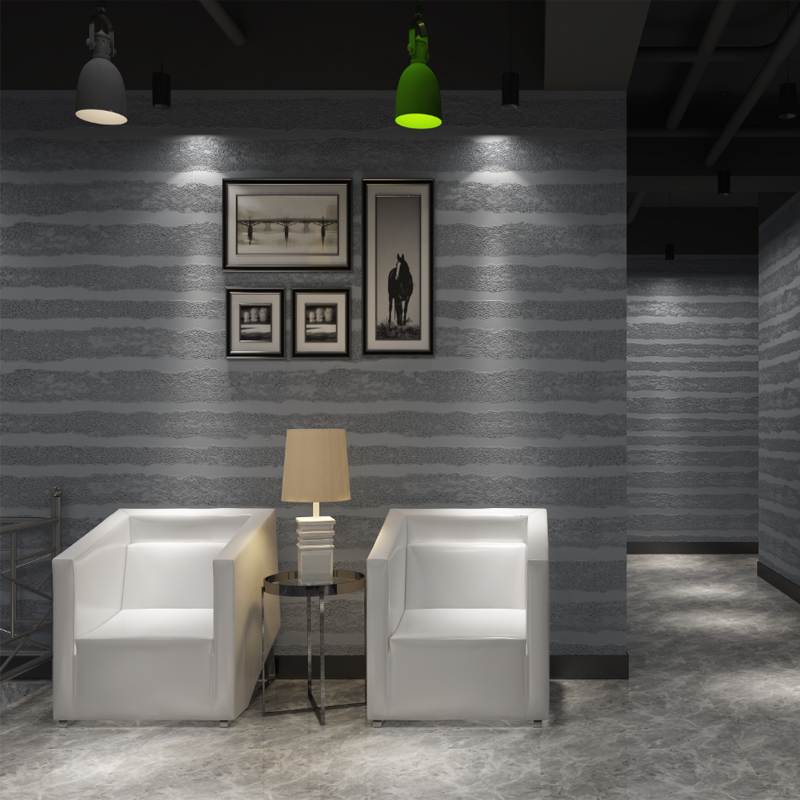
PVC soft-stone wall sticker panel, listed at 2.5 mm in formats from 30×60 cm to 120×300 cm.
Wall sticker panel vs wall panel: a vocabulary comparison
| Question the term answers | Wall sticker panel | Wall panel |
|---|---|---|
| What is it? | A thin decorative sheet with factory-applied adhesive and a release liner | A broad category of decorative or functional panels fixed to a wall |
| How is it fixed? | Peel-and-stick; the adhesive is part of the product | Product-specific; adhesive, mechanical fixing or interlocking edges may be used, depending on the product |
| Thickness examples in the SXP range | 2 mm or 2.5 mm (WB-PET); 2 mm (PVC wall sticker); 2.8 mm (WB-KC) | 2.5 mm (WB-PVC wall panel); WB-WPC profile listed at 160×23×2900 mm |
| Size examples | 30×30 cm to 120×300 cm across PET, KC and soft-stone types | 30×30, 50×50 and 96×48 cm (PVC wall panel); 160×23×2900 mm (WB-WPC) |
| Common misreading | That “sticker” implies a temporary or low-grade product | That “panel” implies a rigid board or one particular fixing method |
The rows compare the terms, not two fixed products. The WB-KC shows why: it is named a wall panel and typed as a self-adhesive foam slat wall sticker, so the two columns can describe the same item from different angles.
Application words: Interior Decoration, Home & Garden and Building Materials
These three phrases are classification fields in the product data, not performance claims. The WB-PET is listed under Home & Garden, Building Materials and Interior Decoration. The WB-WPC is listed under Interior Decoration and Building Materials. The WB-PVC wall panel is listed under Home & Garden, Building Materials and Interior Decoration. The field tells you where the supplier expects the product to be used and where it sits in a catalogue; it does not by itself confirm suitability for a specific room.
The application notes give the project types more concretely: renovation of old houses, apartment full renovations, hotel room makeovers, homestay renovations, chain brand store refurbishments, office fit-outs, temporary exhibition booths, simple rental apartment renovations and modular interior projects. Read together, the fields and the project list explain why the same product can appear under a home decoration search and a commercial fit-out search.
This is where vocabulary becomes practical. A rental apartment refurbishment and a hotel room makeover may both use self-adhesive products, but they will not necessarily use the same material, thickness or format. Naming the project type, the substrate and the desired surface effect is more useful than naming a colour.
Reading a model number: WB-PET, WB-WPC, WB-KC, WB-PVC and WB-PG
A model number is an identifier, not a specification. It tells you which product unit to look up; the type, material and dimensions tell you what it is.
- WB-PET: PET marble wall sticker; 2 mm or 2.5 mm; 30×30 cm to 120×300 cm.
- WB-WPC: WPC wall panel; 160×23×2900 mm; 16 pieces per box.
- WB-KC: 3D self-adhesive foam slat wall sticker; PVC; 2.8 mm; 30×30 cm to 120×300 cm, with customizable lengths.
- WB-PVC: used across several PVC types, including parquet wall sticker, soft-stone wall sticker panel, wall sticker and wall panel.
- WB-PG: leather wall sticker; 6 mm; 60×60 cm to 70×300 cm.
WB-PVC is the clearest warning against reading the model alone. The same code covers a 1.5/2 mm parquet sticker, a 2.5 mm soft-stone panel, a 2 mm wall sticker and a 2.5 mm wall panel in 30×30, 50×50 and 96×48 cm. The type and dimensions are what separate them. When a quotation lists only the model, ask for the type and dimension line before comparing anything.
Frequently asked questions
Is a wall sticker panel the same as a wall panel?
They operate at different levels. A wall panel is a category term for a panel fixed to a wall; a wall sticker panel is a thin self-adhesive sheet with a peel-off backing. Some products carry both labels: the WB-KC is named a wall panel and typed as a 3D self-adhesive foam slat wall sticker. Compare the type, material and dimensions, not the headline noun alone.
What do PET, PVC and WPC mean in a wall panel listing?
PET is a polyester, used in the WB-PET as a sheet carrying a marble-effect print at 2 mm or 2.5 mm. PVC is polyvinyl chloride, used across the WB-PVC types at 1.5/2 mm, 2 mm and 2.5 mm. WPC is wood plastic composite, used in the WB-WPC profile at 160×23×2900 mm. The material name describes the substance; the surface word describes the look.
What do 2 mm, 2.5 mm and 2.8 mm refer to?
They are thickness values for specific products. The WB-PET is listed at 2 mm or 2.5 mm, the PVC wall sticker at 2 mm, the PVC soft-stone wall sticker panel at 2.5 mm and the WB-KC at 2.8 mm. They are not interchangeable grades, and none of them should be assumed for a different model without checking that model’s data.
Why do sizes run from 30×30 cm to 120×300 cm?
The range covers small tile-like formats and large sheets. Small units suit repeated or mosaic-style patterns; large formats cover more area per piece and reduce joints. Sheet sizes are usually written in centimetres, while profiles such as the WB-WPC are written in millimetres, so check the unit before comparing two listings.
What does a model number such as WB-PVC tell me?
It identifies a product unit, not a full specification. WB-PVC is used for a 1.5/2 mm parquet wall sticker, a 2.5 mm soft-stone wall sticker panel, a 2 mm wall sticker and a 2.5 mm wall panel in 30×30, 50×50 and 96×48 cm. Always read the type and dimension fields together with the model.
Where can I check the full specification range?
The SXP Wall Panel product brochure lists the models, sizes and thicknesses discussed in this guide, and the website carries the product pages. If you are preparing a sample request, quote the model, type, thickness and size so the request matches the product unit you have in mind.
Conclusion
The vocabulary resolves into a simple structure. “Wall panel” is the category you search in. “Wall sticker panel” is the format you install. PET, PVC, WPC, foam and leather are materials. Marble, wood grain, embossed and mosaic are surfaces. Two millimetres, 2.5 mm and 2.8 mm are thickness values attached to specific products, not a universal scale. Model codes point to product units, and the type and dimension fields complete the description.
For a buyer at the awareness and research stage, that structure is enough to ask better questions: which material, which thickness, which format, which substrate and which project type. Those five questions will narrow a catalogue faster than any single adjective.
The SXP Wall Panel range is supplied by Shanghai Yuanguan Rubber Plastic Co., Ltd., a decorative materials manufacturer founded in 2005 with an 8,000 m² manufacturing facility, serving customers in more than 80 countries and regions. The full specification list, including the models discussed here, is available in the product brochure.
If you are matching a product to a project, the brochure is a practical next step: download the SXP product brochure.
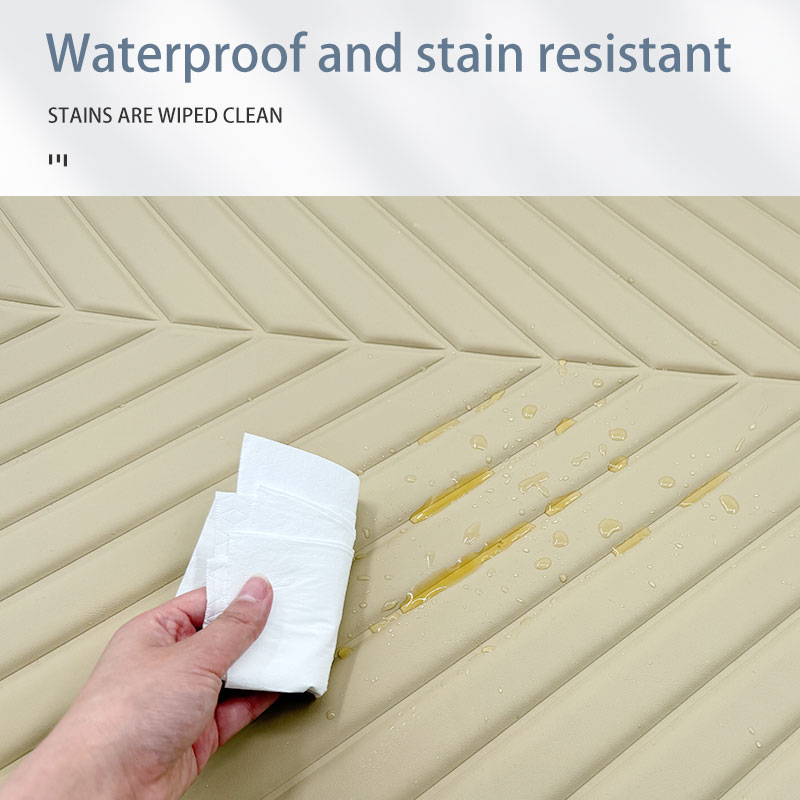
Self-adhesive PU leather and velvet wall sticker, an example of a surface-material term in the same product family.
Have Questions or Need More Details?
Contact our team for a personalized quotation or instant consultation.
Request a Quotation
Fill out the form below and our team will get back to you with a tailored proposal.
WhatsApp Direct Chat
Prefer to chat in real-time? Message us on WhatsApp for instant assistance & quick answers.
- Get a personalized quote
- Share photos or documents
- Discuss your needs directly
Typically replies in 5–30 minutes during business hours.