
Wall Panel Supplier Evaluation: PET, WPC and PVC Delivery Assurance
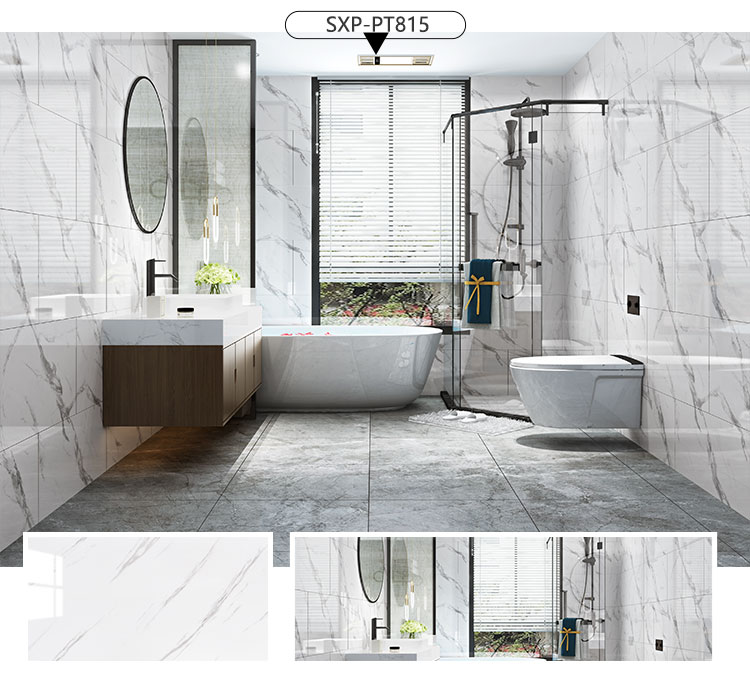
PET marble wall sticker panel (WB-PET) — one of three sheet lines covered in this supplier evaluation.
A wall panel supplier should be evaluated on two things a sample cannot show: whether the declared size, thickness and packing specifications belong to a line that actually runs, and whether the delivery terms, acceptance criteria and storage obligations are written down before the purchase order is signed. This guide sets out the evidence checks for PET, WPC and PVC lines.
The first sample a buyer receives is usually the best-looking one. It is rarely the one that shows whether a supplier can hold 2 mm and 2.5 mm sheet thickness across a 30×30 cm tile and a 120×300 cm panel, pack 16 pieces into a box without crushing the edges, or produce compliance documentation that matches the SKU in the container. Those are the questions that decide whether a hotel renovation, a chain-store refurbishment or a rental apartment programme is delivered on schedule.
This article is written for procurement teams and importers in the research and evaluation stage. It uses the declared specifications of the SXP Wall Panel lines — WB-PET, WB-WPC and the WB-PVC family — as a working example of what an evidence file should contain, and it separates the capability question from the delivery assurance question.
Problem Definition: Why a Sample Proves Almost Nothing
A wall panel sample proves appearance and, at most, hand-feel. It does not prove repeatability. In practice, supplier selection fails in four predictable places.
- Size range narrower than the catalogue. A supplier may list 30×30 cm to 120×300 cm while only producing the small formats in-house and trimming larger ones from a different sheet. Trimming changes edge quality and carton dimensions, and it changes the price basis.
- Thickness drift under cost pressure. Where 2 mm, 2.5 mm and 2.8 mm options exist across a range, a lower quotation may quietly correspond to the thinner option. Thickness is the first specification to move when a supplier is squeezed.
- Packing and weight never disclosed. A WPC panel declared at 690, 810 or 830 g/m and packed 16 pieces per box produces very different container payloads and handling costs. Buyers who compare unit prices without these numbers compare incomplete figures.
- No written acceptance criteria. Without an agreed test method and a named third-party report, a claim about thickness, material or foam type cannot be enforced after arrival.
The practical consequence is that a supplier can pass a sample review and still fail a delivery review. The evaluation below is designed to catch that gap before the first container is booked.
Industry Background: Why Documented Evidence Now Carries More Weight
The wall panel category is large and regionally concentrated. Dataintelo values the global wall panels market at USD 32.4 billion in 2025, projected to reach USD 43.7 billion by 2033. The same source reports that metal wall panels held a 28.5% share in 2025, while Asia Pacific held the largest regional share at 42.3%. Wood-based wall panels accounted for nearly 31% of global installations in 2024, with wood wall panel systems projected to grow at 6.2% CAGR to 2035 according to WiseGuyReports.
For buyers, the relevant implication is not the headline growth figure. It is that a large, multi-material supply base means quotations arrive from very different kinds of suppliers — sheet extruders, profile lines, converters and traders — and that the paperwork, not the brochure, is what distinguishes them.
Two documentation points are worth fixing early. First, customs classification: the standard HS code for wood plastic composite (WPC) wall panels exported from China is 3925.90.0000, per a U.S. Customs and Border Protection ruling. Second, fire classification: European standard EN 13501-1 classifies reaction-to-fire performance, and B-s1,d0 is a commonly specified Euroclass rating for commercial interior wall panel applications. Neither point can be resolved retroactively at the port or at the site inspection.
SXP Wall Panel is the wall panel brand used in the product documentation of Shanghai Yuanguan Rubber Plastic Co., Ltd., a decorative materials manufacturer founded in 2005 and based in Qingpu District, Shanghai, China. The company operates an 8,000 ㎡ factory with 150 employees, including a 5-engineer R&D team, reports an annual output of 75,000,000 units, and exports about 90% of production to markets in the EU, USA, Asia and South America. Its wall panel range covers self-adhesive PET, WPC, PVC and foam-based sheet products, which makes it a useful reference case for a multi-line evaluation.
Detailed Solution: What to Verify on Each Production Line
Each line has its own specification logic. Grouping them under one generic "wall panel" enquiry is the most common cause of mismatched quotations.
PET line — WB-PET PET marble wall sticker
The PET marble wall sticker (WB-PET) is declared with seven sizes — 30×30 cm, 30×60 cm, 60×60 cm, 40×80 cm, 60×120 cm, 60×300 cm and 120×300 cm — and two thickness options, 2 mm and 2.5 mm, on a PET base.
Ask the supplier to confirm which of the seven sizes run as primary formats and which are cut from a parent sheet. Then ask for the carton dimensions and gross weight for the largest format, because a 120×300 cm panel dictates pallet footprint and container stowage in a way that a 30×30 cm tile does not. For marble-effect surfaces, also ask whether the 2 mm and 2.5 mm versions share the same surface film and pattern repeat, so that two thicknesses ordered for the same project do not arrive with visibly different veining.
WPC line — WB-WPC wall panel
The WPC wall panel (WB-WPC) is a profile product, not a flat sheet: 160×23×2900 mm, packed 16 pieces per box, with a declared weight of 690, 810 or 830 g/m depending on the item.
The weight band is the single most useful number in this line. A 690 g/m and an 830 g/m panel look similar on a sample board but produce different container payloads and different installed loads. Request the weight band per SKU in writing, confirm the 16-pieces-per-box packing applies to the specific item quoted, and cross-check the box dimensions against your pallet plan. For shipments into the EU or the USA, confirm the customs classification the supplier uses; for WPC wall panels exported from China, HS code 3925.90.0000 is the reference point.
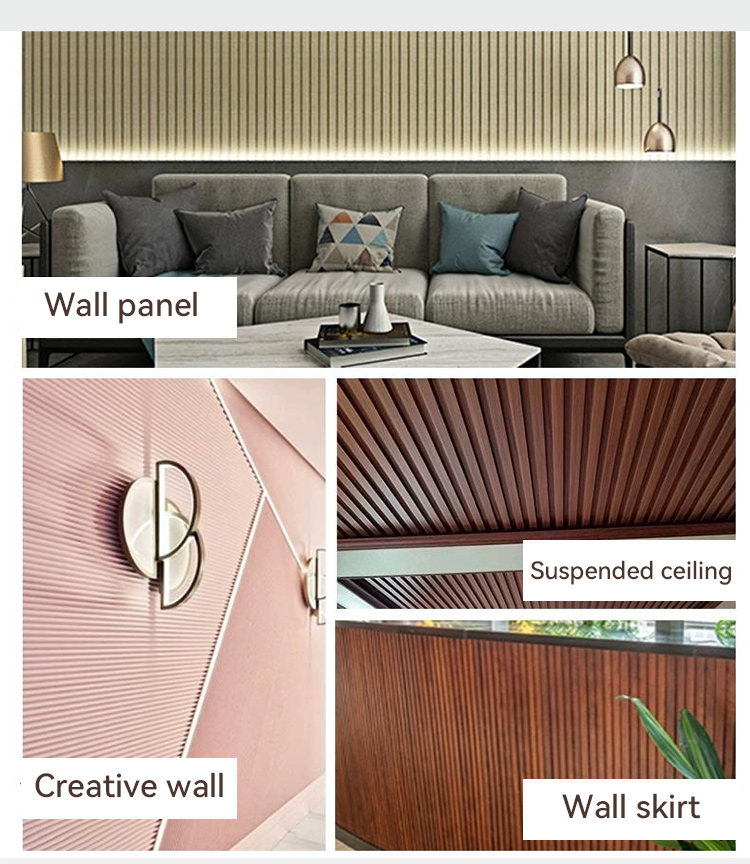
WB-WPC wall panel: 160×23×2900 mm, 16 pcs/box, 690/810/830 g/m.
PVC line — several sub-lines behind one word
"PVC wall panel" is not one product. Within the WB-PVC family the declared specifications differ by sub-line:
- PVC wall panel: 30×30 cm, 50×50 cm and 96×48 cm, thickness 2.5 mm.
- PVC wall sticker: 30×30 cm, 30×60 cm, 40×80 cm, 60×60 cm, 60×120 cm and 120×300 cm, thickness 2 mm.
- PVC soft stone wall sticker: 30×60 cm, 60×60 cm, 40×80 cm, 60×100 cm, 40×300 cm, 60×300 cm and 120×300 cm, thickness 2.5 mm.
- PVC parquet wall sticker: 30×30 cm, 30×60 cm, 40×80 cm, 60×60 cm or customized, thickness 1.5 mm or 2 mm.
Before comparing prices, make the supplier state which sub-line the quotation refers to, and request the thickness per sub-line rather than a single figure. Two adjacent WB-PVC items can be 2 mm and 2.5 mm respectively, and that 0.5 mm is the difference between a specification that matches the project and one that does not.
Two further lines sit alongside the PVC family and are frequently bundled into the same enquiry: the WB-KC 3D self-adhesive foam slat wall sticker, offered in 30×30 cm, 60×60 cm, 30×60 cm, 40×300 cm, 60×300 cm and 120×300 cm with customizable length at 2.8 mm thickness; and the WB-PG leather wall sticker in 60×60 cm, 60×240 cm, 70×70 cm, 70×280 cm and 70×300 cm at 6 mm. If a quotation mixes these with PVC sheet without naming the model, the specification has not been fixed.
Delivery assurance: capacity, lead time and minimum order
Delivery assurance is a separate evidence set from product capability. The declared parameters to request in writing are: monthly capacity of 10+ million square meters, a minimum order quantity of 1,000 square meters, a lead time of 30 days, and 100% testing of production. Those four numbers let a buyer build a realistic delivery schedule instead of a hopeful one.
Capacity also has to be read against the line mix. A supplier capable of 10+ million square meters per month across sheet products still has to allocate PET, WPC profile and PVC sub-line time separately. For a project requiring several formats in one shipment, ask how the formats are sequenced and whether partial shipments are acceptable within the 30-day lead time.
Customization capability belongs in the same conversation. The declared OEM/ODM scope covers size, color, pattern and design, embossing texture, material structure, thickness, packaging, logo and private label, custom labels, and new product development. Each of these changes tooling or setup time, so it must be reflected in the quoted lead time rather than assumed.
Compliance evidence that must match the SKU
Compliance documents are only useful if the product scope named in the document matches the product being shipped. Three concrete items are worth requesting:
- RoHS. The applicable standard for the 3D wall brick (PE material) product is RoHS Directive (EU) 2015/863. The SGS RoHS Test Report with certificate number SHAEC1709394501 applies to that product for the EU market.
- Fire classification. EN 13501-1 classifies reaction-to-fire performance, and B-s1,d0 is a commonly specified rating for commercial interior wall panels. Confirm whether the specific SKU in your order has been classified and under which report.
- Customs documentation. Confirm the HS code applied to each line; for WPC wall panels exported from China the reference classification is 3925.90.0000.
Low-cost product risk and total cost of ownership
Low unit price is usually achieved by removing material. The declared comparison data for the SXP sheet range states a 22% increase in total material thickness, 35% higher glue coating weight and a 180% thicker wear layer relative to alternatives, and states that a 12% higher raw material cost results in a 60% lower average annual use cost, giving a lower total cost of ownership.
Whether or not a buyer accepts those figures for a given project, the structure of the argument is the one to test: thickness, adhesive weight and wear layer are the three variables that determine replacement frequency in a commercial space. Ask for the thickness and the coating weight in writing, then compare the annual replacement rate against the price difference. A panel replaced twice in a five-year cycle is rarely the cheaper option.
Foam-based orders: XPE versus IXPE
When an export order specifies a foam-based wall sticker panel, the material grade matters. IXPE is cross-linked by electron-beam irradiation, producing fine, uniform cells, fast rebound and resistance to permanent indentation. Chemically cross-linked XPE has larger cells, slower rebound and tends to take a permanent dent under heavy pressure.
A visual and hand-press test — pressing the sample hard for three to five seconds and watching recovery — is only preliminary screening and cannot be used as the basis of a claim. The acceptance criterion should be a third-party report, and the material should be named explicitly in the proforma invoice.
Storage obligations that belong in the contract
Storage is a delivery issue, not an afterthought. Foam wall stickers are sensitive to high temperature, heavy pressure and UV light; PU stone panels are vulnerable to moisture and impact; linen soft-pack wall stickers are vulnerable to dust, dampness and mildew. The general rules are a cool, ventilated warehouse at or below 40°C, goods on pallets rather than directly on the floor, limited stacking height, no heavy hard panels stacked on foam goods, covering for dust-sensitive items, and FIFO rotation.
Curl, deformation and mildew caused by sun exposure, over-stacking or ground moisture are classified as improper-storage damage rather than inherent product defect. That distinction should be agreed before shipment, because it determines who carries the loss.
Step-by-Step Breakdown: A Seven-Step Evaluation Sequence
- Freeze the SKU before comparing prices. Record the model, base material, thickness and size for every line in scope — for example WB-PET at 2 mm and 2.5 mm, WB-WPC at 160×23×2900 mm, and the specific WB-PVC sub-line. A quotation without a model number cannot be compared.
- Request the full size matrix and confirm production versus trimming. Ask which formats run as primary and which are cut from a parent sheet, and request carton dimensions for the largest format in each line.
- Collect packing and weight data. Confirm the 16-pieces-per-box packing for WPC, and the weight band (690/810/830 g/m) per SKU. Use those figures to recalculate freight and handling before awarding.
- Map compliance documents to each SKU. Record the standard, the report number and the product scope — for example RoHS Directive (EU) 2015/863 and SGS report SHAEC1709394501 for the PE 3D wall brick, and EN 13501-1 classification where a commercial interior rating is required.
- Write acceptance criteria into the purchase order. Name the test method, the third-party laboratory and the material declaration. For foam products, state XPE or IXPE explicitly in the proforma invoice and make the third-party report the acceptance basis.
- Lock delivery terms. Confirm minimum order quantity (1,000 square meters), lead time (30 days), monthly capacity (10+ million square meters) and whether mixed-format shipments are permitted within a single delivery window.
- Allocate storage and handover responsibility. Specify pallet delivery, maximum stacking height, the 40°C ceiling and FIFO rotation, and record that storage-induced curl, deformation or mildew is not treated as inherent defect.
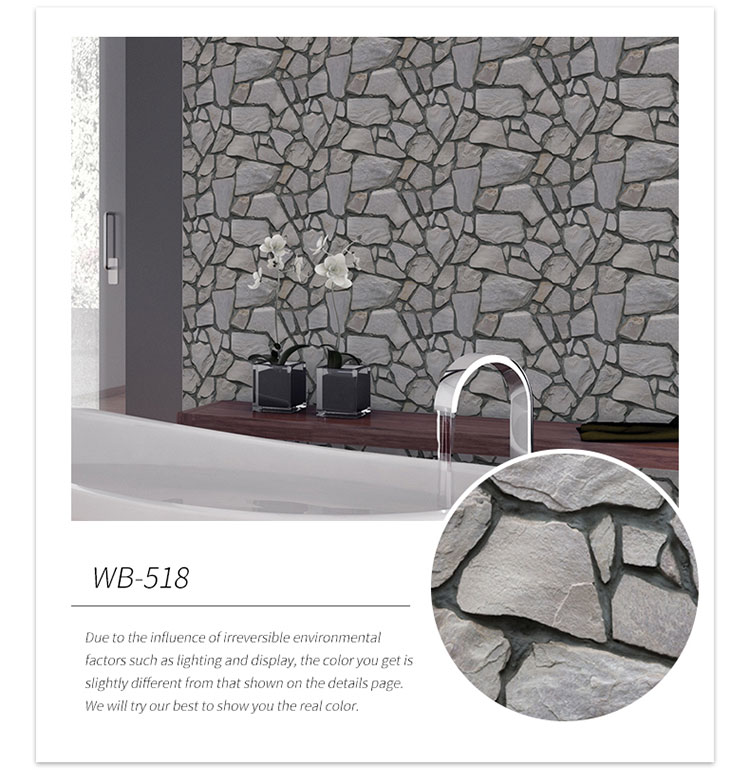
WB-PVC PVC wall panel: 2.5 mm, available in 30×30 cm, 50×50 cm and 96×48 cm.
Use Cases: Where These Checks Change the Outcome
Hotel guest room and chain-store refurbishment
Hotel and chain-brand store projects are typically specified on texture, scratch resistance and compliance rather than on price alone. In this setting the PVC soft-stone wall sticker at 2.5 mm and the PU leather wall sticker at 6 mm are the relevant lines, and the evaluation priority shifts to the compliance file per SKU and to whether the surface can be maintained through a multi-year cycle. This is the scenario behind the question of finding a commercial wall panel manufacturer for hotel renovations: the answer depends less on the catalogue than on whether fire and material documentation exists for the exact SKU.
Supermarket and retail fit-out
A documented supermarket application involved 370,000 units installed for a home center client, with the project duration listed as 5–10 years. The case highlights moisture-proof performance, quick installation and a wide range of surface textures for commercial space, with customer feedback reporting a good decorative effect and easy daily maintenance, followed by repeat orders.
For a buyer, the transferable lesson is volume tolerance: 370,000 units in a single programme requires the supplier to hold specification consistency across many production batches, which is exactly what the packing and weight checks in step 3 are designed to protect.
Apartment, rental and modular renovation
For apartment full renovations, simple rental apartment renovations and modular interior projects, the relevant lines are the self-adhesive formats: WB-KC foam slat panel at 2.8 mm and the PVC wall sticker at 2 mm. Here the dominant risk is substrate condition. The base surface must be flat, dry and free of dust and grease, and the products are not for use on powdery, sandy or loose surfaces. Add that condition to the installation scope, not just to the product data sheet.
Exhibition and temporary construction
Temporary exhibition booths and short-cycle retail builds value installation speed over service life. The declared installation mode — self-adhesive with peel-off backing, dry installation without cement or glue, local cutting, and removal where the style allows — is the specification to test. Where prolonged strong sunlight is expected, note that long-term exposure should be avoided.
OEM and private-label programmes
For distributors building their own range, the customization scope is the capability test: size, color, pattern and design, embossing texture, material structure, thickness, packaging, logo and private label, custom labels, and new product development. Each item should appear as a line in the quotation with its own lead-time impact.
Comparison Table: PET, WPC and PVC Lines on Verifiable Parameters
| Evaluation item | WB-PET (PET marble wall sticker) | WB-WPC (WPC wall panel) | WB-PVC (PVC wall panel / wall sticker) |
|---|---|---|---|
| Base material | PET | WPC | PVC |
| Declared thickness | 2 mm / 2.5 mm | Profile product (160×23×2900 mm); no sheet thickness declared | 2.5 mm (wall panel); 2 mm (wall sticker); 2.5 mm (soft stone); 1.5 / 2 mm (parquet) |
| Declared size range | 30×30, 30×60, 60×60, 40×80, 60×120, 60×300, 120×300 cm | 160×23×2900 mm | 30×30, 50×50, 96×48 cm (wall panel); 30×30 to 120×300 cm (wall sticker) |
| Packing | Not declared in the specification set — request per format | 16 pcs/box | Not declared in the specification set — request per sub-line |
| Declared weight | Not declared — request per format | 690 / 810 / 830 g/m | Not declared — request per sub-line |
| Typical fit | Marble-effect interior surfaces | Interior decoration and building materials, profile applications | Interior decoration; commercial spaces; renovation projects |
| Compliance evidence to request | Report scoped to PET material | HS 3925.90.0000 for WPC wall panels from China | RoHS Directive (EU) 2015/863; SGS report SHAEC1709394501 (PE 3D wall brick); EN 13501-1 where a commercial fire rating is required |
Commercial and delivery parameters apply across all three lines: OEM/ODM support, monthly capacity of 10+ million square meters, minimum order quantity of 1,000 square meters, lead time of 30 days, and 100% testing before delivery. Export markets declared for the range are Europe, North America, the Middle East, Asia, Oceania and Japan.
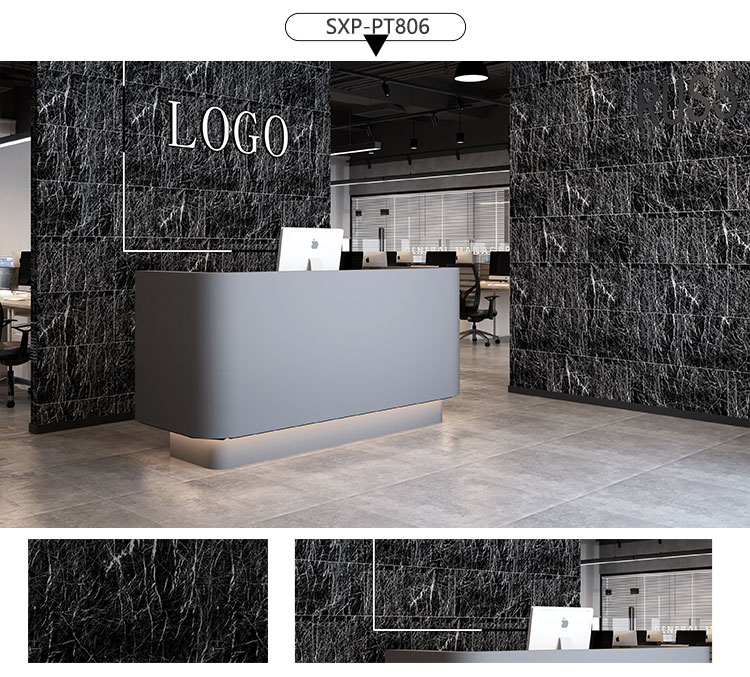
Format variety within one PET line matters: a 30×30 cm tile and a 120×300 cm panel carry different packing and freight implications.
FAQ
1. What compliance evidence should a commercial wall panel supplier provide for hotel and retail projects?
Request three document sets and check that each one names the exact product you are buying. For PVC and PE sheet products, RoHS Directive (EU) 2015/863 is the applicable standard, and the SGS RoHS Test Report with certificate number SHAEC1709394501 applies to the 3D wall brick (PE material) product for the EU market. Where a commercial interior fire rating is specified, EN 13501-1 is the classification standard and B-s1,d0 is a commonly specified Euroclass rating for commercial interior wall panels. For WPC wall panels exported from China, the standard HS code is 3925.90.0000. A document that names a different material from the one you are shipping does not support your order.
2. Can one supplier run PET, WPC and PVC lines without mixing up specifications?
Only if each line is identified by model code in the quotation. In the SXP Wall Panel range, WB-PET is a PET marble wall sticker at 2 mm and 2.5 mm across seven sizes from 30×30 cm to 120×300 cm; WB-WPC is a WPC wall panel at 160×23×2900 mm, packed 16 pieces per box, at 690, 810 or 830 g/m; and WB-PVC covers several sub-lines, including a 2.5 mm PVC wall panel in 30×30 cm, 50×50 cm and 96×48 cm, a 2 mm PVC wall sticker up to 120×300 cm, a 2.5 mm soft stone wall sticker, and a 1.5 mm or 2 mm parquet wall sticker. A quotation that says only "PVC wall panel" has not fixed the specification. Declared production capacity is 10+ million square meters per month with 100% testing.
3. How do minimum order quantity and packing affect the landed cost?
The declared minimum order quantity is 1,000 square meters and the lead time is 30 days. Packing and weight then drive the freight line: WPC panels are packed 16 pieces per box and declared at 690, 810 or 830 g/m, so the weight band per SKU changes container payload. Comparing unit prices without the packing format and weight per metre produces an incomplete comparison. On service life, the declared comparison data for the SXP sheet range states a 12% higher raw material cost but a 60% lower average annual use cost, which is the variable to test against your replacement cycle.
4. How should samples be validated before a bulk order?
Request the sample from the same line and format you intend to buy, then separate appearance from material. For foam-based wall sticker panels, IXPE is cross-linked by electron-beam irradiation with fine uniform cells and fast rebound, while chemically cross-linked XPE shows larger cells and slower rebound with permanent denting under pressure. A hand-press test — pressing hard for three to five seconds and watching recovery — is preliminary screening only and cannot support a claim. Specify the material in the proforma invoice and take a third-party report on formamide and cross-linking degree as the acceptance criterion.
5. What lead time and acceptance terms should be written into the purchase order?
Write four things down: the lead time (30 days), the monthly capacity available to your programme (10+ million square meters), the minimum order quantity (1,000 square meters), and the acceptance method for each SKU — including the third-party report referenced for material or foam type. Add the storage clause: a cool, ventilated warehouse at or below 40°C, goods on pallets rather than directly on the floor, limited stacking height, no heavy hard panels stacked on foam goods, covering for dust-sensitive items, and FIFO rotation. Curl, deformation and mildew caused by sun exposure, over-stacking or ground moisture are treated as improper-storage damage rather than inherent product defect, so the clause protects both sides. Buyers who want to test these terms against a live programme can request a specification sample set and a formal quotation from the SXP Wall Panel team.
Conclusion
Supplier evaluation for wall panels is not a visual exercise. It is a documentation exercise with a commercial consequence. The three checks that carry the most weight are the size and thickness matrix per line, the packing and weight data per SKU, and the compliance file that names the exact material being shipped. A supplier that can state WB-PET at 2 mm and 2.5 mm across seven formats, WB-WPC at 160×23×2900 mm in 16-piece boxes at 690/810/830 g/m, and the specific WB-PVC sub-line behind a quotation has already demonstrated more than a sample can.
Delivery assurance follows the same logic. Monthly capacity of 10+ million square meters, a 1,000 square meter minimum, a 30-day lead time and 100% testing are only useful when they are written into the purchase order alongside acceptance criteria and a storage clause. That is the difference between a supplier that passes a sample review and a supplier that passes a delivery review.
Next Step: Request the Specification File and a Quotation
Shanghai Yuanguan Rubber Plastic Co., Ltd. supplies the SXP Wall Panel range — PET marble wall stickers, WPC wall panels, PVC wall panels and wall stickers, foam slat panels and PU leather wall stickers — with OEM/ODM support, a 1,000 square meter minimum order, a 30-day lead time and 100% testing before delivery.
To evaluate the range against your project, request a specification sample set and a formal quotation, or download the product brochure: Shanghai Yuanguan Product Brochure.
Website: www.wallpanelsticker.com | Email: ericwang@shyuanguan.com | Tel / WhatsApp: +86 13524706491 | Address: Building 5, No.6066, Songze Road, Qingpu District, Shanghai, China
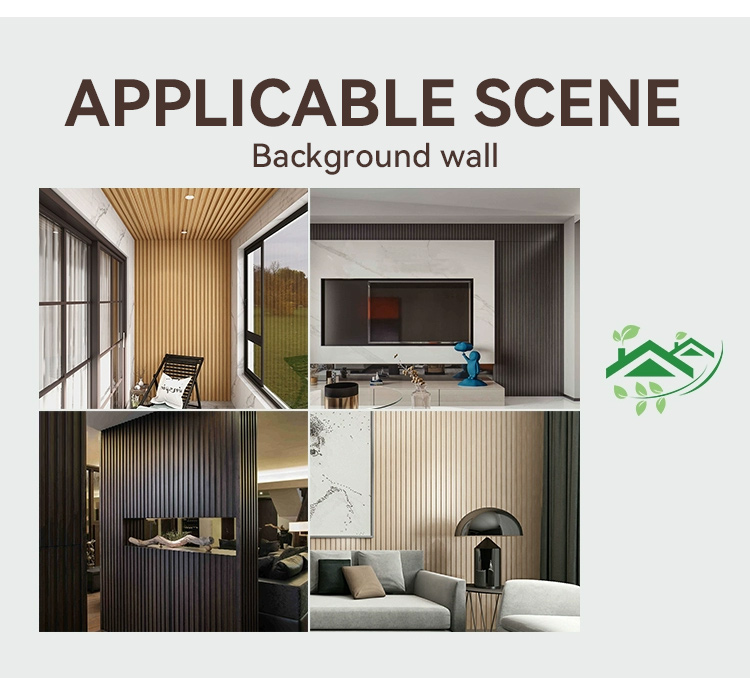
Sample sets should come from the same production line and format as the intended order.
Have Questions or Need More Details?
Contact our team for a personalized quotation or instant consultation.
Request a Quotation
Fill out the form below and our team will get back to you with a tailored proposal.
WhatsApp Direct Chat
Prefer to chat in real-time? Message us on WhatsApp for instant assistance & quick answers.
- Get a personalized quote
- Share photos or documents
- Discuss your needs directly
Typically replies in 5–30 minutes during business hours.