
Self-Adhesive Wall Sticker vs PVC Soft-Stone Panel: A Head-to-Head Decision for Interior Projects
Short answer: for residential apartments and rental-house renovation, an XPE foam self-adhesive wall sticker is the recommended route — light weight, good sound absorption and cushioning performance, and lower logistics cost. For hotel guest rooms and chain-store commercial interiors, a PVC soft-stone self-adhesive wall sticker is preferred, because it delivers superior scratch resistance and a premium surface texture. The foam route is lighter and cheaper to move; the soft-stone route is heavier, more scratch-resistant and more expensive per unit. Neither option is universally better, and the choice should be settled by project positioning, substrate condition and compliance documentation — not by unit price alone.
This head-to-head compares the two systems as procurement decisions, not as catalogue images. It shows where each material wins, where each material creates risk, and which checks a buyer should complete before a purchase order is issued for an interior decoration project.
Problem Definition: why these two products are confused at the evaluation stage
Both products are sold as “self-adhesive wall panel”, both are installed dry with a peel-off backing film, and both are marketed with the same words: water-proof wall panel, DIY wall panel, home decor wall panel, commercial wall panel. In a quotation sheet they can look interchangeable. In use, they are not.
Four differences decide the project outcome:
1. Weight and freight structure. The foam sticker is light; the soft-stone panel is heavier. Weight changes pallet counts, container utilisation and landed cost long before the unit price is compared.
2. Surface durability. A PVC soft-stone panel offers superior texture and scratch resistance. An XPE foam wall sticker has general surface scratch resistance. In a corridor, a lift lobby or a retail aisle, that difference is visible within months.
3. Environmental sensitivity. Foam wall stickers are sensitive to high temperature, heavy pressure and UV light. Soft-stone panels fear moisture and impact. Storage and installation conditions therefore have to be planned differently for each material.
4. Compliance documentation. Certificates are issued against a material and a product scope, not against a brand. A test report that covers one product in a range does not automatically cover another. Buyers who treat compliance as a single PDF attachment — rather than a scope check — carry the customs and after-sales risk.
Industry Background: where self-adhesive interior systems sit in 2026
Wall panels are a large and still-expanding category. Dataintelo values the global wall panels market at USD 32.4 billion in 2025, projected to reach USD 43.7 billion by 2033. Within that market, metal wall panels held a 28.5% share in 2025, and Asia Pacific accounted for the largest regional share at 42.3%.
Wood-look demand remains a separate and growing stream: wood-based wall panels held nearly 31% of global installations in 2024, and wood wall panel systems are projected to grow at 6.2% CAGR to 2035. This matters for hotel and hospitality projects, where wood-look and stone-look finishes are often specified in the same building — sometimes in the same room.
On the regulatory side, EN 13501-1 governs reaction-to-fire classification in Europe, and B-s1,d0 is a commonly specified Euroclass rating for commercial interior wall panel applications. Buyers specifying commercial wall panel systems should treat the fire classification, the material declaration and the packaging rules as three separate document requests, not one.
The practical consequence for a project buyer is straightforward: the self-adhesive segment is no longer a single product. It is a family of formats — PVC wall sticker at 2 mm, PVC parquet wall sticker at 1.5 mm and 2 mm, PET marble wall sticker at 2 mm and 2.5 mm, leather wall sticker at 6 mm, 3D self-adhesive foam slat wall sticker at 2.8 mm, WPC wall panel at 160×23×2900 mm, and PVC soft-stone wall sticker at 2.5 mm. Formats differ in thickness, size range, texture and risk profile, and the foam-versus-soft-stone choice is the most frequent fork in that family.
Detailed Solution: what each system actually is
Side A — XPE foam self-adhesive wall sticker
An XPE foam self-adhesive wall sticker is a foam-core decorative sticker supplied with a peel-off adhesive backing. Its defining characteristics in project use are light weight, good sound absorption and cushioning performance, and lower logistics cost. Surface scratch resistance is general rather than premium.
Where a foam-based slat look is required, the SXP Wall Panel range includes the WB-KC 3D Self-Adhesive Foam Slat Wall Sticker: PVC material, 2.8 mm thickness, sizes 30×30, 60×60, 30×60, 40×300 cm, 60×300 cm and 120×300 cm, with length available as a custom option. The slat format is the practical answer for accent walls, headboard walls and feature strips where a three-dimensional profile is part of the design intent.
Foam core note — XPE versus IXPE. Within foam stickers, the core material itself is a second decision. XPE is chemically cross-linked foam with a lower cost. IXPE is cross-linked by electron-beam irradiation, with fine uniform cells, fast rebound and resistance to permanent indentation. Chemically cross-linked XPE has larger cells, slower rebound and can take a permanent dent under heavy pressure. A visual and hand-press check — fine uniform cells and fast recovery pointing to IXPE, uneven large cells and slow rebound pointing to XPE — is only preliminary screening; a third-party test report is the final evidence. For Europe and North America shipments, formamide and REACH test reports should be requested.
Side B — PVC soft-stone self-adhesive wall sticker
The WB-PVC soft stone wall sticker is a PVC-based self-adhesive panel at 2.5 mm thickness, supplied in 30×60, 60×60, 40×80, 60×100, 40×300, 60×300 and 120×300 cm. It belongs to the soft stone wall sticker category and is intended for interior decoration and building materials applications.
Its advantage is surface quality: superior texture and scratch resistance compared with the foam route. The cost of that advantage is measurable — heavier panel weight, a higher unit cost, and a material that fears moisture and impact. On a large commercial wall area, all three of those factors appear in the budget and in the snagging list.
What the comparison actually turns on
The foam sticker wins on weight, cushioning, sound absorption and freight. The soft-stone panel wins on texture and scratch resistance. Everything else — sizes, thickness options, colour and pattern customisation, embossing texture, packaging, private label — is a supplier capability question rather than a material question, and should be evaluated separately.
Water-proof wall panelScratch-resistant wall panelSound insulation wall panelSelf adhesive wall panelDIY wall panel
Step-by-Step Breakdown: how to decide between the two
- Fix the project positioning first. Residential renovation, apartment and rental-house projects point to the XPE foam self-adhesive wall sticker. High-grade commercial projects — hotel guest rooms, chain-store interiors — point to the PVC soft-stone self-adhesive wall sticker. Deciding the material before the positioning is how projects end up with a premium surface in a storage room and a foam sticker in a lift lobby.
- Score the surface requirement. If the wall will be touched, cleaned or abraded — retail shelving zones, corridor lower panels, reception desks — prioritise scratch resistance. If the priority is acoustic comfort and impact cushioning — bedrooms, children’s rooms, temporary partitions — prioritise the foam route.
- Check the substrate and the installation method. Both systems use self-adhesive installation with a backing film, dry installation without cement or glue, local cutting, and removal/reinstallation on some styles. Both require a base that is flat, dry and free of dust and grease. Neither is suitable for powdery, sandy or loose surfaces. Standard tools are a utility knife, scraper or roller, tape measure and spirit level. Installation is for indoor use at normal room temperature, and long-term exposure to strong sunlight should be avoided.
- Calculate landed cost, not unit cost. Add freight to the comparison. The foam sticker carries lower logistics cost because of its lighter weight; the soft-stone panel is heavier and has a higher unit cost. A quotation that compares only the per-square-metre figure will usually mislead on container-level orders.
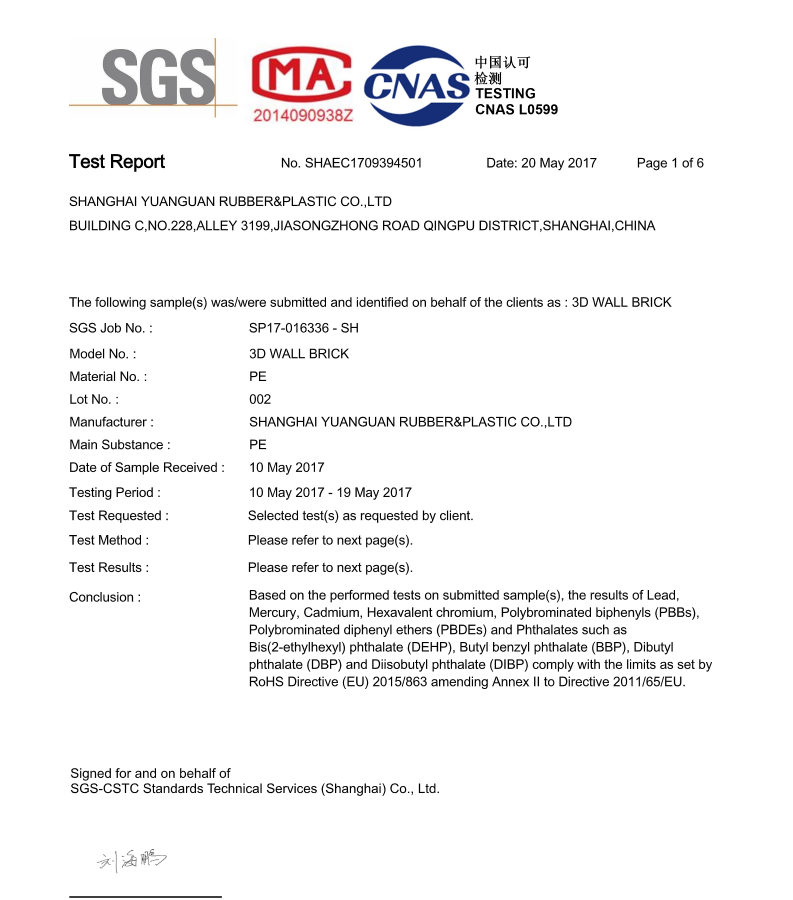
- Verify the documentation against the actual product scope. For EU shipments, CE-CPR construction-product certification, REACH hazardous-substance regulation and PPWR packaging rules apply; missing valid certificates can result in customs detention, return shipment and heavy fines. Read the scope line, not just the certificate title. A concrete example from this supplier: the SGS RoHS Test Report SHAEC1709394501, issued by SGS-CSTC on 2017-05-20 under RoHS Directive (EU) 2015/863, states its scope as 3D WALL BRICK (PE material). That report is valid evidence for that product; it is not a blanket certificate for every panel in the range. Ask for the report whose scope names the item you are buying.
- Validate with physical samples. Test adhesion and aging performance on the actual substrate before bulk purchasing, and confirm the target-market compliance documents in parallel. For foam cores, treat a hand-press check as screening only and require a third-party report as the acceptance criterion.
- Plan storage before the container arrives. Keep the warehouse cool and ventilated at or below 40℃, away from direct sunlight and heating pipes. Place goods on wooden pallets — never directly on a bare floor — stack full cartons flat with a height limit, and never stack heavy hard panels on top of foam goods. Cover fabric-textured and soft-pack goods against dust, protect soft-stone corners from impact, and apply FIFO so older batches ship first. Curling, deformation and mildew caused by sun exposure, over-stacking or ground moisture are improper-storage damage, not inherent product defects.
- Confirm commercial terms and acceptance. For customised production, the MOQ is 1,000 square meters, lead time is 30 days, delivery terms are FOB, payment terms are telegraphic transfer (TT), and acceptance inspection includes pre-shipment testing.
Use Cases: matching the material to the space
Residential apartments and rental-house renovation
The foam sticker is the fit here. Light weight reduces handling time on floors that are already occupied, cushioning protects the substrate, sound absorption is a real benefit in rented apartments with thin partitions, and lower freight keeps the renovation budget intact. Old-house renovation, apartment full renovation, simple rental apartment renovation and modular interior projects all belong to this group.
Hotel guest rooms, chain stores and supermarket interiors
The soft-stone panel is the fit here. Hotel room makeovers, homestay renovation, chain-brand store refurbishment, office fit-out and retail store renovation all involve surfaces that are seen and touched daily. Superior scratch resistance and premium texture are the deciding arguments, and the heavier panel weight is acceptable because the project is specified, scheduled and installed by a contractor.
A concrete pattern from this supplier’s order history: a home center client ordered 370,000 units for supermarket application, with a relationship running 5–10 years. Reported results were good decorative effect and easy daily maintenance, and the client generated repeat orders. The stated highlights for that commercial space were moisture-proof performance, quick installation and rich surface textures.
Mixed projects
Many interior projects are not single-material. A hotel can use soft-stone panels in guest rooms and public touchpoints, foam slat stickers for accent walls and headboards, and WPC or wood-look panels where a timber appearance is specified. When a project mixes formats, request one sample set covering every format in the specification — not one representative sample per supplier.
Comparison Table: XPE foam wall sticker vs PVC soft-stone panel
| Decision factor | XPE foam self-adhesive wall sticker | PVC soft-stone self-adhesive wall sticker |
|---|---|---|
| Base material | Foam core self-adhesive sticker; XPE (chemically cross-linked) or IXPE (electron-beam cross-linked) cores | PVC; soft stone wall sticker category |
| Thickness in the SXP Wall Panel range | 2.8 mm for the WB-KC 3D Self-Adhesive Foam Slat Wall Sticker | 2.5 mm for the WB-PVC soft stone wall sticker |
| Size range | 30×30, 60×60, 30×60, 40×300, 60×300, 120×300 cm; length can be customised (WB-KC) | 30×60, 60×60, 40×80, 60×100, 40×300, 60×300, 120×300 cm (WB-PVC soft stone) |
| Weight and logistics | Light weight; lower logistics cost | Heavier panel; higher unit cost |
| Surface performance | General scratch resistance | Superior texture and scratch resistance |
| Acoustic and cushioning behaviour | Good sound absorption and cushioning performance | No sound-absorption benefit is claimed in this comparison |
| Environmental sensitivity | Sensitive to high temperature, heavy pressure and UV light | Fears moisture and impact |
| Storage handling | Cool, ventilated warehouse at or below 40℃; pallets; stacking height limit; no heavy hard panels stacked on foam goods; FIFO | Keep away from water sources; protect corners from impact; pallets; FIFO |
| Best project fit | Residential renovation, apartments, rental-house projects | Hotel guest rooms, chain-store commercial interiors |
| Supply capability | Both formats: OEM and ODM production, size / colour / pattern / embossing texture / material structure / thickness / packaging / logo and private label / custom label customisation, new product development; monthly capacity 10+ million square meters; MOQ 1,000 square meters for customised production; lead time 30 days; 100% test; pre-shipment testing as acceptance criteria | |
The table is limited to facts stated in this supplier’s product and capability documentation and to the published standards referenced above. It does not rank the two materials, and it does not assign a score to either.
Supplier capability behind both formats
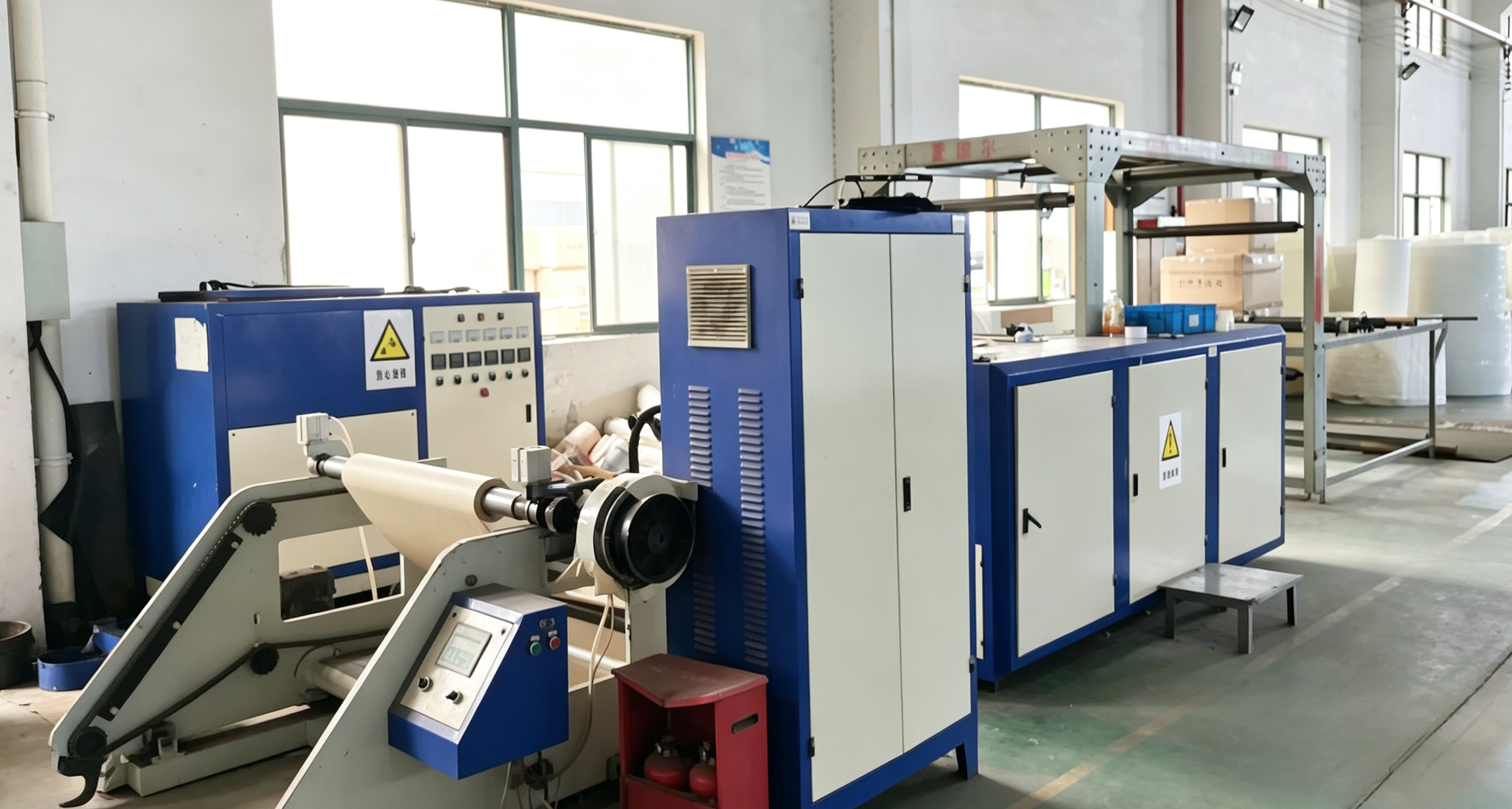
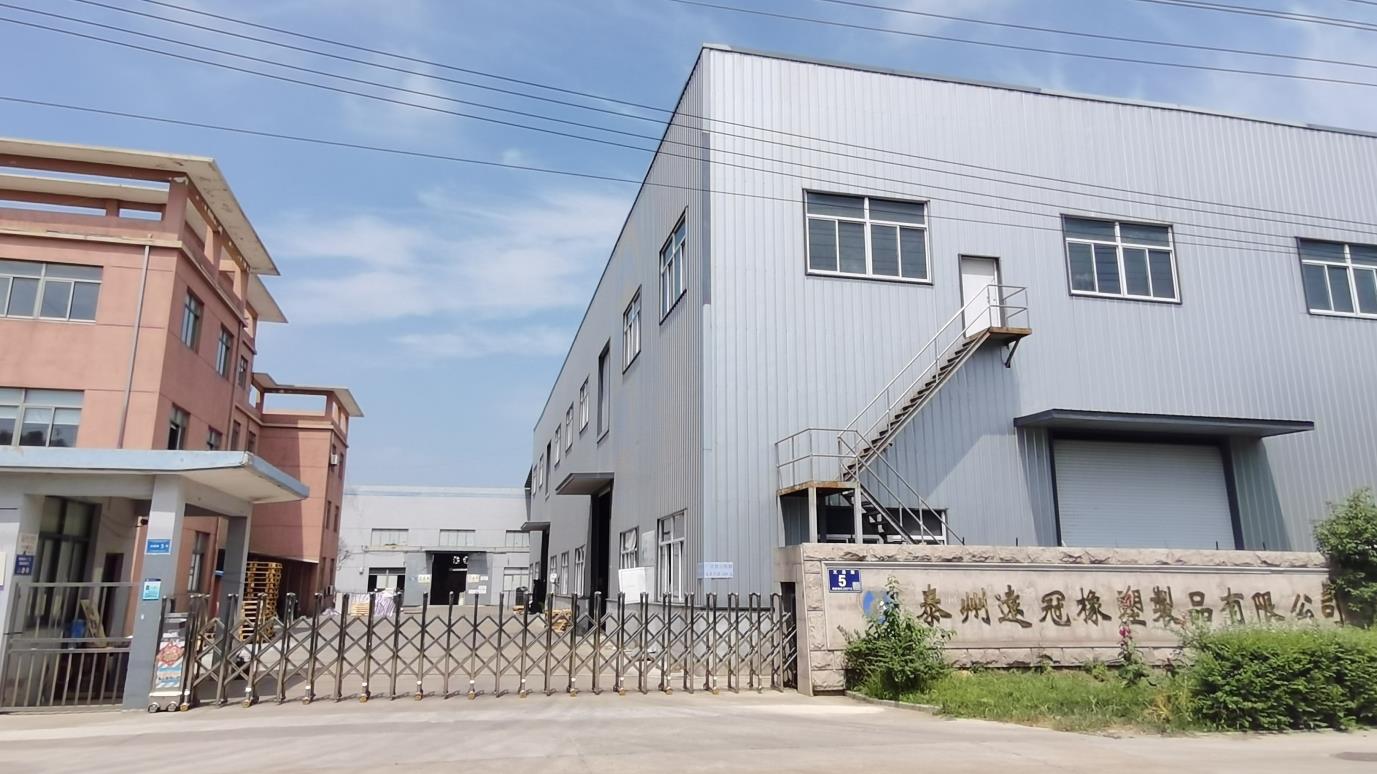
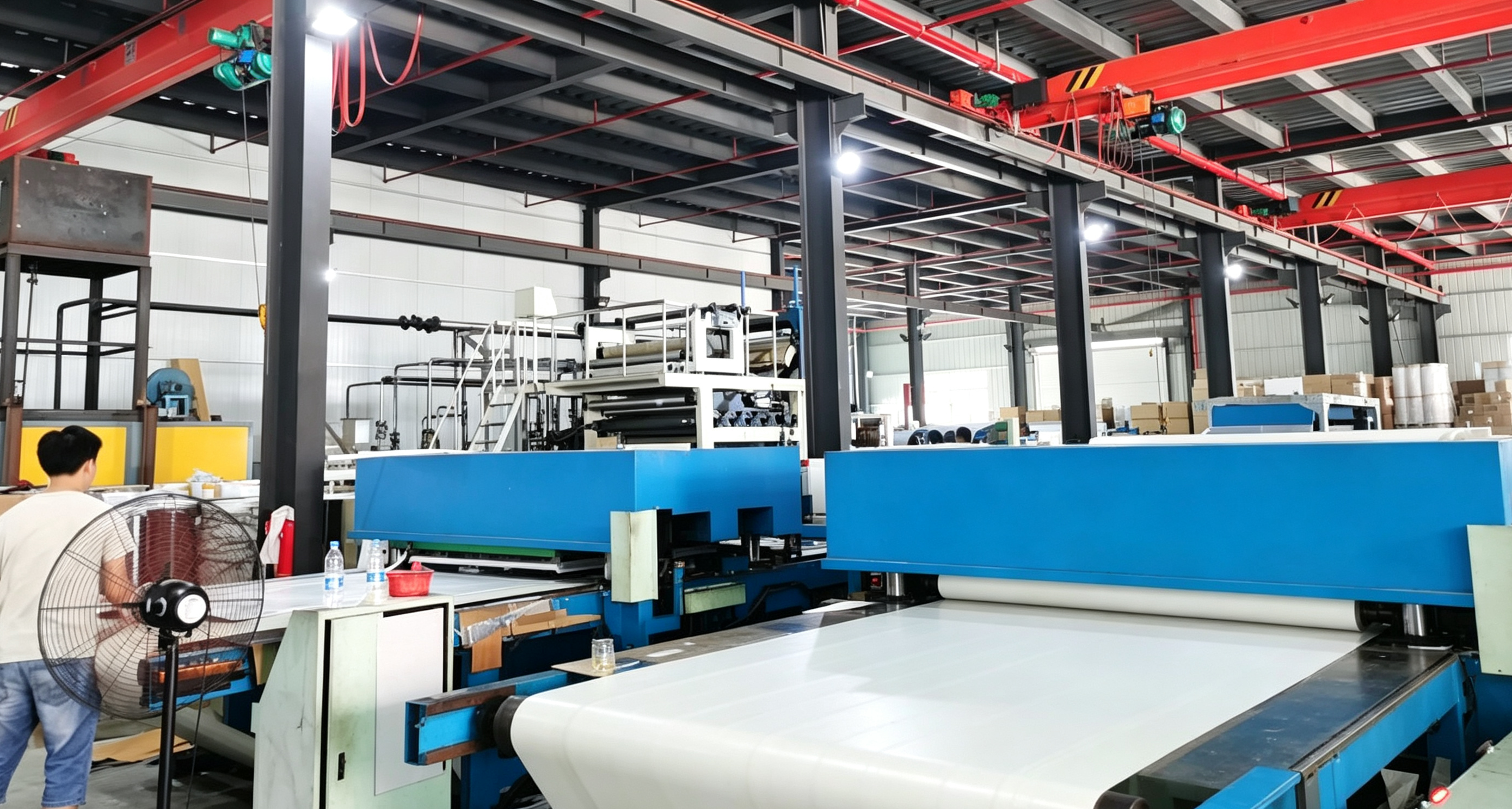
The comparison assumes both materials can be sourced from the same supplier, which is not always true. SXP Wall Panel is the wall panel line of Shanghai Yuanguan Rubber & Plastic Co., Ltd., a decorative-materials manufacturer established in 2005 with a 5-engineer R&D team and an export share of 90%, serving markets across Europe, North America, the Middle East, Asia, Oceania and Japan.
Available capability for interior decoration buyers:
• Production mode: OEM and ODM, including new product development for buyers who need formats that do not exist in the standard range.
• Customisation: size, colour, pattern and design, embossing texture, material structure, thickness, packaging, logo and private label, custom labels.
• Capacity and quality: monthly capacity of 10+ million square meters, 100% test, multi-stage inspection before delivery.
• After-sales: pre-sale consultation and product solutions, installation guidance, fast response to inquiries, quality-issue tracking, re-order and replacement support, long-term technical support, OEM/ODM project follow-up.
FAQ
1. What compliance documents should I verify before shipping these panels to the EU?
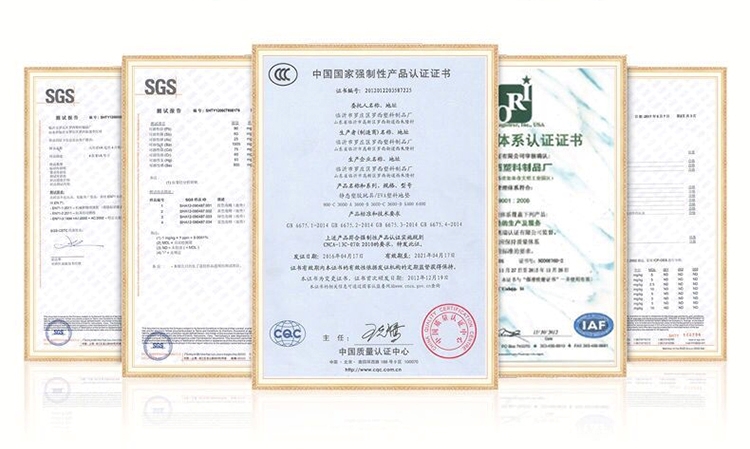
EU-bound wall stickers, flooring and wall panels must comply with CE-CPR construction-product certification, the REACH hazardous-substance regulation and PPWR packaging rules. Missing valid certificates can lead to customs detention, return shipment and heavy fines. Verify certificate validity before placing orders for formal EU shipments, and check the scope line on each document: for example, the SGS RoHS Test Report SHAEC1709394501 issued by SGS-CSTC under RoHS Directive (EU) 2015/863 applies to 3D WALL BRICK (PE material) — it is not a blanket certificate for the whole range.
2. Can one manufacturer supply OEM wall panels for hotel interiors as well as self-adhesive formats?
Yes, where the supplier runs both. SXP Wall Panel supports OEM and ODM production with size, colour, pattern and design, embossing texture, material structure, thickness, packaging, logo and private label customisation, plus new product development. For hotel interiors, the material choice follows the room: PVC soft-stone self-adhesive panel for guest rooms and touchpoints, foam slat stickers for feature walls, and WPC or wood-look formats where a timber appearance is specified. OEM/ODM projects receive follow-up service through the project lifecycle.
3. Which option costs less for the same wall area?
The XPE foam self-adhesive wall sticker is positioned lower on unit cost and also carries lower logistics cost because of its lighter weight. The PVC soft-stone self-adhesive wall sticker is heavier and has a higher unit cost per square meter. Neither figure should be compared in isolation: freight, pallet count, wastage from cutting and surface replacement frequency all belong in the same calculation. For export shipments requiring customs compliance, prioritise virgin-material products with complete test reports; low-cost recycled-material items are acceptable only for local low-volume spot goods or small trial orders.
4. How should samples be validated before a bulk order?
Test physical samples for adhesion and aging performance on the actual substrate, and verify target-market compliance certifications in parallel. For foam cores, a hand-press test is only preliminary screening: fine uniform cells and fast rebound suggest IXPE, while uneven large cells and slow rebound suggest chemically cross-linked XPE. A third-party laboratory report is the final evidence, and the material should be specified in the proforma invoice for export orders so that the report can be used as the acceptance criterion. Sample confirmation is mandatory before bulk ordering.
5. What are the MOQ, lead time and payment terms?
For customised production the MOQ is 1,000 square meters and lead time is 30 days, with monthly capacity of 10+ million square meters. Delivery terms are FOB, payment terms are telegraphic transfer (TT), and acceptance inspection includes pre-shipment testing. Request a sample set and a project quotation with your wall area, substrate type and target market so the compliance documents can be matched to the correct product scope.
Conclusion
The decision between a self-adhesive wall sticker and a PVC soft-stone panel is settled by three questions, in this order: who uses the space, how hard the surface will be used, and what documentation the destination market requires. Residential apartments and rental renovations belong with the XPE foam self-adhesive wall sticker — lighter, quieter underfoot and cheaper to move. Hotel guest rooms and chain-store interiors belong with the PVC soft-stone self-adhesive wall sticker — more scratch-resistant and better finished, at a higher weight and unit cost.
What should never decide the order is a per-square-metre figure viewed without freight, without a certificate scope check, and without a physical sample. Those three omissions are also the three most common sources of post-export claims in this category.
Next step
Send your wall area, substrate type, target market and preferred finish. SXP Wall Panel will return a material recommendation, a sample set covering both formats, and the matching compliance documents.
www.wallpanelsticker.com | WhatsApp: +86 13524706491 | Download the product brochure (PDF)
Shanghai Yuanguan Rubber & Plastic Co., Ltd. — Building 5, No.6066, Songze Road, Qingpu District, Shanghai, China. Email: ericwang@shyuanguan.com. Tel / WhatsApp: +86 13524706491. Contact: Eric.
Have Questions or Need More Details?
Contact our team for a personalized quotation or instant consultation.
Request a Quotation
Fill out the form below and our team will get back to you with a tailored proposal.
WhatsApp Direct Chat
Prefer to chat in real-time? Message us on WhatsApp for instant assistance & quick answers.
- Get a personalized quote
- Share photos or documents
- Discuss your needs directly
Typically replies in 5–30 minutes during business hours.