
Wall Panel Buyer's Guide: Top Types, Materials & Selection Tips for 2026
Wall Panel Types & Material Guide: What to Know Before Buying in 2026
Wall panels are pre-finished surface materials used to cover and decorate interior walls. Whether you are planning a home renovation, a hotel makeover, or a chain-store fit-out, choosing the right wall panel affects installation speed, durability, maintenance, and overall visual quality. This guide explains the main wall panel categories, what each type is best suited for, and how to evaluate supplier capability before you order.
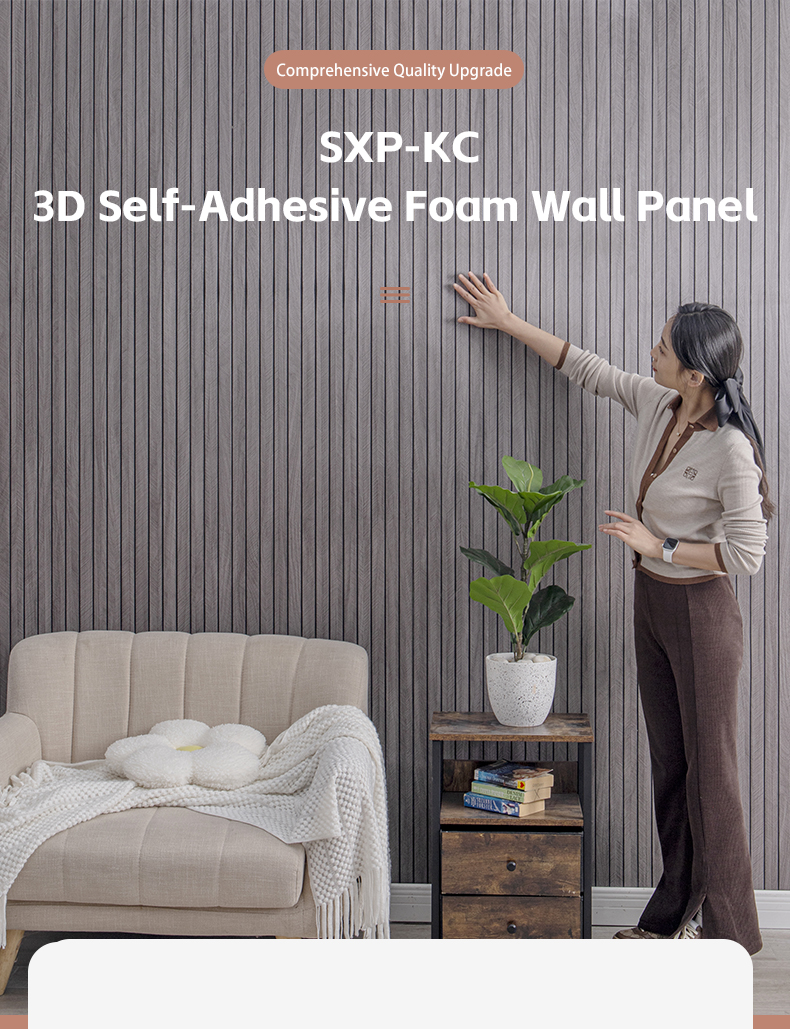
What Is a Wall Panel?
A wall panel is a decorative or protective board installed on interior surfaces to create a finished look without traditional plastering or painting. Wall panels may be made from PVC, PET, WPC (wood-plastic composite), leather, foam, or other composite materials. Some are self-adhesive, while others use click-locking or mechanical fixing systems. In the building materials industry, wall panels are frequently used for interior decoration, home renovation, and light commercial projects because they reduce construction time and labour compared with wet trades.
Shanghai Yuanguan Rubber Plastic Co., Ltd., which supplies products under the SXP Wall Panel line, is an example of a manufacturer that specialises in the wall panel category. The company produces self-adhesive wall stickers, 3D foam wall panels, PVC wallpaper, WPC decorative wall panels, self-adhesive PVC flooring, carpet tiles and decorative carpets. Its products are used in interior decoration and building materials markets across the EU, USA, Asia and South America.
Why Wall Panels Are Gaining Share in Interior Decoration
Several trends explain the rising use of wall panels in both residential and commercial spaces. DIY installation is easier with self-adhesive backing than with tile or wet plaster. Renovation cycles are shorter because panels cover old paint, cracks and stains in one step. In commercial projects, wall panels reduce downtime and make it easier to standardise branding across multiple locations.
Available market data points to continued growth in this space. The global wall panels market was valued at USD 32.4 billion in 2025 and is projected to reach USD 43.7 billion by 2033. Demand is uneven across regions: Asia Pacific accounted for the largest regional share in 2025 at 42.3%, while wood-based wall panel systems are projected to grow at 6.2% CAGR to 2035. These figures cover a broad definition of wall panels, including exterior cladding systems, so the direction of travel is more useful than the exact number.
Main Wall Panel Categories: Material Comparison
To make an informed buying decision, it helps to understand the main wall panel categories available from Chinese manufacturers and the typical use case for each. The table below compares the product lines that SXP Wall Panel supplies under its various models.
| Category | Material | Typical Thickness | Common Sizes | Typical Use |
|---|---|---|---|---|
| 3D Self-Adhesive Foam Slat Wall Sticker | PVC | 2.8 mm | 30×30, 60×60, 30×60, 40×300, 60×300, 120×300 cm; length customizable | Interior decoration; adding a 3D ribbed or slatted look to feature walls |
| WPC Wall Panel | Wood-Plastic Composite | — | 160×23×2900 mm; 16 pcs/box; 690–830 g/m | Interior decoration and building materials; long plank-style wall cladding |
| PET Marble Wall Sticker Panel | PET | 2 mm / 2.5 mm | 30×30, 30×60, 60×60, 40×80, 60×120, 60×300, 120×300 cm | Marble-look surfaces in home, building materials, and interior decoration projects |
| PVC Parquet Wall Sticker | PVC | 1.5 / 2 mm | 30×30, 30×60, 40×80, 60×60 cm; customized | Decorative parquet-style wall surfaces; home and interior projects |
| Leather Wall Sticker | PU leather / velvet | 6 mm | 60×60, 60×240, 70×70, 70×280, 70×300 cm | Soft, padded wall surfaces for bedrooms, hotel rooms, and upholstered wall effects |
| PVC Soft Stone Wall Sticker | PVC | 2.5 mm | 30×60, 60×60, 40×80, 60×100, 40×300, 60×300, 120×300 cm | Stone-texture interior walls with softer weight than natural stone |
| PVC Wall Sticker Panel | PVC | 2 mm | 30×30, 30×60, 40×80, 60×60, 60×120, 120×300 cm | Budget-friendly decorative wall covering for flat, smooth surfaces |
| PVC Wall Panel (suction-moulded) | PVC | 2.5 mm | 30×30, 50×50, 96×48 cm | Grid or tile-effect wall panels for interior finishing |
The product line above shows why it is not enough to search for the single keyword “wall panel.” A wall panel can be a rigid plank, a soft leather sticker, or a thin marble-effect film. The right choice depends on the project surface, the wall condition, and the visual effect you want to achieve.
Self-Adhesive vs. Mechanically Fixed Wall Panels
One of the most important decisions is how the panel will be installed. Self-adhesive wall panels are installed dry: remove the protective film, position the panel on a smooth surface, and press firmly. No cement or glue is needed. These panels can be cut locally with a utility knife and can often be removed and reinstalled, with some styles leaving no residue. This makes them attractive for rental apartments, temporary exhibition booths, and renovation projects with tight schedules.
The main installation conditions for self-adhesive panels are clear. The base surface must be flat, dry, and free of dust and grease. Suitable surfaces include cement floors, tiled surfaces, latex-painted walls, plasterboard, plywood, and other smooth, solid bases. The panels are not recommended for powdery, sandy, or loose surfaces. For wall application, the main tools are a utility knife, a scraper or roller, a tape measure and a spirit level; no large construction equipment is required.
How to Choose Between XPE Foam and PVC Soft-Stone Wall Stickers
Buyers often ask whether to choose an XPE foam self-adhesive wall sticker or a PVC soft-stone self-adhesive wall sticker. The answer depends on project positioning and budget.
XPE foam wall stickers are lightweight, offer good sound absorption and cushioning, and keep logistics costs competitive. They are commonly used for residential apartments and rental-house renovation. Their main limitation is that the surface scratch resistance is only average. PVC soft-stone wall stickers provide better scratch resistance, a more premium texture, and better anti-aging performance. They are heavier and cost more per unit, which is why they are favoured for hotel guest rooms and chain-store commercial projects.
For a long-lifespan project or an export order, it is also worth comparing XPE and IXPE foam. IXPE is cross-linked by electron-beam irradiation, resulting in fine, uniform cells, fast rebound, and resistance to permanent indentation. Chemically cross-linked XPE has larger cells, slower rebound, and can develop permanent dents under heavy pressure. A simple visual and hand-press test is only a screening method; a third-party test report is the final evidence for material performance.
Wooden, Marble and Leather Effects Without the Maintenance
Natural materials are visually appealing but expensive to install and maintain. Wooden wall panels can warp, marble is heavy and brittle, and leather upholstery is costly. Wall panels with printed or embossed textures provide an alternative. PVC wood-grain wall stickers simulate wooden surfaces with a 2 mm thickness, while PET marble wall stickers offer a marble look with a much lighter weight. Leather wall stickers made of PU leather or velvet add a soft, upholstered effect with a 6 mm thickness and are supplied in large roll formats such as 70×300 cm.
For buyers, the practical point is this: you can achieve the visual language of timber, stone or leather at a fraction of the installation time and cost. But these are not structural materials. They are decorative surfaces designed to be applied onto flat, stable, dry bases.
Where Wall Panels Are Used: Typical Scenarios
Wall panels are used across many project types. The main scenarios include building decoration, interior renovation, old-house remodeling, commercial space decoration, prefabricated interior decoration, hotel and B&B renovation, exhibition booth construction, and retail store renovation. Project examples include apartment full renovations, hotel room makeovers, homestay renovations, chain-store refurbishments, office fit-outs, temporary exhibition booths, rental apartment upgrades and modular interior projects.
In these scenarios, wall panels carry out several functions at once: wall and floor decoration and beautification; covering cracks and stains on the base surface; sound insulation and noise reduction; cushioning and bump protection; protecting existing walls and floors; shortening construction time; and improving the visual quality of the space.
Step-by-Step: How to Evaluate a Wall Panel Supplier
The best time to evaluate a wall panel supplier is before you place a large order, not after customs clearance. A practical evaluation process has six steps.
- Confirm the product category and model. Ask the supplier to state the exact product type, material, model designation, thickness, size range and packaging. For example, the SXP range includes the WB-KC 3D foam sticker, WB-WPC plank, WB-PET marble panel, wb-PVC parquet sticker, WB-PG leather sticker and WB-PVC soft-stone panel.
- Verify the manufacturing background. Ask whether the supplier has its own factory, how long it has been operating, what quality systems it holds, and how large its production capacity is. These details help you judge whether the supplier can deliver consistent volume.
- Request material and compliance documentation. For exports to the EU, check whether the product has CE-CPR certification under the Construction Products Regulation, whether the material meets REACH restrictions on hazardous substances, and whether packaging follows PPWR rules. Missing certificates can cause customs detention, return shipment or fines.
- Check sample quality. Order samples and test adhesion, scratch resistance, colour consistency and ageing performance. Sample confirmation should be mandatory before bulk ordering.
- Clarify storage and logistics requirements. Ask how the goods must be stored in the warehouse. Foam panels, for example, should be kept in a cool, ventilated warehouse below 40°C, away from direct sunlight and heating pipes, on wooden pallets rather than bare floors, with limited stacking height. PU-stone panels are sensitive to moisture and impact; linen soft-pack panels are vulnerable to dust and mildew. FIFO (first-in, first-out) rotation is recommended.
- Review after-sales support. Confirm how the supplier handles quality complaints, re-orders and documentation before you commit to a long-term partnership.
What Can Go Wrong with Low-Cost Wall Panels
Low-cost wall stickers, flooring and wall panels carry real risks. Price gaps in this industry usually come from raw materials, thickness, formula, quality control and certification. Products at the very low end often use recycled material, which can cause dimension deviation, fading, odour and non-compliant certificates. After export, the consequences can include customs detention, after-sales claims and market returns.
The safer approach is to prioritise virgin-material products with complete test reports for project orders, export business and shipments that require customs compliance. Low-cost recycled-material panels should be reserved for local low-volume spot goods or small trial orders. Do not make purchasing decisions purely on price.
Wall Panels vs. Traditional Wall Finishes: Quick Comparison
| Criteria | Self-Adhesive Wall Panels | Paint | Tile | Wallpaper |
|---|---|---|---|---|
| Installation time | Hours to days, dry installation | Dependent on surface prep and drying time | Days, requires adhesive and grout | 1–2 days, but paste and drying time needed |
| Labour cost | Low; can be DIY | Moderate | High | Moderate |
| Surface preparation | Flat, dry, smooth base required | Often requires filling and sanding | Requires level base | Smooth, dry base required |
| Effect range | Wood, marble, leather, stone, 3D textures | Solid colours | Stone and ceramic effects | Print patterns |
| Renovation impact | Minimal; less dust and waste | Moderate | High | Moderate |
| Removal/reinstallation | Some styles can be removed and reinstalled | Requires repainting | Requires demolition | Requires stripping |
Compliance and Documentation: What Buyers Should Request
Compliance risk is the most expensive problem a buyer can face. For wall panels exported to the EU, current rules require attention in three areas. First, construction products may need CE certification under the Construction Products Regulation. Second, REACH restricts hazardous substances in materials. Third, PPWR affects packaging waste requirements. Missing or invalid certificates can lead to customs detention, return shipment and fines.
An example of a verifiable certificate in this category is the RoHS certification of the 3D wall brick (PE material) product, tested by SGS-CSTC under certificate number SHAEC1709394501, in compliance with Directive (EU) 2015/863. This shows the type of documentation buyers can ask a supplier to provide.
For buyers of WPC wall panels, the standard HS code for wood-plastic composite panels exported from China is 3925.90.0000. This code helps with customs classification and should be confirmed with the freight forwarder before shipment.
Storage Requirements for Different Types of Wall Stickers and Panels
Wall panels are manufactured to be durable, but they can be damaged by poor storage. General warehouse requirements depend on the material type. Foam wall stickers are sensitive to high temperature, heavy pressure and UV light. PU-stone panels are sensitive to moisture and impact. Linen soft-pack wall stickers are vulnerable to dust, dampness and mildew.
To prevent damage, keep the warehouse cool and ventilated, with temperature at or below 40°C, away from direct sunlight and heating pipes. Place goods on wooden pallets, never directly on the floor. Stack full cartons flat with height limited, and do not place heavy hard panels on top of foam goods. Cover linen soft-pack goods to prevent dust accumulation, and avoid corner impacts on PU-stone items. Follow the FIFO principle so older batches ship first.
If goods arrive damaged, the cause matters. Curling, deformation and mildew caused by sun exposure, over-stacking or ground moisture are generally classified as improper-storage damage rather than inherent product defects. This is one more reason to define storage and handling rules with your warehouse team in advance.
FAQ
What compliance risks should I notice for wall panels exported to the EU?
Exports to the EU must comply with CE-CPR construction-product certification, REACH hazardous-substance regulation and PPWR packaging rules. Missing valid certificates can result in customs detention, return shipment and heavy fines. Request full valid certificates before placing orders.
How do I tell XPE foam apart from IXPE foam?
IXPE is cross-linked by electron-beam irradiation, giving fine uniform cells, fast rebound and resistance to permanent indentation. Chemically cross-linked XPE has larger cells, slower rebound and can suffer permanent dents under heavy pressure. A visual and hand-press test is only a preliminary screening; use a third-party test report as final evidence.
Which should I choose for an interior decoration project: XPE foam or PVC soft-stone wall sticker?
Choose according to project positioning and budget. XPE foam self-adhesive wall stickers suit residential apartments and rental-housing renovation because they are light, sound-absorbing and low-cost to ship. PVC soft-stone self-adhesive wall stickers suit hotel guest rooms and chain-store commercial projects because they offer better scratch resistance, texture and anti-aging performance. Test physical samples and verify target-market compliance before bulk purchasing.
What are the main risks of low-cost wall stickers, flooring and wall panels?
Low-cost products typically use recycled material, which can cause dimension deviation, fading, odour and non-compliant certificates. Risks include customs detention, after-sales claims and market returns after export. For project orders and export shipments, prioritise virgin-material products with complete test reports. Sample confirmation is mandatory before bulk ordering.
What are the general warehouse storage requirements for different wall panels?
Keep the warehouse cool and ventilated, at or below 40°C, away from direct sunlight and heating pipes. Place goods on pallets, never directly on the floor. Limit stacking height and never place heavy hard panels on top of foam goods. Protect PU-stone items from moisture and impact, and cover linen soft-pack items to prevent dust and mildew. Apply FIFO to avoid long-term stockpiling.
Can I order samples or get a quote from SXP Wall Panel?
Yes. Shanghai Yuanguan Rubber Plastic Co., Ltd. supports sample orders and provides quotation for wall panel and wall sticker products. To start, contact Eric by email at ericwang@shyuanguan.com or by WhatsApp at +86 13524706491. You can also download the company product brochure for a full overview of the product range.
Making the Final Decision
Wall panels are not a single product category. They range from 2 mm PVC stickers to 6 mm leather panels and rigid WPC planks. The correct choice is the one that matches your surface condition, installation skill, project timeline, budget and target-market compliance requirements.
For residential and rental renovations, XPE foam and PVC wall stickers offer speed and low cost. For premium commercial spaces, PVC soft-stone and leather panels deliver better texture and durability. For export orders, compliance documentation matters as much as the product itself.
Before placing a bulk order, confirm the product model and material, request samples, verify certificates, and check storage requirements. A reliable manufacturer should be able to supply clear specifications, production background and after-sales support.
Need a wall panel sample or quotation?
Contact Eric at Shanghai Yuanguan Rubber Plastic Co., Ltd. for support with samples, quotes and bulk orders.
Email: ericwang@shyuanguan.com | WhatsApp: +86 13524706491
Have Questions or Need More Details?
Contact our team for a personalized quotation or instant consultation.
Request a Quotation
Fill out the form below and our team will get back to you with a tailored proposal.
WhatsApp Direct Chat
Prefer to chat in real-time? Message us on WhatsApp for instant assistance & quick answers.
- Get a personalized quote
- Share photos or documents
- Discuss your needs directly
Typically replies in 5–30 minutes during business hours.