
PVC Flooring vs Laminate: A Side-by-Side Comparison Guide
When you compare PVC flooring and laminate for a renovation project, the practical decision usually comes down to moisture tolerance, installation speed, life-cycle maintenance and supplier flexibility. This guide puts PVC flooring and laminate side by side and explains where each fits in residential and commercial interior work. The PVC flooring details are based on a self-adhesive PVC floor tile supplied by Shanghai Yuanguan Rubber Plastic Co., Ltd. under the SXP Wall Panel brand; laminate characteristics are discussed as general market knowledge because specifications and quality vary by manufacturer.
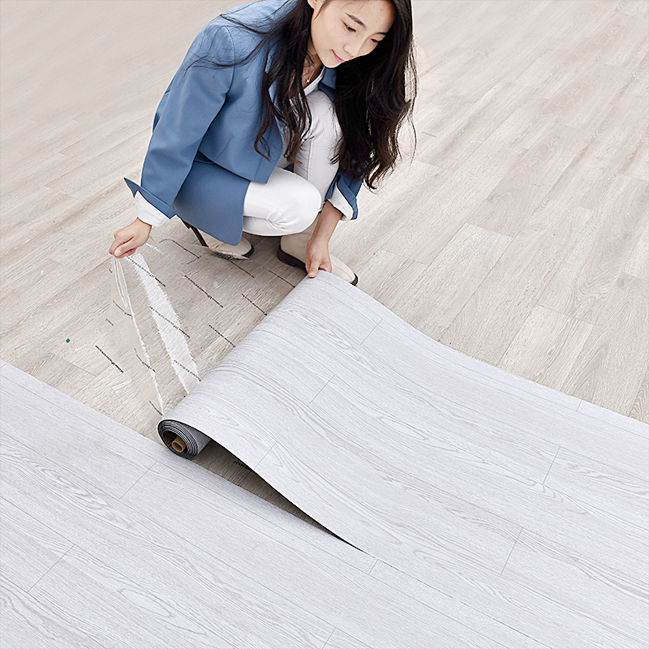
Figure 1: PVC floor tile is one of the wood-look alternatives often compared with laminate.
Problem Definition: Why Buyers Get Stuck Between PVC Flooring and Laminate
Buyers often assume that laminate is the stronger product because its planks are thicker. Yet in real renovation projects, the more relevant questions are: Can the floor tolerate a bathroom or kitchen environment? How fast can it be installed? What surface preparation is needed? How much maintenance will it require over years of use? These questions matter for an old-house renovation, apartment full renovation, hotel room makeover, office fit-out or retail store refurbishment.
PVC flooring and laminate both offer wood-inspired looks, and both are considered hard-surface alternatives to solid wood. But the material behaviour is not the same. PVC flooring is typically made from a resilient PVC material that can work in typical humid indoor environments. Laminate has a decorative layer over a fibreboard core and its moisture performance depends on the product construction. If a project requires quick installation and low water-related risk, a self-adhesive PVC floor is often the more practical answer.
Industry Background: The Growing Demand for PVC Flooring
The global market for vinyl flooring, which includes PVC/vinyl floor tile and sheet products, was estimated at USD 28.0 billion in 2026 according to Grand View Research. The same source projected the market to grow to USD 41.5 billion by 2033, at a CAGR of 5.8% from 2026 to 2033. Trade data from OEC also shows that China was the top exporter of vinyl chloride polymer floor coverings under HS 391810 in 2024, with exports valued at USD 4.97 billion. These figures help explain why importers, distributors and renovation companies are now evaluating PVC flooring suppliers in China more seriously.
Laminate flooring remains a popular choice in living rooms and bedrooms. It is an established product with a wide range of decors. The challenge is that laminate does not have one universal specification: wear layers, density, locking systems and moisture ratings all change between product lines. This is why a fair comparison should focus not only on material labels but on how each floor performs in the intended project.
Detailed Solution: Comparing PVC Flooring and Laminate by Decision Factor
1. Water Resistance and Room Suitability
The first differentiator is often water. The self-adhesive PVC floor tile in this guide is documented for indoor use under normal room temperature and typical humid environments. This makes it a practical option for spaces where moisture is expected, such as bathrooms, dry areas of kitchens, entrances and rental apartments. It should not be treated as a waterproof membrane for standing water or flood-prone areas; instead, it is selected for normal indoor humidity and accidental spillage.
Laminate generally uses a fibreboard core that can swell if moisture reaches the joint. Many laminate manufacturers advise against installation in wet rooms or bathrooms. Some water-resistant laminate ranges exist, but they usually need specific sealing systems and careful instructions. For evaluators, the rule is simple: if the project involves frequent humidity, PVC flooring tends to be a lower-risk choice than a basic laminate floor.
2. Installation Speed and Labour
Installation is where self-adhesive PVC flooring changes the project plan. The product is installed using a self-adhesive backing: peel off the protective film and stick it to a smooth surface. It is a dry installation that does not require cement or glue, and it can be cut locally. For removal, some styles can be removed and reinstalled without leaving residue. Supporting equipment is simple: a utility knife, scraper or roller, tape measure, spirit level and adhesive remover when needed.
Laminate installation usually follows a floating-floor method. Planks are assembled with glue or click-lock joints, often with an underlayment and expansion gaps around the room perimeter. An experienced flooring crew can install laminate quickly, but the process normally involves more setup and cutting calculations. When renovation time is short, the gap between a peel-and-stick floor and a click-lock floating floor becomes meaningful.
3. Maintenance and Repair
Maintenance claims should be based on real product data rather than assumptions. For the SXP Wall Panel PVC flooring format, the documented maintenance advantage is that it requires 85% less maintenance than alternatives, with no hollowing, edge warping or degumming, and it is scratch resistant. This reduces the burden for multi-unit buildings, hotels and shops where floors are used by many different people.
Laminate floors usually need only sweeping and slightly damp mopping. They should not be steam-cleaned or wet-mopped because excess water can damage the core. Scratches on a laminate surface cannot be sanded out, although some lighter marks can be hidden with repair kits. The practical difference is that PVC flooring can be easier to manage in wet-cleaning programs, while laminate demands more controlled cleaning methods.
4. Design Options and Customization
Modern PVC flooring is made in many formats, including tiles, planks and sheets. The broader PVC flooring category includes wood-grain, stone-grain, carpet-pattern and parquet-pattern designs, as well as matte finishes. When buying from a manufacturer with OEM/ODM capability, buyers can request size customization, colour customization, pattern and design customization, embossing texture customization, material structure customization, thickness customization, packaging customization and private-label branding. This flexibility is useful for e-commerce sellers and distributors that want their own product brand.
Laminate also offers a wide range of wood decors and embossed textures. However, selection is usually limited to the models offered by each laminate factory. Custom laminate programs are less common in small and medium renovation projects because the production runs are larger. For a renovation company managing many rooms that must look consistent, PVC flooring with custom size and pattern can be easier to match to the project design.
5. Compliance and Procurement Risk
Flooring buyers who ship to EU markets should check construction-product compliance. Industry guidelines for wall stickers, flooring and wall panels exported to the EU include CE-CPR construction-product certification, REACH hazardous-substance regulation and PPWR packaging rules. Missing valid certificates may create customs detention, return shipment and financial loss. In the US market, FloorScore is a recognised indoor air quality certification for hard-surface flooring, verifying VOC emissions against California Section 01350 criteria. Fire-resistance classifications for PVC flooring are often referenced as B1 in China and Cfl-s1 in Europe, but the exact class depends on the finished product.
Another warning from industry knowledge is that very low-cost PVC flooring may be made with recycled materials. This can lead to dimension deviation, fading, odour and missing compliance documents. The safer procurement path is to request samples and current test reports before bulk ordering, and to confirm that the manufacturer has a mature quality system.
Step-by-Step Breakdown: How to Choose Between PVC Flooring and Laminate
Use this step-by-step evaluation for a renovation project or a distributor sourcing programme.
Step 1. Define the room and use. List each room: old house renovation, apartment full renovation, hotel guest room, office or retail area. For bedrooms and low-moisture living rooms, laminate can work. For typical humid environments, PVC flooring is easier to justify.
Step 2. Inspect the existing substrate. Self-adhesive PVC flooring requires a flat, dry, dust-free and grease-free base. Smooth cement floors, tiled surfaces and other stable, solid substrates are appropriate. A powdery, sandy or loose surface is not acceptable. Laminate also needs a level base, but its prep can include underlayment and moisture barriers.
Step 3. Compare installation time and site disruption. Peel-and-stick PVC flooring is a dry installation and does not need large construction equipment. This means less downtime for occupied apartments, hotel floors or retail stores. Laminate installation can also be efficient, but the project should allow for expansion gaps, transitions and more complex cutting around doorways.
Step 4. Calculate life-cycle maintenance. The self-adhesive PVC product requires 85% less maintenance than alternatives, with no hollowing, edge warping or degumming, and is scratch resistant. If cleaning staff will use wet mops frequently in a hotel or office, this is a major operating advantage. Laminate is routine to maintain but usually needs a dry or nearly dry cleaning routine.
Step 5. Check supplier capability. For project quantities and private-label programmes, look for a manufacturer that supports flexible customization and one-stop service. A 7,000-square-metre intelligent factory, 75 million units annual output, and direct factory supply can reduce intermediate costs and help keep delivery reliable. SXP Wall Panel, for example, is produced by a Shanghai-based factory established in 2005 and exports to Europe, USA, Asia and South America.
Step 6. Validate with samples and documents. Ask for material samples, application tests and compliance documentation. The manufacturing MOQ is commonly 1,000 square metres for custom PVC flooring work, and lead time is about 30 days after order confirmation.
Use Cases: PVC Flooring in Renovation and Commercial Projects
PVC flooring is suitable for renovation of old houses, apartment full renovations, hotel room makeovers, homestay renovations, office fit-outs and retail store refurbishment. Its role in these scenarios is to decorate and beautify the floor while covering cracks and stains on an existing base surface. In an occupied building, the dry-installation method reduces odour and keeps the renovation area usable more quickly.
In a documented case, PVC flooring products were supplied at a scale of 100,000 units for residential and commercial interior decoration, including apartment renovation, office fitting and retail store refurbishment. The project was distributed by an international e-commerce platform across multiple countries. Stable product performance was reported, and the customer completed three repeat orders within two years.
For hospital renovation projects, compliance documentation becomes even more important. A PVC flooring manufacturer should be able to clarify slip resistance, fire behaviour, VOC emissions and cleaning compatibility. No floor should be specified for a hospital without confirming that the exact model meets the project brief and local regulations.
PVC Flooring vs. Laminate: Quick Comparison Table
| Comparison factor | PVC flooring (SXP self-adhesive PVC floor tile, model WB-PVC) | Laminate flooring (general market characteristics) |
|---|---|---|
| Material structure | PVC floor tile | Multi-layer decorative floor with fibreboard core in most product lines |
| Documented dimensions | 40/60/120 x 300 cm; thickness 1.5 mm | Varies by manufacturer and product series |
| Installation method | Self-adhesive backing; peel off film and stick to smooth surface; dry installation, no cement or glue; can be cut locally | Usually floating click-lock or glue-assisted plank installation; often requires underlayment and expansion gap |
| Substrate requirement | Base must be flat, dry, free of dust and grease; smooth cement floors, tile and other solid bases acceptable | Substrate should be level and sound; manufacturer instructions vary |
| Water and humidity | Indoor use at normal room temperature and typical humid environments | Some lines offer higher moisture resistance, but many laminate floors are not recommended for wet rooms |
| Maintenance | 85% less maintenance than alternatives; no hollowing, edge warping or degumming; scratch resistant | Normally swept and cleaned with slightly damp mop; avoid steam or wet mopping on most products |
| Customization and brand | OEM/ODM supported: size, colour, pattern, embossing texture, material structure, thickness, packaging, logo and private label | Designs and sizes are usually chosen from the factory's existing laminate ranges |
| Typical projects | Apartment renovation, old-house renovation, hotel/homestay makeover, office fit-out, retail store refurbishment | Bedrooms, living rooms, offices and retail spaces where moisture risk is low |
Note: This table compares one PVC flooring product format with the general characteristics of laminate. Always check the exact test reports, moisture rating and installation instructions of any floor you plan to buy.
FAQ
1. Is a PVC flooring manufacturer suitable for hospital renovation projects?
A PVC-flooring-based solution can be considered for hospital renovation when the chosen model meets the project's compliance, slip-resistance, cleanability and fire-safety requirements. SXP Wall Panel supplies self-adhesive PVC flooring that has been used in residential and commercial interior decoration, including apartment renovation, office fitting and retail store refurbishment. For hospital projects, request valid test reports, check local regulations and evaluate a physical sample before specification.
2. How do PVC flooring and laminate compare for bathroom and kitchen use?
The SXP PVC flooring format is documented for indoor use under normal room temperature and typical humid environments. This makes PVC flooring more adaptable than a basic laminate floor in kitchens, bathrooms and other humid indoor rooms. The base surface must be flat, dry and free of dust and grease before installation. Standing water or flooding should still be avoided unless the specific product is rated for it.
3. What should I look for in a PVC flooring manufacturer before a project order?
Check the manufacturer's factory capacity, customization service, quality documents and export experience. The supplier behind SXP Wall Panel operates a 7,000-square-metre factory with an annual output of 75 million units. It supports OEM/ODM customization in size, colour, pattern, texture and packaging. A responsible supplier should also explain MOQ, lead time and after-sales support before you place a deposit.
4. How much maintenance does self-adhesive PVC flooring need?
Documented product information states that the SXP PVC flooring format requires 85% less maintenance than alternatives, with no hollowing, edge warping or degumming, and is scratch resistant. This makes it a practical option for high-traffic rental, hotel and retail environments. Routine sweeping and damp mopping are normally sufficient, but always follow the supplier's care instructions for the specific surface finish.
5. Can I request samples and custom branding for a PVC flooring pilot order?
Yes. The SXP Wall Panel PVC flooring line offers OEM/ODM service, and the factory provides full one-stop services including sample support, order production, shipment arrangement and after-sales support. A typical custom flooring MOQ is 1,000 square metres, with a lead time of about 30 days after confirmation. For a private-label retail programme, the supplier can also support custom packaging, logo and label design.
Evaluate PVC flooring for your next renovation project. You can download the Shanghai Yuanguan product brochure for a broader view of the factory's flooring and wall panel ranges. For sample requests and order-related questions, contact Eric at ericwang@shyuanguan.com or via WhatsApp at +86 13524706491.
Conclusion
PVC flooring and laminate are both valid floor coverings, but they solve different project problems. Laminate remains a familiar choice for dry rooms, with a wood-like appearance and a floating installation system. PVC flooring, especially a self-adhesive PVC tile, provides a more water-tolerant, low-maintenance and fast-installation option for spaces that will face humidity, frequent cleaning or quick renovation schedules.
For distributors, contractors and renovation companies, the right decision depends on the base surface, moisture level, cleaning routine and available installation time. A strong PVC flooring supplier will help you verify samples, check compliance documents and customise the product for your project or private label. Use the comparison above as a working checklist, and validate the final selection with real samples before ordering in bulk.
Have Questions or Need More Details?
Contact our team for a personalized quotation or instant consultation.
Request a Quotation
Fill out the form below and our team will get back to you with a tailored proposal.
WhatsApp Direct Chat
Prefer to chat in real-time? Message us on WhatsApp for instant assistance & quick answers.
- Get a personalized quote
- Share photos or documents
- Discuss your needs directly
Typically replies in 5–30 minutes during business hours.