
Technical Guide to Wall Sticker Panel Core Materials: PET, PVC, and WPC Specs Explained
A wall sticker panel is specified by three variables a buyer can verify before ordering: core material, sheet or profile thickness, and module size. In the SXP Wall Panel range, those variables resolve into a small set of model codes — WB-PET (PET marble wall sticker, 2 mm and 2.5 mm), the WB-PVC family (PVC sheet and panel formats from 1.5 mm to 2.5 mm), WB-KC (3D self-adhesive foam slat wall sticker, 2.8 mm) and WB-WPC (WPC wall panel, 160 × 23 × 2900 mm, 690 / 810 / 830 g per metre). This guide explains what each published specification means in practice, why the units differ between sheet and profile formats, and which checks belong on a specification sheet before samples are approved.
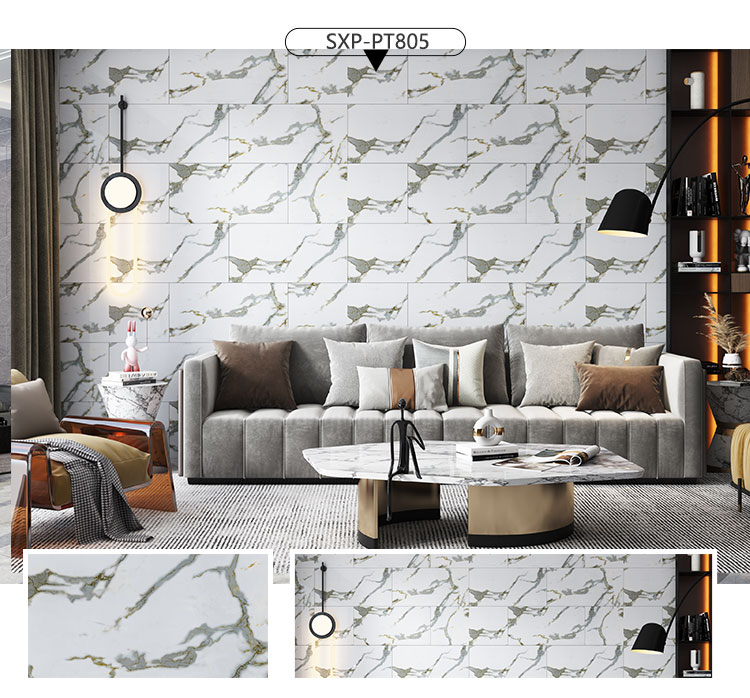
PET marble wall sticker sheet from the SXP Wall Panel range (model WB-PET), supplied in 2 mm and 2.5 mm thicknesses.
Problem Definition: Where Wall Sticker Panel Specifications Usually Break
Material specifications in this category fail for predictable reasons, and almost all of them are visible before a purchase order is issued. The four errors below account for most specification disputes between importers, distributors and interior contractors.
- Thickness read as a quality score. Thickness is a function of substrate, traffic and format, not a ranking. The range spans 1.5 mm and 2 mm PVC sheet, 2 mm and 2.5 mm PET sheet, 2.5 mm PVC soft stone and panel formats, 2.8 mm PVC foam slat, and a 23 mm WPC profile. A 1.5 mm sheet is not a defective 2.5 mm sheet; it is a different product class built for different wall conditions.
- Weight quoted in the wrong unit. Sheet formats are described by thickness and module size, while the WPC wall panel publishes a mass of 690, 810 or 830 g/m against a 160 × 23 × 2900 mm profile. That figure is expressed per metre of profile. Comparing it against a per-square-metre figure produces an incorrect freight and handling estimate.
- Certification claimed at company level rather than SKU level. A test report that names one material and one product does not automatically transfer to another material. Buyers who accept a company-level statement instead of a report naming the exact SKU inherit the risk.
- Module selected without joint planning. Available modules run from 30 × 30 cm up to 120 × 300 cm. Module size drives waste factor, joint count, cutting time and visual rhythm — it is a planning decision, not a colour decision.
Substrate is the fifth, and most common, failure point. The self-adhesive formats require a flat, dry base free of dust and grease. Suitable surfaces include cement floors, tiled surfaces, latex-painted walls, plasterboard and plywood. Powdery, sandy or loose surfaces are explicitly excluded, and a specification that ignores this will fail during installation regardless of material quality.
Industry Background: Material Choice Is Now a Compliance and Logistics Decision
Wall panels are a large and actively reallocating category. The global wall panels market was valued at USD 32.4 billion in 2025 and is projected to reach USD 43.7 billion by 2033, according to Dataintelo, which reports a CAGR of 4.2% across that period. Definitional caution is warranted: another published estimate places the 2025 market near USD 10.2 billion, a gap that reflects whether exterior cladding systems are counted inside the same boundary as interior wall panels. For technical buyers, the useful reading is not the headline number but the direction — volume is shifting between material families.
That shift is measurable by material. Metal wall panels held the largest single share in 2025 at 28.5%, while Asia Pacific accounted for the largest regional share at 42.3%. Wood-based wall panels represented close to 31% of global installations in 2024, and wood wall panel systems are projected to grow at a 6.2% CAGR through 2035. Decorative sheet formats — PET marble, PVC soft stone, self-adhesive PVC and WPC profiles — compete inside this structure on installation speed, module flexibility and landed cost rather than on raw material volume.
Two non-commercial factors now sit alongside material choice. The first is fire classification: EN 13501-1 governs reaction-to-fire performance in the European Union, and B-s1,d0 is a commonly specified Euroclass rating for commercial interior wall panel applications. The second is customs classification: a U.S. Customs and Border Protection ruling (N337378) classifies wood plastic composite products from China under HS Code 3925.90.0000. Classification and duty treatment should always be confirmed with a customs broker for the specific panel being imported, because the ruling addresses a defined product rather than every WPC format on the market.
Detailed Solution: PET, PVC and WPC Specified One by One
PET marble wall sticker — model WB-PET
WB-PET is a PET-based marble wall sticker, published with a thickness of 2 mm and 2.5 mm and a module range of 30 × 30 cm, 30 × 60 cm, 60 × 60 cm, 40 × 80 cm, 60 × 120 cm, 60 × 300 cm and 120 × 300 cm. Its primary application band is home and garden, building materials and interior decoration.
The practical meaning of that specification is format flexibility. PET sheet in this range reaches 120 × 300 cm, so a wall can be resolved with few seams and a continuous marble visual, which is why PET marble is usually compared against tile and stone-effect rigid surfaces rather than against foam products. The constraint is the base: the same smooth, solid, non-powdery substrate rule applies, and long-term exposure to strong sunlight should be avoided in indoor installations.
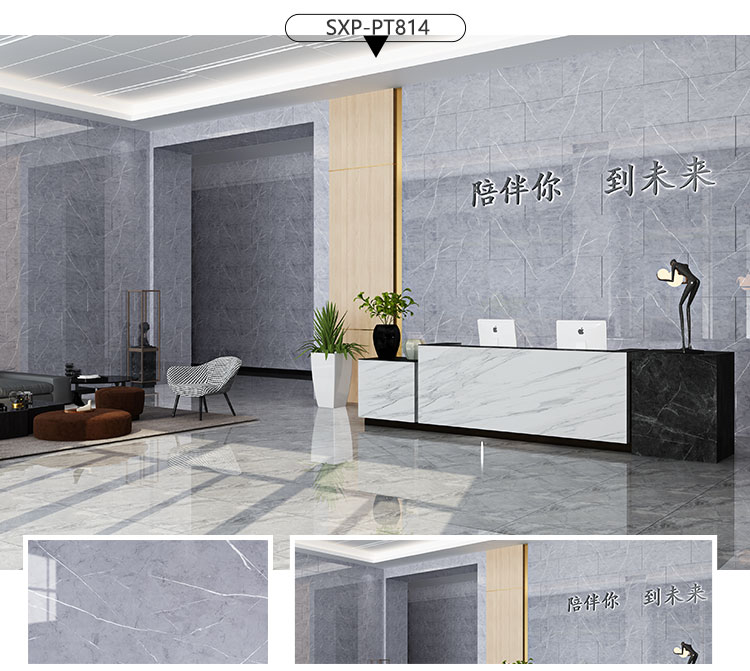
WB-PET sheet format. PET marble is specified by thickness (2 mm / 2.5 mm) and by module, not by weight per metre.
The PVC family — WB-PVC sheet formats and WB-KC foam slats
PVC is the widest specification band in the range, and it covers five distinct product forms that are frequently confused with one another because they share a model prefix.
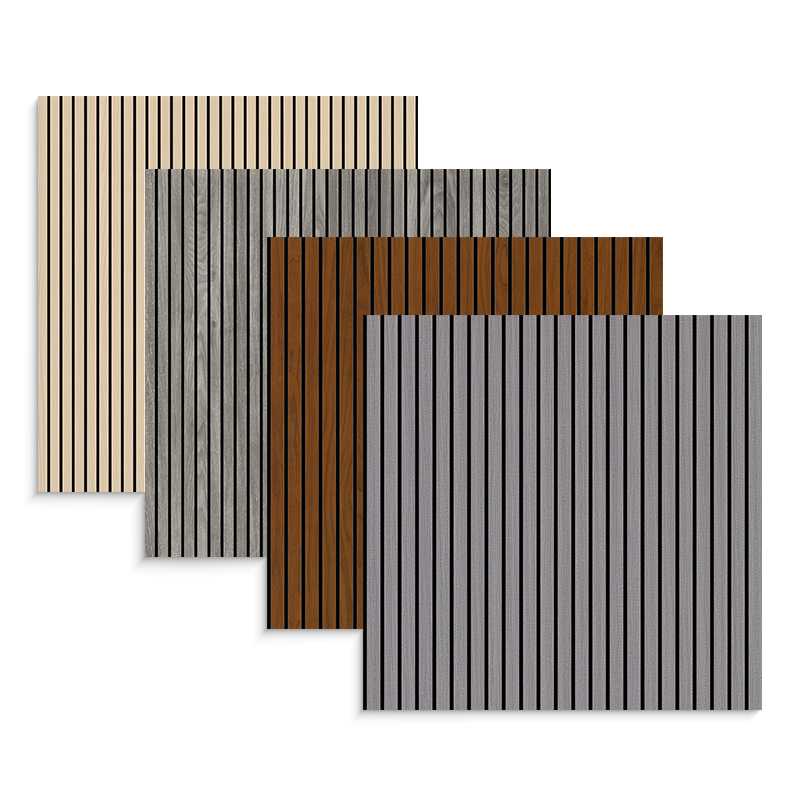
- PVC wall sticker (WB-PVC): PVC material, 2 mm thickness, sizes 30 × 30 cm, 30 × 60 cm, 40 × 80 cm, 60 × 60 cm, 60 × 120 cm and 120 × 300 cm, for interior decoration.
- PVC soft stone wall sticker (WB-PVC): PVC material, 2.5 mm thickness, sizes 30 × 60 cm, 60 × 60 cm, 40 × 80 cm, 60 × 100 cm, 40 × 300 cm, 60 × 300 cm and 120 × 300 cm, for interior decoration and building materials.
- PVC parquet wall sticker (wb-PVC): PVC material, 1.5 mm and 2 mm thickness, sizes 30 × 30 cm, 30 × 60 cm, 40 × 80 cm, 60 × 60 cm or customized.
- PVC wall panel (WB-PVC): PVC material, 2.5 mm thickness, sizes 30 × 30 cm, 50 × 50 cm and 96 × 48 cm, for home and garden, building materials and interior decoration.
- 3D self-adhesive foam slat wall sticker (WB-KC): PVC material, 2.8 mm thickness, sizes 30 × 30 cm, 60 × 60 cm, 30 × 60 cm, 40 × 300 cm, 60 × 300 cm and 120 × 300 cm, with customizable length.
Read together, the PVC band runs from 1.5 mm to 2.8 mm and from 30 cm modules to 300 cm panels. That spread is deliberate: a 1.5 mm or 2 mm sheet suits large-area renovation where speed and material economy dominate, a 2.5 mm soft stone or panel format suits commercial walls where surface feel and wear exposure matter more, and the 2.8 mm foam slat adds three-dimensional relief for feature walls. Product guidance for this family positions the soft stone format for premium texture and scratch resistance, while foam formats are positioned around light weight, cushioning and sound-absorption behaviour with a generally lower logistics cost.
PVC wall sticker (WB-PVC), 2 mm, shown in a wood-grain surface. PVC is the only material in this range that spans 1.5 mm to 2.8 mm.
Self-adhesive KC 3D grille wall sticker (WB-KC), PVC foam slat format, 2.8 mm, with customizable length.
WPC wall panel — model WB-WPC
WB-WPC is published as a WPC wall panel with a size of 160 × 23 × 2900 mm, packed 16 pieces per box, and a weight of 690 / 810 / 830 g/m. Its application band is interior decoration and building materials.
This is a different unit system from the sheet formats, and that difference is where quoting errors appear. A PET or PVC sheet is planned in square metres using a module grid. The WPC panel publishes a fixed length, a defined cross-section and a mass per metre. Everything downstream — take-off quantity, pallet configuration, carrier selection and unloading labour — should therefore be calculated in metres and pieces first, then converted if a square-metre comparison is required. When that conversion is made, the basis of the published weight figure should be confirmed in writing with the supplier, together with the pack quantity of 16 pieces per box.
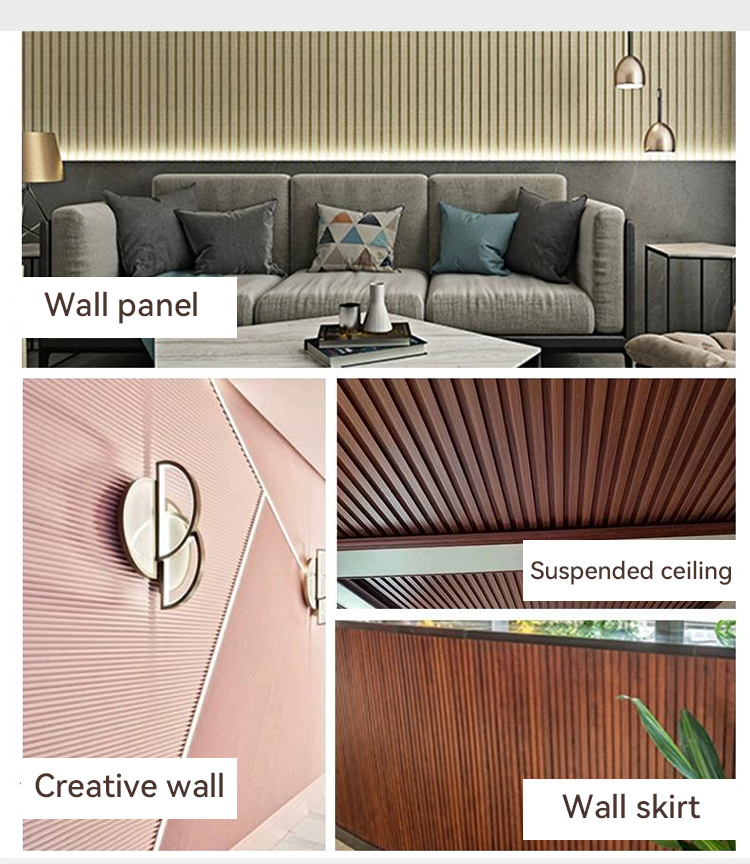
WB-WPC wall panel, 160 × 23 × 2900 mm, 16 pcs per box, weight published as 690 / 810 / 830 g per metre.
Boundary note: what sits outside this PET / PVC / WPC scope
The SXP Wall Panel range also includes a leather wall sticker, model WB-PG, at 6 mm thickness in sizes 60 × 60 cm, 60 × 240 cm, 70 × 70 cm, 70 × 280 cm and 70 × 300 cm. It is listed here only to keep material families separate: leather, PET, PVC and WPC carry different specification logic, and mixing their parameters in one comparison column is the single fastest way to produce a misleading specification sheet.
Step-by-Step Breakdown: Specifying a Panel from Substrate to Purchase Order
- Start with the substrate, not the pattern. Confirm the wall or floor is flat, dry, dust-free and grease-free. Acceptable bases include cement floors, tiled surfaces, latex-painted walls, plasterboard and plywood. Reject powdery, sandy or loose surfaces before the material discussion begins, and for floor applications confirm base strength and the absence of hollow spots.
- Fix the thickness band. Choose from 1.5 mm / 2 mm PVC sheet, 2 mm PVC panel, 2 mm / 2.5 mm PET sheet, 2.5 mm PVC soft stone, 2.8 mm PVC foam slat, or the 23 mm WPC profile. Selection should follow traffic exposure, surface feel requirements and the visual depth the design calls for.
- Choose the module and plan the joints. Set out the wall using the published sizes — 30 × 30 cm through 120 × 300 cm for sheet formats, 2900 mm length for WPC, and customizable length for WB-KC. Joint layout determines waste factor and installation time, so it belongs in the specification, not on site.
- Read the weight in the correct unit. For WB-WPC, record 690 / 810 / 830 g/m and the 16 pcs/box pack, and state clearly whether the figure is per metre or per square metre in the purchase documents. For sheet formats, mass follows from thickness and module.
- Verify compliance documents against the exact SKU. Match the report to the material and model being purchased, not to the supplier in general. Confirm the applicable reaction-to-fire classification where the project is a commercial interior in the EU.
- Validate with physical samples, then confirm commercial terms. Sample support is part of the standard service scope, and sample validation should test adhesion and aging behaviour on the actual substrate. Production terms for the range are published as a minimum order quantity of 1,000 square metres, a lead time of 30 days, monthly capacity above 10 million square metres, and 100% testing. Customization is available on size, color, pattern and design, embossing texture, material structure, thickness, packaging, logo and private label, custom labels, and new product development.
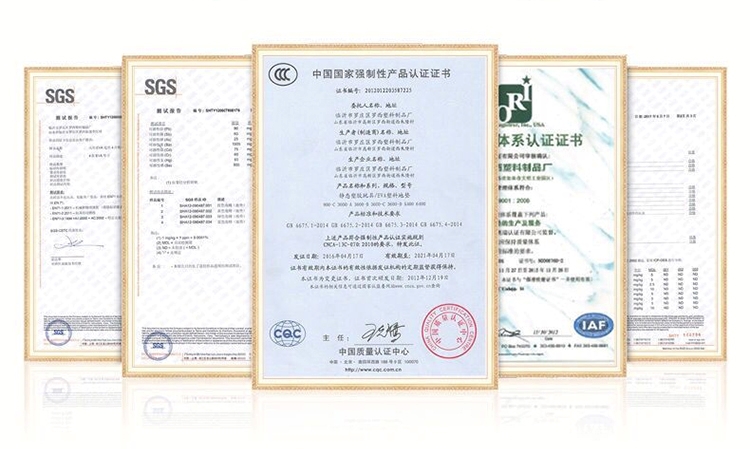
Certification documentation is verified per product and per material. A report naming one material does not extend automatically to another SKU.
Use Cases: Matching Material to Project Type
Project type narrows material choice faster than any other variable. The installation environment that applies across the range is indoor use at normal room temperature, including typically humid areas such as bathrooms and dry areas of kitchens, while avoiding long-term exposure to strong sunlight. Within that envelope, the following matches are the practical ones.
- Old-house remodelling and rental apartment renovation. PVC formats at 1.5 mm and 2 mm suit large-area, fast-cycle work. Installation is self-adhesive with a peel-off backing — a dry process with no cement or glue — panels can be cut on site, and some styles can be removed and reinstalled without leaving residue.
- Hotel rooms, homestays and chain-store refurbishment. PVC soft stone at 2.5 mm and PET marble at 2 mm / 2.5 mm fit commercial interiors where surface feel, texture quality and wear exposure are specified. Large modules up to 120 × 300 cm reduce joint count across long wall runs.
- Feature walls and slat relief. WB-KC at 2.8 mm delivers three-dimensional grille relief in modules up to 120 × 300 cm with customizable length.
- Linear profile systems. WB-WPC at 160 × 23 × 2900 mm is planned in metres and pieces, which suits projects that specify consistent linear rhythm.
- Exhibition booths and short-cycle fit-outs. Lightweight self-adhesive formats and removable styles serve temporary construction where installation speed and disassembly matter.
Beyond appearance, the functional scope documented for these products includes covering cracks and stains on the base surface, sound insulation and noise reduction, cushioning and bump protection, protection of existing walls and floors, and shortening construction time. The accompanying tool set is deliberately small: utility knife, scraper or roller, tape measure, spirit level, and adhesive remover for disassembly, with a matching floor roller recommended for floor applications rather than any large construction equipment.
One delivered reference point illustrates how these parameters behave at commercial scale. A home-center channel project covering 370,000 units for supermarket application has run for a service duration of 5–10 years, with reported results of good decorative effect and easy daily maintenance, and repeat orders from the same customer. The factors recorded as decisive in that project were moisture resistance, quick installation and a wide choice of surface textures for commercial space — all three of which trace back to the thickness, material and module decisions described above.
Specification Comparison Table
The table below lists only published specification data. Values are reproduced as documented for each model and are not normalized, because normalizing them would introduce assumptions that the source data does not contain.
| Model | Material | Thickness | Published sizes | Pack / weight note |
|---|---|---|---|---|
| WB-PET | PET | 2 mm / 2.5 mm | 30×30, 30×60, 60×60, 40×80, 60×120, 60×300, 120×300 cm | Sheet format; PET marble surface |
| WB-PVC (PVC wall sticker) | PVC | 2 mm | 30×30, 30×60, 40×80, 60×60, 60×120, 120×300 cm | Sheet format; interior decoration |
| WB-PVC (soft stone wall sticker) | PVC | 2.5 mm | 30×60, 60×60, 40×80, 60×100, 40×300, 60×300, 120×300 cm | Sheet format; building materials band |
| wb-PVC (parquet wall sticker) | PVC | 1.5 mm / 2 mm | 30×30, 30×60, 40×80, 60×60 cm or customized | Sheet format; size customization available |
| WB-PVC (PVC wall panel) | PVC | 2.5 mm | 30×30, 50×50, 96×48 cm | Sheet format; home and garden band |
| WB-KC | PVC | 2.8 mm | 30×30, 60×60, 30×60, 40×300, 60×300, 120×300 cm | Length customizable; 3D foam slat relief |
| WB-WPC | WPC | 23 mm profile | 160×23×2900 mm | 16 pcs/box; 690 / 810 / 830 g/m |
| WB-PG | Leather | 6 mm | 60×60, 60×240, 70×70, 70×280, 70×300 cm | Outside the PET / PVC / WPC scope |
FAQ
1. What compliance evidence should a buyer request from a PVC wall panel manufacturer, and which SKUs does it cover?
Ask for the report that names the exact material and model being purchased. For reference, the SGS RoHS Test Report held on file carries report number SHAEC1709394501, was issued by SGS-CSTC, and covers the 3D wall brick (PE material) manufactured by Shanghai Yuanguan Rubber & Plastic Co., Ltd., tested against RoHS Directive (EU) 2015/863 for the EU market. That scope is material-specific: the PET, PVC and WPC items described in this guide are separate products, so their documentation must be requested separately. For European commercial interiors, EN 13501-1 is the relevant reaction-to-fire classification standard, and B-s1,d0 is a commonly specified Euroclass rating for interior wall panel applications — confirm the rating reported for the specific panel construction rather than assuming it. The manufacturer's ISO 9001 quality management system certification further covers the production system, which is a different type of evidence from a product test report.
2. What thickness, size and weight range is available across PET, PVC and WPC?
PET marble sheet (WB-PET) is published at 2 mm and 2.5 mm with modules from 30 × 30 cm to 120 × 300 cm. PVC spans the widest band: 1.5 mm and 2 mm for parquet wall stickers, 2 mm for PVC wall stickers, 2.5 mm for both the soft stone wall sticker and the PVC wall panel, and 2.8 mm for the WB-KC 3D foam slat, with modules from 30 × 30 cm to 120 × 300 cm and customizable length on the slat format. WPC publishes a different unit system entirely: a 160 × 23 × 2900 mm profile with a weight of 690 / 810 / 830 g/m and 16 pieces per box.
3. What is the minimum order quantity, and what drives cost in this category?
The published minimum order quantity for the range is 1,000 square metres, with monthly capacity above 10 million square metres. Cost is driven mainly by material family and thickness band, by module size — larger modules such as 120 × 300 cm reduce joint count but change packing and handling — by surface treatment and embossing texture, and by packaging and private-label requirements. Because the panels are supplied factory direct, intermediate costs are reduced, but the correct way to compare quotations is to fix the model code, thickness, module and surface before comparing price, so that two quotes are describing the same product.
4. Can samples be supplied before a bulk order, and what should be tested?
Yes. Sample support is included in the standard one-stop service scope, alongside order production, shipment arrangement and after-sales support. Samples should be tested for adhesion and aging behaviour on a substrate that matches the actual project surface, and target-market compliance documentation should be verified before bulk purchasing. Physical sample testing is the stage where a thickness decision can still be changed cheaply; after production it cannot. Electrical or high-load equipment is not required for installation — the documented tool set is a utility knife, scraper or roller, tape measure, spirit level and, for floors, a matching roller.
5. What lead time applies, and how do I confirm a specification and quotation?
The published lead time is 30 days, with 100% testing before delivery and multi-stage quality inspection on all batches. OEM and ODM production is supported, together with customization of size, color, pattern and design, embossing texture, material structure, thickness, packaging, logo and private label, custom labels, and new product development. To confirm a configuration, send the project take-off with the model code, thickness, module, surface and required quantity. Q
Quotations, samples and the full product brochure are available directly: the brochure can be downloaded at Shanghai Yuanguan Product Brochure. Contact Eric at ericwang@shyuanguan.com or by phone / WhatsApp on +86 13524706491, or visit www.wallpanelsticker.com.
Conclusion: Three Checks Before You Order
Material specification in this category is not complicated, but it is unforgiving of unit errors. Three checks resolve most of the risk. First, confirm the material-and-model combination — WB-PET for PET marble at 2 mm or 2.5 mm, a WB-PVC format between 1.5 mm and 2.5 mm, WB-KC for 2.8 mm foam slat, or WB-WPC at 160 × 23 × 2900 mm with 690 / 810 / 830 g/m. Second, confirm the unit system: square metres and modules for sheet formats, metres and pieces for the WPC profile. Third, confirm compliance evidence against the exact SKU, and validate adhesion and surface behaviour on the real substrate with samples before production is scheduled.
SXP Wall Panel is the decorative wall panel line manufactured by Shanghai Yuanguan Rubber & Plastic Co., Ltd., a China-based manufacturer of wall stickers, wallpaper, flooring and foam materials supplying building materials retailers and wholesalers across more than 80 countries and regions, with ISO 9001 quality management system certification and OEM/ODM production support.
Next step: sample, quotation or specification review
Send your project take-off — model code, thickness, module, surface and quantity — and we will return a sample set and a quotation against the exact specification, along with the certification documents that apply to the SKU you are buying.
Email: ericwang@shyuanguan.com | WhatsApp / Tel: +86 13524706491 | Website: www.wallpanelsticker.com
Product brochure: download the Shanghai Yuanguan Product Brochure (PDF).
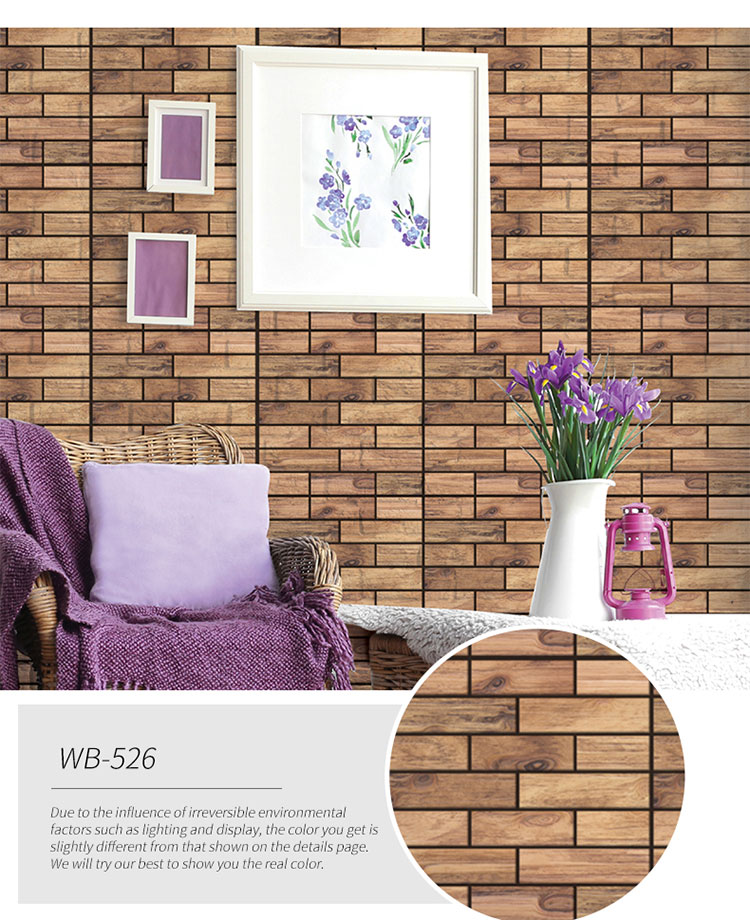
PVC wall panel from the SXP Wall Panel range. Sample sets and specification-matched quotations are available on request.
Have Questions or Need More Details?
Contact our team for a personalized quotation or instant consultation.
Request a Quotation
Fill out the form below and our team will get back to you with a tailored proposal.
WhatsApp Direct Chat
Prefer to chat in real-time? Message us on WhatsApp for instant assistance & quick answers.
- Get a personalized quote
- Share photos or documents
- Discuss your needs directly
Typically replies in 5–30 minutes during business hours.