
WALL PANEL Partnership FAQ: Long-Term Supply, Compliance & After-Sales Support
WALL PANEL Partnership FAQ: Long-Term Supply, Compliance & After-Sales Support
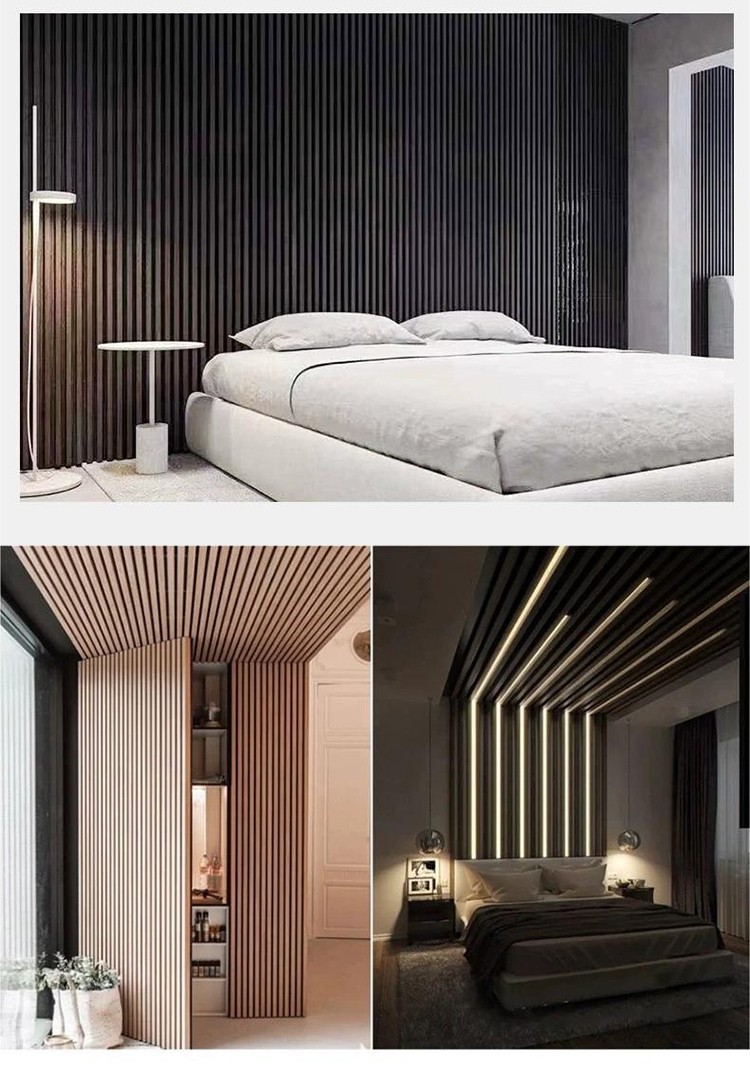
WPC wall panel (model WB-WPC), one of the wall panel lines covered by the SXP Wall Panel long-term supply program.
A long-term WALL PANEL partnership is usually decided by three operational capabilities rather than by unit price: keeping compliance documents valid for the destination market, protecting stock in the warehouse, and being able to prove what each batch is made of. This FAQ answers the recurring questions that importers, distributors, project buyers and channel partners ask once they move from a single trial order to a repeating annual supply program — covering EU compliance exposure, storage of foam and stone-type panels, how to tell XPE from IXPE foam, and how after-sales claims are actually resolved.
SXP Wall Panel is the wall panel brand of Shanghai Yuanguan Rubber Plastic Co., Ltd., a decorative materials manufacturer founded in 2005 in Shanghai, China. The company produces self-adhesive wall stickers, 3D foam wall panels, PVC wallpaper, WPC decorative wall panels, self-adhesive PVC flooring, and carpet tiles and decorative carpets, and serves buyers in more than 80 countries and regions, with the EU, USA, Asia and South America among its major markets.
Why Long-Term WALL PANEL Partnerships Break Down
Three failure points appear repeatedly in first-year supply relationships, and none of them is about the visual finish of the panel.
1. Compliance is discovered at customs, not at the quotation stage. Wall stickers, flooring and wall panels shipped into the EU must comply with CE-CPR construction-product certification, the REACH hazardous-substance regulation and PPWR packaging rules. When a container arrives with missing or invalid certificates, the practical outcomes are customs detention, return shipment and heavy fines — costs that typically exceed whatever price difference the buyer negotiated at the quotation stage.
2. Storage damage is claimed as a product defect. Foam-based wall stickers are sensitive to high temperature, heavy pressure and UV light; PU-stone and soft-stone panels are vulnerable to moisture and impact; fabric-textured soft-pack products are vulnerable to dust, dampness and mildew. Curling, deformation and mildew caused by sun exposure, over-stacking or ground moisture are treated as improper-storage damage rather than inherent product defects — but that distinction only holds if a storage protocol was agreed in writing before delivery.
3. Material identity drifts between batches. Price gaps in this category come mainly from raw materials (virgin versus recycled material), thickness, formulation, quality control and certifications. Recycled-material items may show dimension deviation, fading and odor, and may ship without complete test certificates. If the material is not specified in the proforma invoice, the second order may not match the first, and the buyer carries the resulting claims and returns.
Industry Background: A Larger Market With Stricter Documentation
The wall panel category keeps expanding while the paperwork around it tightens. Dataintelo's Wall Panels Market Research Report 2033 values the global wall panels market at USD 32.4 billion in 2025 and projects USD 43.7 billion by 2033, a CAGR of 4.2%. In the same report, metal wall panels held the largest product share at 28.5% in 2025, and Asia Pacific accounted for the largest regional share at 42.3%. On the wood side, wood-based wall panels represented nearly 31% of global installations in 2024, and WiseGuyReports projects wood wall panel systems to grow at roughly 6.2% CAGR through 2035.
Regulation has moved in the same direction. EN 13501-1 governs the reaction-to-fire classification of construction products in the European Union, and the B-s1,d0 class is commonly specified for commercial interior wall panel applications. For trade classification, U.S. Customs and Border Protection ruling N337378 classifies wood plastic composite (WPC) products from China under tariff number 3925.90.0000 — a detail that affects how a WPC wall panel line is declared on import documents.
The practical consequence for buyers is that documentation now travels as far as the panel itself. A supplier that cannot produce a valid certificate set, a material statement and a batch record quickly becomes a risk on the second order, regardless of how the sample looked.
How a Repeat-Supply Partnership Is Structured
Compliance documentation: what to ask for, and what each document actually covers
Shanghai Yuanguan Rubber Plastic Co., Ltd. holds ISO 9001 quality management system certification, and the 3D WALL BRICK (PE material) product is certified under RoHS Directive (EU) 2015/863, verified by SGS-CSTC under certificate number SHAEC1709394501. Those are specific, checkable references — and that is exactly the point. Buyers should treat certificates as product-scoped documents, not as company-wide badges.
For EU-bound shipments, the working rule is simple: request the full valid certificate set for each product and material in the order — CE, REACH and MSDS documentation where the destination market requires it, plus PPWR-compliant packaging — and verify validity dates before the order is placed. Where a project specifies additional performance criteria such as a fire classification, confirm in writing which test evidence covers the exact product being quoted.
Specifications that must stay stable across batches
Repeat supply only works when the specification is written down. The SXP Wall Panel range covers several distinct product families, each with fixed model designations:
- WB-PET — PET marble wall sticker, available at 2 mm and 2.5 mm thickness, in sizes from 30×30 cm and 30×60 cm up to 60×300 cm and 120×300 cm.
- WB-WPC — WPC wall panel with a 160×23×2900 mm profile, weighing 690/810/830 g per meter and packed 16 pieces per box.
- WB-KC — 3D self-adhesive foam slat wall sticker in PVC, 2.8 mm thick, in sizes 30×30, 30×60, 60×60, 40×300, 60×300 and 120×300 cm, with customizable lengths.
Alongside these, the company produces a PVC soft-stone wall sticker at 2.5 mm, a PVC wall sticker at 2 mm across the 30×30 cm to 120×300 cm size range, and a 6 mm PU leather and velvet wall sticker line (model WB-PG) in 60×60 cm, 60×240 cm, 70×70 cm, 70×280 cm and 70×300 cm formats.
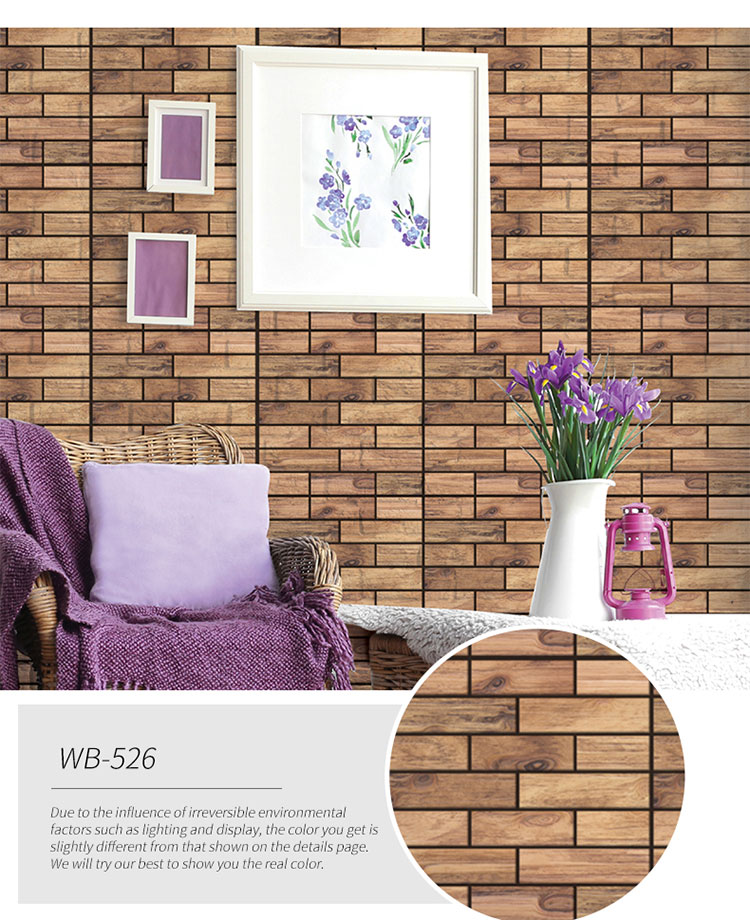
PVC wall panel line (model WB-PVC), produced at 2.5 mm thickness in 30×30 cm, 50×50 cm and 96×48 cm formats.
Warehouse storage rules for foam, stone-type and soft-pack stock
Storage is where most “quality complaints” actually originate, so it belongs in the partnership agreement rather than in the after-sales mailbox. The working protocol covers six points:
- Keep the warehouse cool and ventilated, with ambient temperature at or below 40 °C, away from direct sunlight and heating pipes.
- Place goods on wooden pallets — never directly on a bare floor — to prevent damp damage.
- Stack full cartons flat within a defined height limit, and never stack heavy hard panels on top of foam goods.
- Cover fabric-textured and soft-pack goods for dust prevention; protect PU-stone-type items from corner impact.
- Keep stock away from heat sources and water sources.
- Apply FIFO: ship older batches first and avoid long-term stock piling.
Under this protocol, curling, deformation and mildew caused by sun exposure, over-stacking or ground moisture are classified as improper-storage damage rather than inherent product defects. The classification only works in both directions — the supplier has to state the rules, and the buyer has to follow them.
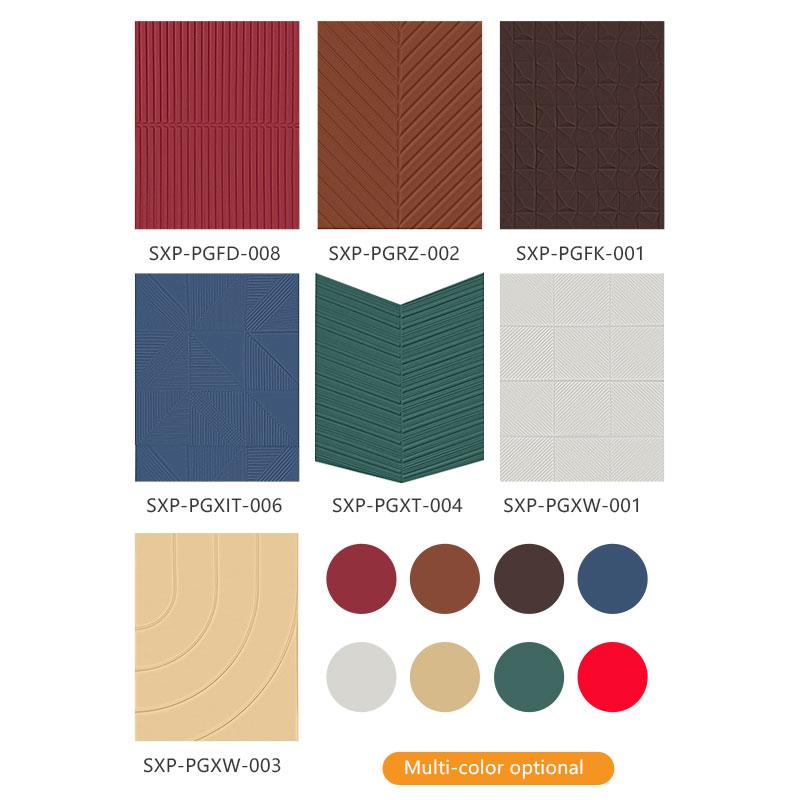
PU leather and velvet wall sticker line (model WB-PG), a 6 mm soft-pack product that needs dust and dampness protection in storage.
Telling XPE foam from IXPE foam
The foam question is a sourcing question, not a foam-physics question, because the two materials behave differently under load and come with different test documentation. IXPE is cross-linked by electron-beam irradiation and has fine, uniform cells, fast rebound and resistance to permanent indentation. Chemically cross-linked XPE has larger cells, slower rebound and tends to take a permanent dent under heavy pressure.
A practical incoming inspection runs in four steps: check the cross-section cells (fine and uniform suggests IXPE; uneven and large suggests XPE); press the sample hard for 3–5 seconds and release, watching recovery speed and residual dent; check the supplier's material statement and request formamide and cross-linking-degree test reports; and if mass goods are suspected non-conforming, send a sample to a third-party laboratory. A visual and hand-press test is preliminary screening only — the third-party report is the acceptance evidence. For export orders, specify the material in the proforma invoice so the requirement is contractual.
After-sales: separating storage damage from product defects
An after-sales framework is useful only if it can end a dispute quickly. That means three things: a written storage protocol, a material statement fixed in the proforma invoice, and a laboratory report as the final arbiter when a material question is contested. With those in place, a claim about adhesive lift, deformation or material substitution can be traced to storage conditions, installation surface or batch record instead of becoming a negotiation.
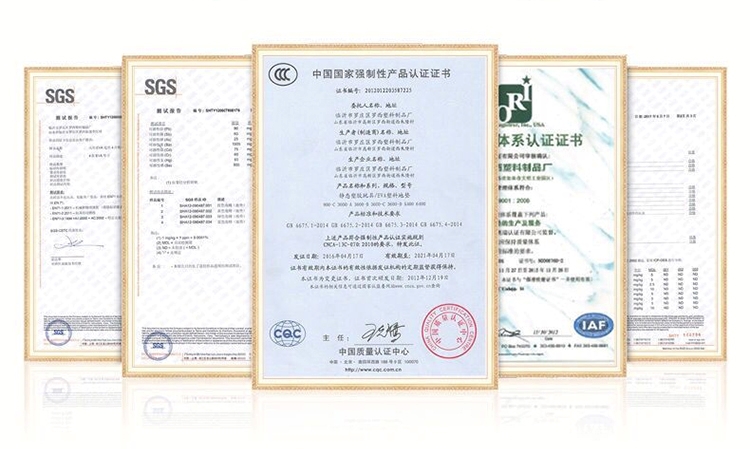
Compliance paperwork is part of the handover package for repeat-supply partners, not an afterthought before shipment.
Step-by-Step: Setting Up a Repeat-Supply Program
Step 1 — Define the destination market and the document set
Write down the destination country, the customs entry route and the document set the market requires. For the EU this typically means CE-CPR, REACH and PPWR-relevant documentation, plus MSDS where applicable. Verify certificate validity and product scope before the order is placed, not after the container is booked.
Step 2 — Match the material to the application
Foam-based self-adhesive wall stickers suit residential apartments and rental-house renovation: they are light, cushioning, sound-absorbing and cheaper to ship. PVC soft-stone wall stickers suit hotel guest rooms and chain-store commercial interiors, where scratch resistance, texture and anti-aging performance matter more than logistics weight. Getting this choice wrong is expensive to correct on the second order.
Step 3 — Validate physical samples before bulk
Test physical samples for adhesion and aging performance under your own conditions, and verify target-market compliance documents at the same time. Sample confirmation should be mandatory for project orders and for any shipment that has to clear customs.
Step 4 — Agree the storage and handling protocol in writing
Fix the pallet rule, the stack-height limit, the 40 °C ceiling, the dust-cover requirement for soft-pack goods and the FIFO rule as contract terms. This single step removes the majority of ambiguity in later quality discussions.
Step 5 — Lock the material statement, thickness, size and packaging in the PI
State the material, model, thickness and size in the proforma invoice — for example WB-WPC at 160×23×2900 mm packed 16 pieces per box, or WB-PET at 2 mm or 2.5 mm in the required size. Standardized production and multi-stage quality inspection are applied to all batches before delivery, and batch records make it possible to compare a repeat order against the original.
Step 6 — Set the after-sales rule before the first claim
Agree in advance that material disputes are settled by third-party laboratory testing, and that storage-related damage is assessed against the written protocol. Both parties then work from evidence rather than from position.
Use Cases: Which Wall Panel Line Fits Which Project
Residential apartments and rental renovation
For apartment full renovations and simple rental-unit refurbishment, XPE foam self-adhesive wall stickers are the usual recommendation: light weight, good sound absorption and cushioning, and competitive logistics cost. The WB-KC 3D self-adhesive foam slat wall sticker at 2.8 mm supports this positioning, with sizes from 30×30 cm to 120×300 cm and customizable lengths for feature walls and full-room runs.
Hotel guest rooms and chain-store interiors
For hotel room makeovers and chain-brand store refurbishment, PVC soft-stone self-adhesive wall stickers are preferred for their scratch resistance, premium surface texture and better anti-aging performance. The 120×300 cm formats reduce the number of seams on long walls, which matters in corridors and retail frontage.
Distributor and retailer stock programs
Building-materials distributors usually need a mix rather than a single line: WB-WPC for interior decoration and building-material projects with a fixed 160×23×2900 mm profile and 16 pieces per box, and WB-PET marble wall stickers at 2 mm and 2.5 mm in retail-friendly sizes from 30×30 cm upward. Planning stock by size band rather than by design alone reduces the number of dead SKUs after the first season.
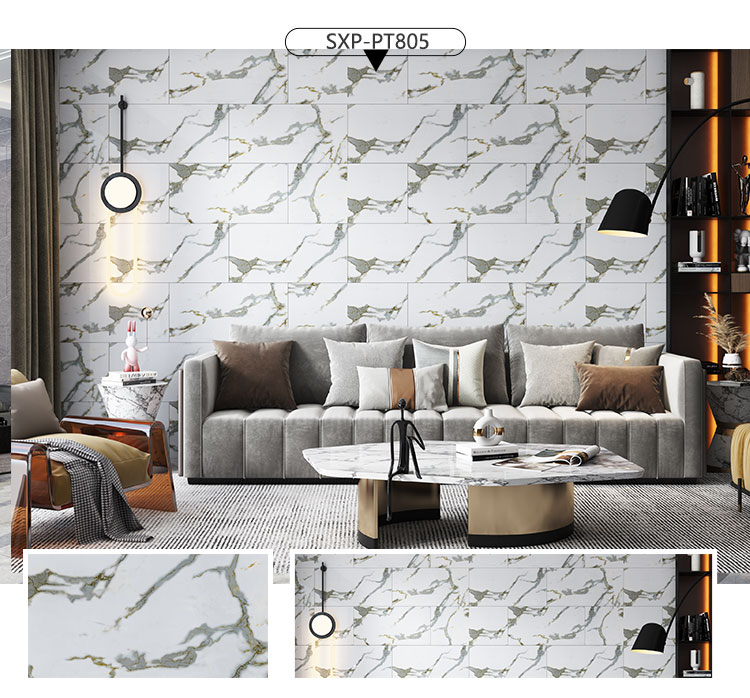
PET marble wall sticker line (model WB-PET), offered at 2 mm and 2.5 mm thickness in sizes from 30×30 cm to 120×300 cm.
Wall Panel Product and Specification Comparison
| Model | Product type | Material | Thickness | Available sizes | Packaging / notes |
|---|---|---|---|---|---|
| WB-PET | PET marble wall sticker | PET | 2 mm / 2.5 mm | 30×30, 30×60, 60×60, 40×80, 60×120, 60×300, 120×300 cm | Home & garden, building materials, interior decoration |
| WB-WPC | WPC wall panel | WPC (wood plastic composite) | Profile 160×23×2900 mm | 2900 mm length, 690/810/830 g per meter | 16 pieces per box |
| WB-KC | 3D self-adhesive foam slat wall sticker | PVC | 2.8 mm | 30×30, 30×60, 60×60, 40×300, 60×300, 120×300 cm; custom lengths | Interior decoration |
| WB-PVC (soft stone) | Soft stone wall sticker | PVC | 2.5 mm | 30×60, 60×60, 40×80, 60×100, 40×300, 60×300, 120×300 cm | Interior decoration, building materials |
| WB-PVC | PVC wall sticker | PVC | 2 mm | 30×30, 30×60, 40×80, 60×60, 60×120, 120×300 cm | Interior decoration |
| WB-PG | PU leather and velvet wall sticker | Leather | 6 mm | 60×60, 60×240, 70×70, 70×280, 70×300 cm | Soft-pack panel; building materials and interior decoration |
Compliance and Storage Quick Reference
| Item | What to verify | Risk if skipped |
|---|---|---|
| EU market access | CE-CPR, REACH and PPWR-relevant documentation, valid for each product and material in the order | Customs detention, return shipment, heavy fines |
| Fire performance | EN 13501-1 classification where the project specifies it; B-s1,d0 is commonly specified for commercial interior wall panels | Project rejection and rework after installation |
| Foam material identity | Supplier material statement plus formamide and cross-linking-degree test reports | Material substitution disputes between batches |
| Storage conditions | Cool ventilated warehouse at or below 40 °C, pallets, stack-height limit, dust covers, FIFO | Curling, deformation and mildew classified as improper-storage damage |
| Customs classification | U.S. CBP ruling N337378 classifies China-origin WPC products under 3925.90.0000 | Clearance delay and duty disputes |
| SGS RoHS reference | 3D WALL BRICK (PE material) under RoHS Directive (EU) 2015/863; certificate SHAEC1709394501 | Unsupported compliance claims for the wrong product |
FAQ: Long-Term Supply, Compliance and After-Sales Questions
What compliance risks apply to wall stickers, flooring and wall panels exported to the EU?
Wall stickers, flooring and wall panels shipped into the EU must comply with CE-CPR construction-product certification, the REACH hazardous-substance regulation and PPWR packaging rules. Products arriving without valid certificates risk customs detention, return shipment and heavy fines. Buyers should request the full valid certificate set before placing an order and check that each certificate covers the exact product and material in that shipment rather than the supplier's catalogue in general.
What warehouse storage requirements apply to foam, PU-stone and soft-pack wall panel stock?
Foam wall stickers are sensitive to high temperature, heavy pressure and UV light; PU-stone panels are vulnerable to moisture and impact; linen-type soft-pack panels are vulnerable to dust, dampness and mildew. The general rules are: keep the warehouse cool and ventilated at or below 40 °C and away from sunlight and heating pipes; place goods on pallets rather than on a bare floor; stack full cartons flat within a height limit and never place heavy hard panels on foam goods; cover soft-pack goods against dust and protect stone-type items from corner impact; keep stock away from heat and water sources; and apply FIFO so older batches ship first. Curling, deformation and mildew caused by sun exposure, over-stacking or ground moisture are improper-storage damage rather than inherent product defects.
How can a buyer tell XPE foam apart from IXPE foam during incoming inspection?
IXPE is cross-linked by electron-beam irradiation and has fine, uniform cells with fast rebound and resistance to permanent indentation. Chemically cross-linked XPE has larger cells, slower rebound and takes a permanent dent under heavy pressure. Check the cross-section cells first, then press a sample hard for 3–5 seconds and watch how it recovers. A visual and hand-press test is preliminary screening only: request the supplier's material statement together with formamide and cross-linking-degree test reports, and use a third-party laboratory report as the final acceptance criterion. For export orders, specify the material in the proforma invoice.
Why do low-cost wall stickers, flooring and wall panels carry extra after-sales risk on repeat orders?
Price gaps in this category come mainly from raw materials (virgin versus recycled material), thickness, formulation, quality control and certifications. Low-cost recycled-material items may show dimension deviation, fading and odor, and often ship without complete test certificates — which creates customs detention risk, after-sales claims and market returns after export. For project orders and export shipments that need customs compliance, prioritize virgin-material products with complete test reports; low-cost items are workable for local low-volume spot goods or small trial orders, and sample confirmation remains mandatory before any bulk commitment.
How do we validate samples and start a repeating supply program with SXP Wall Panel?
Start with physical samples and test adhesion and aging performance under your own conditions, then confirm the material statement, model, thickness, size and packaging in the proforma invoice — for example WB-WPC at 160×23×2900 mm packed 16 pieces per box, or WB-PET at 2 mm or 2.5 mm in the size you need. Production then runs under standardized processes with multi-stage quality inspection on all batches before delivery, and the company supports flexible customization of size, thickness, pattern, surface and packaging, plus one-stop sample support, order production, shipment arrangement and after-sales support. To move from a sample to a repeat program, send your target market and specification list to our export team at ericwang@shyuanguan.com or WhatsApp +86 13524706491.
Conclusion: What a Long-Term Partner Should Be Able to Prove
A WALL PANEL supply partnership holds together on evidence: valid certificates scoped to the actual product, a storage protocol that both sides follow, a material statement fixed in the invoice, and a lab report that settles disputes instead of prolonging them. SXP Wall Panel, the wall panel brand of Shanghai Yuanguan Rubber Plastic Co., Ltd., operates an 8,000-square-meter manufacturing facility in Shanghai with approximately 150 staff, a five-engineer R&D team, 12 independent brands and an annual production capacity of 75,000,000 units — capacity that supports repeat orders across WB-PET, WB-WPC, WB-KC, WB-PVC and WB-PG lines, from 2 mm and 2.5 mm wall stickers up to 120×300 cm formats.
Buyers who plan to build a long-term program should begin with a sample, a specification sheet and a document checklist for the destination market — not with a price list alone.
Next step: sample, specification and document check
Request physical samples, the current specification sheet and the compliance document set for your destination market. The full product catalogue is available for download:
Shanghai Yuanguan Product Brochure (PDF)
Website: www.wallpanelsticker.com
Contact: Eric — ericwang@shyuanguan.com · Tel / WhatsApp: +86 13524706491
Address: Building 5, No.6066, Songze Road, Qingpu District, Shanghai, China
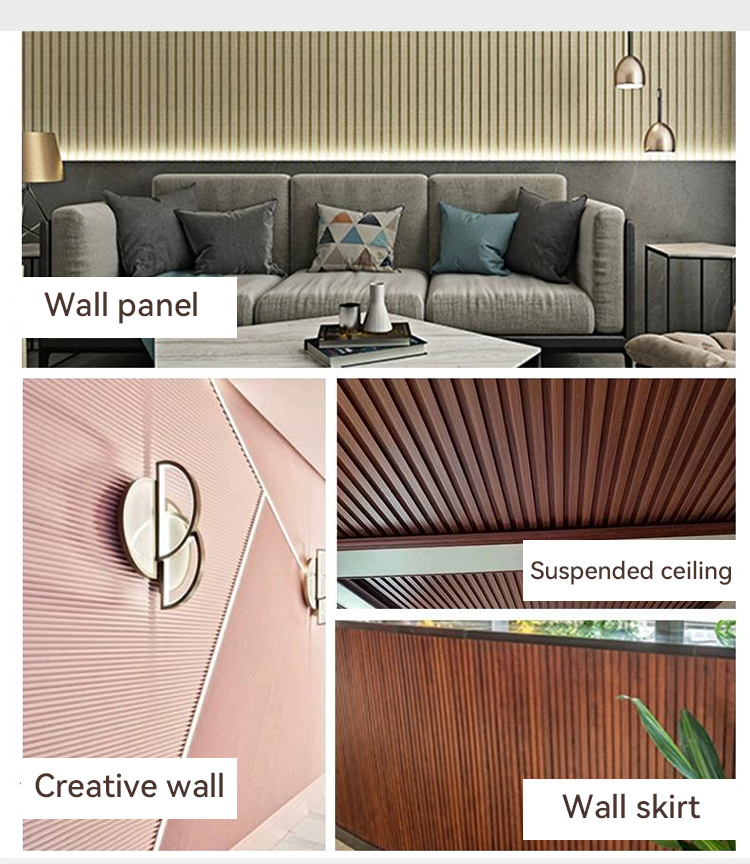
Sample and catalogue requests for the WPC wall panel line (model WB-WPC) are handled directly by the SXP Wall Panel export team.
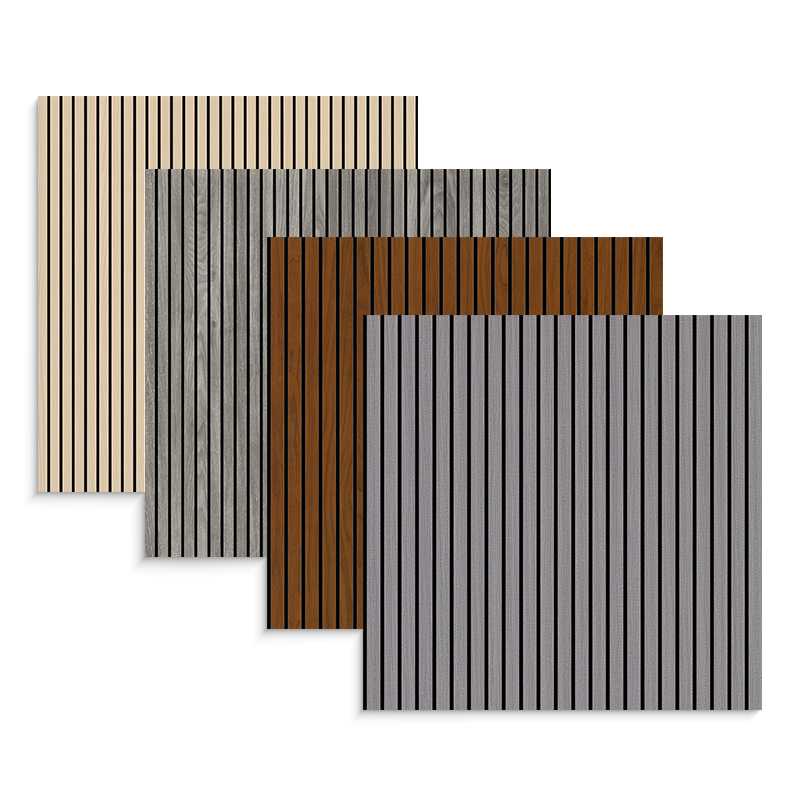
3D self-adhesive foam slat wall sticker (model WB-KC) at 2.8 mm thickness, one of the repeat-supply lines discussed in this FAQ.
Have Questions or Need More Details?
Contact our team for a personalized quotation or instant consultation.
Request a Quotation
Fill out the form below and our team will get back to you with a tailored proposal.
WhatsApp Direct Chat
Prefer to chat in real-time? Message us on WhatsApp for instant assistance & quick answers.
- Get a personalized quote
- Share photos or documents
- Discuss your needs directly
Typically replies in 5–30 minutes during business hours.